

Heat Pump Repair Orlando: Expert Service Guide
Published September 8, 2026
When your heat pump system fails in Orlando, immediate attention is necessary because Central Florida's intense humidity and high temperatures can quickly turn a comfortable home into an uninhabitable space. Professional heat pump repair Orlando services focus on diagnosing the root cause of malfunctions—whether it's electrical failure, refrigerant leaks, or compressor issues—to restore optimal climate control and energy efficiency.
As Central Florida experiences increasingly volatile weather, from persistent 90°+ summer heat to unexpected afternoon thunderstorms and the constant threat of hurricane season, your heat pump is more critical than ever. A system that isn't running correctly can compromise not just your comfort, but the structural integrity of your home, especially in older neighborhoods like Colonial Heights or parts of Winter Park. Understanding the signs of failure is the first step toward effective repair.
Why Heat Pump Failures Are Unique in Central Florida
Heat pumps are incredibly efficient systems, but they are also complex machines that work hard against the region's unique climate challenges. Orlando's proximity to coastal humidity means HVAC equipment is constantly working under high load. The combination of high ambient temperatures, corrosive air, and the heavy use of the unit in homes that may have been built before modern climate sealing presents specific challenges for longevity and repair.
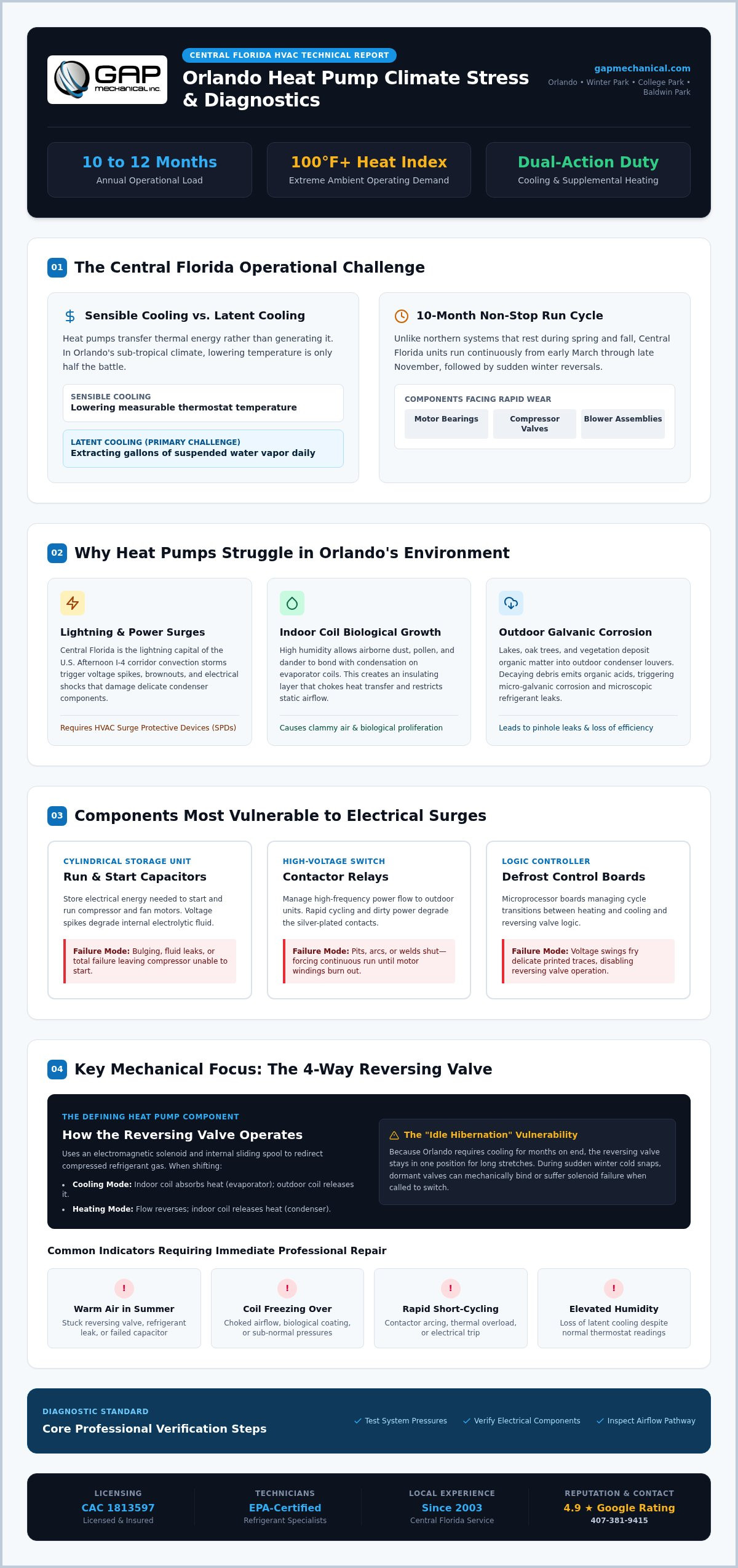
A heat pump uses refrigeration cycles to move heat. When it breaks, the failure point is often related to the ability to efficiently transfer that heat. In a typical Orlando home, failure isn't just about the unit stopping; it's about the unit failing to keep up with the oppressive humidity, leading to mold risks and discomfort.
If you are experiencing erratic behavior—the temperature inside fluctuates wildly, or the unit cycles on and off every few minutes—these are not normal operating conditions. These symptoms demand a professional diagnosis to determine if the issue is a simple fix or a deeper component failure.
We often see systems that shut down entirely after a major electrical event. If you suspect your unit might have been affected by recent power fluctuations, it is wise to review information on troubleshooting common AC problems after a power outage.
Recognizing the Signs of Heat Pump Trouble
Many homeowners wait until the system completely dies before calling for help, but by the time the unit fails completely, the repair may require more extensive work. Observing subtle signs can allow for timely intervention before a small issue becomes a catastrophic failure. Identifying these signs is key to preemptive care and ensuring a successful repair.
Here is a checklist of common indicators that your heat pump in the Orlando area requires professional inspection:
- Blowing Warm Air: If the air coming from your vents feels warm instead of cool, the system is not transferring heat effectively, which is a primary indicator of compressor or refrigerant issues.
- Strange Noises: Grinding, screeching, or loud rattling coming from the outdoor condenser unit suggests a mechanical component (like a fan motor or compressor) is struggling or failing.
- Excessive Energy Bills: If your utility bills spike without a corresponding increase in usage, your heat pump is likely running inefficiently due to internal failures or refrigerant leaks.
- Water Leaks: Leaks under the unit, either inside or outside, often indicate clogged condensate lines or a failing drain pan, which needs immediate attention to prevent water damage to your home.
- Frequent Tripping Breakers: Repeated tripping of circuit breakers points toward electrical issues, such as a short circuit or a failing capacitor within the unit.
For homeowners experiencing comfort issues, especially during peak heat, knowing that the system is performing correctly is paramount. If your unit is currently struggling to keep up with the heat, you may be concerned about AC is blowing warm air in Orlando. The causes range from simple filter blockages to complex system failures that require expert repair.
The Repair Process: From Diagnosis to Resolution
A heat pump repair is not a single step; it is a methodical process of diagnosis, component replacement, and system testing. When a technician arrives in Orlando, their first priority is never to guess. They use specialized tools to assess the system's performance against manufacturer specifications.
The process usually involves these key steps:
- Visual Inspection: Checking the outdoor unit, electrical connections, and refrigerant lines for any signs of wear, corrosion, or physical damage.
- Performance Metrics Testing: Measuring temperature differentials, airflow, and electrical current draw to pinpoint exactly where the system is failing.
- Root Cause Identification: Determining if the issue is solvable with a simple part swap (like a capacitor or fan motor) or if the core components require more specialized attention.
- Repair Execution: Replacing faulty parts with high-quality components, ensuring all connections are sealed properly, especially when dealing with refrigerants.
- Post-Repair Testing: Running the system through various cycles (heating and cooling) to verify that the repair has fully restored optimal performance and safety.
Because heat pumps involve complex refrigeration cycles, the technicians performing the repair must be highly trained and certified. At GAP Mechanical, our team operates as an EPA-certified entity, ensuring that all refrigerant handling and system modifications meet the highest environmental and safety standards. We have been serving the Central Florida community since 2003, building a reputation based on reliable, expert service.
Understanding Heat Pump Technology and Longevity
When considering the long-term health of your home's climate control, it is essential to understand how heat pumps function differently from traditional AC units. Heat pumps are designed to provide both cooling in the summer and supplemental heat in the winter, making them incredibly versatile for the varied climate of Central Florida.
The efficiency of a heat pump is heavily dependent on its ability to maintain balance between the indoor and outdoor environment. When a system is repaired, it is often an opportunity to assess the overall health of the infrastructure supporting it.
For those exploring the advantages of this technology, understanding the benefits of a heat pump in Florida can provide context for why proper maintenance and timely repair are so crucial to maximizing your asset and comfort.
Furthermore, if you are looking to upgrade or replace a failing unit, understanding the processes of installation is vital. For instance, if you are living in a community like Winter Park, knowing the nuances of AC installation in Winter Park can help you choose a system that is perfectly matched to your home's specific needs and local climate demands.
The Importance of Timely Repair Over Temporary Fixes
In the realm of HVAC repair, the temptation is often to apply a temporary fix to get through a particularly hot week. However, when dealing with a heat pump, temporary solutions rarely address the underlying mechanical or electrical failure. A small leak can worsen into a major component failure; a slightly inefficient motor can rapidly burn out entirely.
A professional repair focuses on the source. We prioritize finding the exact point of failure—whether it is a cracked line, a failing compressor bearing, or a clogged coil—and executing a permanent solution. This approach ensures that the system will not only run effectively during the next heatwave but will also maintain energy efficiency over its entire lifespan.
A reliable system provides stability. In the high-stress environment of an Orlando summer, stability means consistent temperature and reliable airflow, regardless of sudden humidity spikes or outdoor temperature fluctuations. We ensure that every repair we make contributes to the long-term reliability of your home’s climate control.
When you have issues with your system—whether it’s a persistent leak, a strange noise, or a complete shutdown—do not delay the call. The sooner the proper diagnosis is made, the sooner your home can return to the comfort and stability you expect from your home.
Frequently Asked Questions
Q: How long should I expect a heat pump repair to take?
A: The duration of a heat pump repair varies significantly depending on the diagnosis. A simple part replacement, such as a capacitor or sensor, may take less than an hour. However, if the issue requires complex work, such as major refrigerant line repairs or compressor replacement, the process will take longer to ensure all systems are tested and sealed correctly.
Q: Do I need a heat pump repaired every year?
A: While a full professional repair is only needed when a specific failure occurs, regular preventative maintenance is highly recommended in Central Florida. Consistent maintenance helps identify minor issues before they escalate into major, costly repairs during the peak of the summer heat.
Q: What is the first thing a technician should check when a heat pump fails?
A: The technician will first check the basic operational elements, including electrical connections, airflow, and the unit's thermostat settings. This helps determine if the failure is a simple control issue or a more complex mechanical failure within the core system components.
Q: Is a heat pump repair different from a standard AC repair?
A: While both involve cooling, a heat pump repair focuses not only on cooling but also on the heating capabilities of the system. The repair process involves specific checks related to the heat exchange cycles, which are unique to heat pump technology, to ensure both heating and cooling functions operate optimally.
Frequently Asked Questions
Why is my heat pump blowing hot air when my thermostat is set to cool?
The most common cause is a failed reversing valve or a burnt-out reversing valve solenoid. The reversing valve directs refrigerant flow between heating and cooling modes. If the solenoid loses power or the internal slide gets mechanically stuck, the system remains in heating mode. Other causes include a tripped circuit breaker for the outdoor unit (which allows the indoor fan to blow unconditioned air) or severe refrigerant loss.
Can afternoon lightning storms damage my heat pump without knocking out my power?
Yes. Indirect lightning strikes and electrical grid switching create transient voltage surges that travel through power and communication lines. These micro-spikes often degrade or destroy outdoor run capacitors, contactor points, and sensitive microprocessor control boards inside the heat pump without tripping the main household circuit breakers.
Why is my heat pump freezing up during a hot Orlando summer?
A heat pump freezes during summer cooling operation due to either restricted airflow or low refrigerant pressure. A clogged air filter, dirty indoor coil, or failed blower motor prevents room heat from reaching the refrigerant, causing temperatures inside the coil to drop below freezing. Similarly, a refrigerant leak drops the system's operational pressure, lowering its boiling point and causing condensation to freeze into a solid block of ice.
How can I tell the difference between a normal defrost cycle and a breakdown in winter?
During a normal defrost cycle in cold weather, the outdoor fan temporarily stops running, the reversing valve shifts with a brief whooshing sound, and light steam may rise from the outdoor unit as it melts exterior frost. This cycle should resolve within 5 to 15 minutes. If the outdoor unit remains iced over for hours, vibrates loudly, or blows unheated air continuously indoors, the defrost control board or sensor has likely failed.
How often should a heat pump be serviced in Central Florida?
Because heat pumps in Orlando operate nearly year-round to handle both heating and cooling, they require professional maintenance at least twice per year. A spring tune-up prepares the system for the intense summer cooling load, while a fall inspection ensures the reversing valve, electrical strips, and defrost controls are operating safely before winter cold snaps.