

AC Unit Frozen Solid What to Do: Winter Park Action Guide
Published September 22, 2026
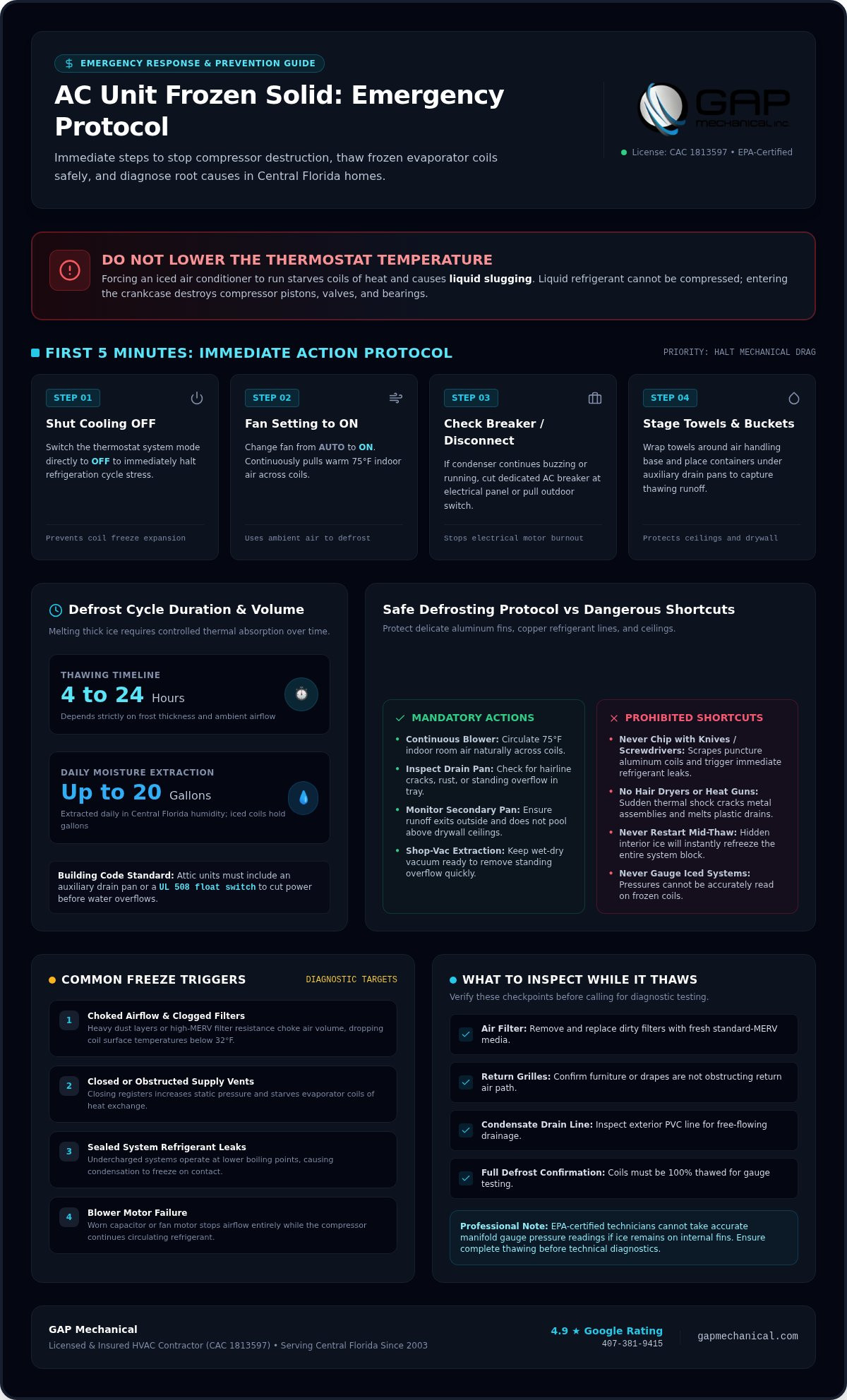
Running an iced-over air conditioner is the fastest way to destroy its compressor. If you have an AC unit frozen solid what to do right now is simple: shut off cooling at the thermostat immediately and switch the fan setting from "AUTO" to "ON." This circulates warm indoor air to melt the ice safely without stressing mechanical components. Never chip at the frost with knives or screwdrivers, which will puncture delicate aluminum coils and trigger an immediate refrigerant loss.
With summer temperatures easily topping 90 degrees in Winter Park, watching your home heat up while the air handler turns into an ice block is stressful. In vintage homes near Park Avenue and the Vias, unmanaged thawing can also quickly overwhelm auxiliary drain pans and ruin ceilings. You'll discover the exact steps to safely thaw your frozen AC unit, prevent compressor damage, and fix the root cause. Here's your step-by-step roadmap to protect your system and restore cold air to your living space.
Key Takeaways
- If you find your AC unit frozen solid what to do first is shut off the cooling mode immediately to prevent catastrophic compressor damage.
- Safely defrost your evaporator coils using continuous indoor airflow over a 4-to-24-hour period without risking ceiling leaks or punctured tubing.
- Pinpoint the underlying trigger behind the ice, whether it stems from choked airflow, high-MERV filter resistance, or a sealed refrigerant leak.
- Inspect your air filters and supply vents while the ice melts to resolve common airflow bottlenecks before restarting the unit.
- Recognize why diagnostic manifold gauges require a completely thawed system before an EPA-certified technician can accurately test operating pressures.
Action Checklist: What to Do When Your AC Freezes Solid
Discovering thick frost coating your refrigerant lines can cause instant panic during an afternoon heatwave. When facing an AC unit frozen solid what to do within the first five minutes determines whether you save your equipment or face a catastrophic mechanical breakdown. Many homeowners make the mistake of dropping the thermostat temperature even lower, thinking extra cooling effort will push cold air through the blockage. In reality, forcing an iced system to run chokes the air conditioning refrigeration cycle, starves the coils of heat, and quickly overheats the compressor motor.
Take these direct emergency steps immediately to protect your equipment and property:
- Turn cooling off: Set your thermostat system switch directly to the "OFF" position.
- Run the blower: Switch the thermostat fan setting from "AUTO" to "ON".
- Cut power at the panel if unresponsive: If the outdoor unit continues buzzing or running after adjusting the wall control, switch off the dedicated AC circuit breaker inside your electrical panel or pull the outdoor disconnect switch near the condenser.
- Stage towels and buckets: Wrap thick towels around the base of the indoor air handling cabinet and place a bucket under any suspended secondary drain pans to catch water runoff.
Step 1: Shut Off the Cooling System Immediately
Running a frozen unit puts excessive mechanical drag on internal parts. Thick layers of ice insulate the evaporator coils, blocking heat absorption completely. As a result, liquid refrigerant fails to boil into a vapor and travels directly into the compressor crankcase. This condition, known as liquid slugging, destroys internal pistons, valves, and bearings because liquid cannot be compressed. Check the outdoor condenser unit to confirm the exterior fan and compressor have powered down completely.
Step 2: Switch the Thermostat Fan Setting to ON
Once cooling is disabled, toggle the fan switch specifically to "ON" rather than leaving it on "AUTO." This setting engages the indoor blower motor independently of the cooling cycle, continually pulling warm 75-degree room air across the frozen metal fins. Circulating indoor ambient air accelerates the thawing timeline naturally. It also prevents the extreme thermal shock that occurs when homeowners mistakenly attempt to blast frozen components with hair dryers or heat guns.
Acting decisively during this initial stage safeguards your equipment against irreversible burnout while setting up a controlled, moisture-safe defrosting environment. If you want professional guidance on protecting your indoor air handler, you can schedule an appointment for residential cooling diagnostics once your system thaws.
How to Safely Thaw a Frozen Air Conditioner Without Damage
Thawing an air conditioner requires patience. Depending on the thickness of the frost layer, complete melting takes anywhere from 4 to 24 hours. Keep your indoor blower fan running continuously during this window to pull room-temperature air through the cabinet. When faced with an AC unit frozen solid what to do next is let thermal transfer work naturally. Rushing this stage with aggressive tools or external heat sources invariably leads to cracked components, significant structural water leaks, and permanently damaged coil assemblies.
Managing the Melt: Protecting Floors and Drain Pans
Central Florida's high humidity creates a massive volume of water during a defrost cycle. A standard residential system in Winter Park extracts up to 20 gallons of water daily from indoor air, and a frozen coil holds several gallons of that moisture in solid form. Follow this checklist to safeguard your living space while the frost liquifies:
- Inspect the primary drain pan: Check the plastic or galvanized tray beneath the evaporator coil for hairline cracks, rust, or standing overflow.
- Monitor the secondary attic pan: If your air handler sits above drywall ceilings in neighborhoods like Hannibal Square, verify that the auxiliary drain pan line is clearing runoff outside rather than pooling near framing.
- Test the emergency float switch: Under Florida Building Code requirements, attic-mounted cooling coils must include an auxiliary drain pan or a UL 508 float switch to cut system power before water overflows.
- Extract standing runoff: Keep a wet-dry shop vacuum on hand alongside towels to catch overflow before it penetrates your subfloor or ceiling plaster.
Never pick, scrape, or chip ice off the coil using screwdrivers, butter knives, or putty scrapers. The copper tubing and aluminum fins inside your air handler are exceptionally soft. A single slip punctures the pressurized tubing, immediately venting refrigerant and destroying the coil assembly. Venting refrigerant also violates EPA Section 608 regulations, which prohibit the intentional release of regulated cooling compounds into the atmosphere.
Similarly, avoid using industrial heat guns, propane torches, or high-output blow dryers. Concentrated heat warps thin aluminum radiator fins, melts PVC drain unions, and cracks internal solder joints. Chemical de-icers are just as hazardous; aggressive solvents corrode metal surfaces and immediately void equipment warranties. Reviewing the official ENERGY STAR cooling maintenance checklist reveals that steady airflow remains the only safe way to preserve delicate heat exchangers. If your unit is encased in ice and you suspect internal drain lines are backed up, reach out to our local diagnostic team to inspect your drainage before moisture damages your home.
Why Your Air Conditioner Froze: 4 Common Root Causes
Under normal conditions, your evaporator coil maintains an operating temperature between 40°F and 50°F. This range allows it to extract heat and dehumidify living spaces without creating frost. Ice develops only when a mechanical or environmental defect drops coil temperatures below the freezing mark. When evaluating an AC unit frozen solid what to do comes down to identifying why that thermal transfer failed in the first place.
Severe Airflow Restrictions and Suffocated Evaporator Coils
Warm indoor air supplies the heat necessary to keep refrigerant vaporizing inside the coil. If airflow stalls, the refrigerant cannot absorb heat, causing temperatures to plummet rapidly. Several common culprits restrict indoor airflow:
- Overly restrictive air filters: Installing high-MERV 1-inch pleated filters in older Winter Park homes chokes static airflow, dropping CFM levels below manufacturer minimums.
- Blocked return or supply vents: Closing off doors and registers in unused rooms creates backpressure, slowing the volume of warm air passing through the handler.
- Accumulated debris: Layers of dust, pet hair, and airborne particulate coat the aluminum fins over time, forming an insulating blanket that blocks thermal absorption.
Refrigerant Leaks and Low Pressure in Central Florida Heat
Air conditioning systems are hermetically sealed loops. Refrigerant is never consumed or "burned up" during normal cooling cycles. If levels drop, a physical leak has developed in the copper tubing, coil seams, or service valves.
When refrigerant escapes, internal system pressure drops. According to standard thermodynamic laws, reduced pressure lowers the refrigerant's boiling saturation temperature. Once that temperature falls below 32°F, natural moisture condensing onto the coil fin surface turns directly into frost. The ice layer thickens continuously, eventually choking off all ventilation. Researching independent guides on AC refrigerant leak repair needs highlights why simply topping off refrigerant without locating and brazing the physical breach fails to deliver a permanent solution.
Blower Motor Failures and Ductwork Bottlenecks
Mechanical failures inside the air handler also stop heat exchange instantly. During extreme summer months, attic temperatures frequently exceed 130°F, degrading electrical components. A weak run capacitor or failing blower motor can shut down fan rotation while the outdoor condenser continues pumping chilled refrigerant inside.
Similarly, separated or collapsed flexible ductwork in tight attic spaces starves the return plenum of volume. If you are assessing an AC unit frozen solid what to do next requires separating simple airflow restrictions from closed-circuit refrigerant issues before turning the system back on.
Homeowner Troubleshooting Checklist: What to Inspect While It Thaws
While your system spends hours melting away accumulated frost, you don't have to wait idly. You can use this downtime to isolate simple airflow obstructions and prepare the unit for a safe restart. When dealing with an AC unit frozen solid what to do during the thawing interval centers on systematic inspection. Methodically checking your filters, vents, and outdoor clearance helps you rule out external flow issues before testing mechanical components.
Inspect and Replace Restricted Air Filters
Pull the air filter out of the return grille or cabinet slot and hold it up toward a bright overhead light. If light cannot penetrate the media, air cannot either. Heavy buildup forces the blower to work against severe static resistance, causing instantaneous freeze-ups. Replace dense, high-resistance pleated filters with fresh filters matching manufacturer specifications. If your unit struggles to pull temperatures down during hot afternoons even with a clean filter, you may be experiencing broader static airflow bottlenecks across your distribution system.
Check Return Grilles and Clear Blocked Supply Vents
Walk through every room to ensure your ductwork can breathe freely. Closed bedroom doors in older homes create pressure imbalances that starve central return grilles. Check these airflow factors throughout the house:
- Supply registers: Confirm all louvers are turned to the fully open position, even in unused guest rooms.
- Return grilles: Move area rugs, heavy drapes, or large furniture away from low-wall and floor intake grilles.
- Duct connections: Visually inspect accessible duct runs in your utility closet for loose aluminum tape, disconnects, or sharp crimps.
Clear Standing Water Around the Condensate Line
Central Florida's subtropical moisture produces thick algae blooms inside horizontal PVC drain runs. When gelled algae blocks the pipe, melting runoff from a frozen coil fills the primary pan quickly. Inspect the drain pan to ensure water flows toward the drain fitting rather than pooling near electrical controls.
Attach a wet-dry vacuum to the exterior condensate drain termination outside your foundation wall. Running the vacuum for two to three minutes pulls out compacted sediment, slime, and trapped meltwater. If your drain line remains backed up or you spot ice re-forming immediately after startup, schedule an emergency diagnostic visit with a licensed technician to inspect your closed refrigerant circuit.
When to Call a Professional for Central Florida Freeze-Ups
A licensed technician cannot run accurate diagnostics while frost blankets your equipment. Calibrated digital manifold gauges require stabilized operating pressures, which cannot be measured when ice acts as an insulating barrier across the evaporator coil. If you have an AC unit frozen solid what to do while waiting for service is verify that all frost has melted completely before your appointment. Once the system thaws, diagnosing sealed refrigerant loops or high-voltage circuits requires professional instrumentation and legal licensing.
Recognizing Refrigerant Leaks and Mechanical Faults
Refrigerant travels through a pressurized copper circuit mixed with compressor lubrication oil. If you notice a faint hissing sound near the indoor coil cabinet or discover dark, oily residue clinging to copper tubing joints, you have an active refrigerant leak. Certified technicians locate these microscopic breaches using sensitive electronic halogen sniffers and high-pressure nitrogen decay tests before brazing the pipe. Technicians also perform electrical tests using multimeters to spot weakened capacitors, pitted contactor points, and grounded motor windings that disrupt indoor blower operation. For an in-depth breakdown of these advanced diagnostic steps, explore our guide to AC repair in Orlando.
Preventing Recurrent Ice Buildup with Routine Maintenance
Preventative tune-ups stop freeze-ups long before ice chokes your system. During scheduled maintenance, technicians wash evaporator fins, clear condensate lines, verify blower motor amperage, and precisely calculate superheat and subcooling levels to confirm proper refrigerant charge. Under federal law, only EPA Section 608 certified technicians can legally tap into residential refrigerant lines and charge cooling equipment.
When you need reliable help for an AC unit frozen solid what to do is trust established local contractors. Family-owned and serving Central Florida since 2003, GAP Mechanical provides licensed and insured service (CAC 1813597) backed by a 4.9-star Google rating. Our EPA-certified technicians quickly isolate airflow restrictions from sealed-system leaks to restore safe cooling. Schedule a comprehensive diagnostic inspection for your residential AC systems to protect your asset and keep your home comfortable all summer long.
Restore Your Home's Cooling and Protect Your asset
Knowing how to handle an AC unit frozen solid what to do immediately saves your equipment from catastrophic compressor burnout and guards your home against structural water damage. Shutting down the cooling mode, running the indoor blower fan, and allowing ice to melt naturally without sharp tools or artificial heat are the critical first steps. Once your evaporator coils clear, replacing clogged filters and opening supply registers often resolves basic airflow restrictions.
If ice re-forms or your system refuses to cool, unresolved refrigerant leaks or electrical faults demand expert intervention. As a family-owned contractor serving Central Florida since 2003, GAP Mechanical pairs EPA-certified technicians with licensed and insured service (CAC 1813597) to pinpoint root causes accurately, backed by a 4.9-star Google rating. Don't spend another humid afternoon sweating in your living room. Schedule your Winter Park AC inspection with GAP Mechanical to get cold, reliable air flowing through your home again today.
Frequently Asked Questions
Can I run my AC while it is frozen if I set the temperature higher?
No, you should never run your air conditioner while the coil is frozen, regardless of your thermostat setting. Raising the setpoint does not eliminate accumulated ice or prevent liquid refrigerant from flooding the compressor. Running the system in this condition forces unevaporated liquid into delicate mechanical valves, causing irreversible compressor failure. Always shut cooling completely off and switch the fan setting to "ON" until the ice clears.
How long does it take for an AC evaporator coil to completely thaw?
A completely frozen evaporator coil typically takes between 4 and 24 hours to thaw entirely. The exact timeframe depends on ice thickness, ambient indoor temperatures, and whether you run the blower fan continuously. Keeping the fan switch set to "ON" pulls warm room air across the metal fins, speeding up the process safely. Never attempt to restart the cooling cycle until all frost has melted and the drain line clears.
Does a frozen AC unit automatically mean my system is low on refrigerant?
No, a frozen coil does not automatically mean your system is low on refrigerant. Severe airflow restrictions trigger freeze-ups just as frequently as sealed-system leaks. Choked air filters, collapsed duct runs, or a failing indoor blower motor starve coils of heat, dropping operating temperatures below 32°F. If you have an AC unit frozen solid what to do before assuming a leak is inspect your filters and verify return vents are open.
Can a clogged air filter really cause my entire air conditioner to freeze solid?
Yes, a severely clogged air filter is one of the leading causes of a frozen system. When a dirty or overly restrictive filter chokes return airflow, warm indoor air cannot transfer heat into the refrigerant circulating through the evaporator coil. Without that thermal energy, coil temperatures plunge below freezing, causing normal condensation to ice over. Replacing dirty filters every 30 to 60 days prevents these airflow bottlenecks in Central Florida homes.
What should I do if water starts leaking through my ceiling while the unit thaws?
Immediately shut off system power at the circuit breaker, place buckets beneath the drip, and inspect the auxiliary drain pan. For an AC unit frozen solid what to do during an attic thaw is manage melting runoff before it saturates drywall. Use a wet-dry shop vacuum on the outdoor condensate drain termination to pull out algae clogs, and empty the attic drip pan to stop ongoing ceiling water damage.
Frequently Asked Questions
Can I run my AC while it is frozen if I set the temperature higher?
No, you should never run your air conditioner while the coil is frozen, regardless of your thermostat setting. Raising the setpoint does not eliminate accumulated ice or prevent liquid refrigerant from flooding the compressor. Running the system in this condition forces unevaporated liquid into delicate mechanical valves, causing irreversible compressor failure. Always shut cooling completely off and switch the fan setting to "ON" until the ice clears.
How long does it take for an AC evaporator coil to completely thaw?
A completely frozen evaporator coil typically takes between 4 and 24 hours to thaw entirely. The exact timeframe depends on ice thickness, ambient indoor temperatures, and whether you run the blower fan continuously. Keeping the fan switch set to "ON" pulls warm room air across the metal fins, speeding up the process safely. Never attempt to restart the cooling cycle until all frost has melted and the drain line clears.
Does a frozen AC unit automatically mean my system is low on refrigerant?
No, a frozen coil does not automatically mean your system is low on refrigerant. Severe airflow restrictions trigger freeze-ups just as frequently as sealed-system leaks. Choked air filters, collapsed duct runs, or a failing indoor blower motor starve coils of heat, dropping operating temperatures below 32°F. If you have an AC unit frozen solid what to do before assuming a leak is inspect your filters and verify return vents are open.
Can a clogged air filter really cause my entire air conditioner to freeze solid?
Yes, a severely clogged air filter is one of the leading causes of a frozen system. When a dirty or overly restrictive filter chokes return airflow, warm indoor air cannot transfer heat into the refrigerant circulating through the evaporator coil. Without that thermal energy, coil temperatures plunge below freezing, causing normal condensation to ice over. Replacing dirty filters every 30 to 60 days prevents these airflow bottlenecks in Central Florida homes.
What should I do if water starts leaking through my ceiling while the unit thaws?
Immediately shut off system power at the circuit breaker, place buckets beneath the drip, and inspect the auxiliary drain pan. For an AC unit frozen solid what to do during an attic thaw is manage melting runoff before it saturates drywall. Use a wet-dry shop vacuum on the outdoor condensate drain termination to pull out algae clogs, and empty the attic drip pan to stop ongoing ceiling water damage.