

AC Making Loud Noise? Orlando Myth-Busting Guide
Published June 12, 2026
If your AC is making a loud noise in Orlando, it is often a combination of environmental factors, system wear, or simple maintenance needs rather than an immediate crisis. While some noises are normal operational sounds, others signal an underlying issue that requires professional attention to ensure comfort and efficiency in Central Florida's unique climate.
The Myth of the 'Normal' Whir: What Sounds Are Actually Okay?
One of the most common misconceptions in Central Florida is believing that any noise above a gentle hum means your system is broken. In reality, a healthy AC unit produces a variety of sounds that are entirely normal, especially given the 90°+ summer temperatures and high humidity we experience in Orlando.
Your HVAC system is a complex machine working under high stress. It is moving large amounts of air and handling refrigerants that operate at specific pressures. These processes create sounds that most people misinterpret as signs of failure. Understanding these normal sounds is the first step in myth-busting the idea that noise always equals trouble.
- The Low Hum or Vibration: This is the sound of the compressor running and the fans moving large volumes of air. In an older home in areas like Kissimmee or Winter Park, you might feel more vibration through the structure of the house, which can amplify the sound. This is generally a sign of normal operation.
- The Clicking Sound: This usually occurs during startup or shutdown phases. It is often the relay engaging or the thermostat cycling the system. This is a typical electrical operation.
- Refrigerant Flow Sounds: Sometimes, you might hear soft gurgling or rushing sounds. This is simply the refrigerant moving through the coils, which is exactly what it should be doing to pull heat out of your Orlando home.
However, the distinction between a normal sound and a warning sound is crucial. A healthy AC unit should sound consistent and stable. If the noise is erratic, sudden, or changes drastically over time, that is when you should start looking at the specific nature of the sound.
When Noise Becomes a Warning: Identifying Serious AC Problems
While the gentle hum is often just the sound of hard work, certain noises are clear indicators that something requires immediate attention. These sounds are not merely operational; they are mechanical signals that a component is failing, straining, or physically loose.
In the constant struggle against Orlando’s heat, your equipment is under immense pressure. If you hear any of the following, you are moving out of the "normal operation" category and into the "action required" category. These sounds tell us the system is fighting a battle it cannot win.
- Loud Grinding or Scraping: This is one of the most critical signs. A grinding noise usually points directly to the motor bearings—either on the fan or the compressor—having worn out. The friction is metal-on-metal, and this can quickly lead to catastrophic mechanical failure.
- High-Pitched Screeching: This typically indicates an issue with a belt or a fan blade hitting something. If the motor is straining against a belt that is too tight or worn, the resulting screech is a sign of a major efficiency drop and potential damage.
- Rattling or Clanking: If the noise seems to be coming from inside the air handler or the outdoor condenser unit, it may mean that the unit is improperly mounted, or more worryingly, that internal components like the coils or fan blades have come loose. This can often be solved with simple tightening, but sometimes it indicates a structural issue with the unit itself.
- A Consistent Roaring Sound: If the sound is like a jet taking off, it might indicate severe restriction in the airflow, often caused by a clogged drain line or an extremely dirty coil, forcing the system to run at too high a speed.
The longevity of your central Florida home depends on the reliability of these systems. Ignoring these warning signs, especially in the intense heat of summer, can lead to more extensive and significant repairs down the line. Proactive listening is key to maintaining a comfortable home.
Central Florida’s Unique Heat Stress on HVAC Systems
The AC making loud noise Orlando is more than just a mechanical issue; it is often a symptom of the harsh environment. Central Florida presents a unique set of challenges for HVAC equipment that differ significantly from other climates. We don't just deal with heat; we deal with extreme humidity, intense UV exposure, and the occasional violent afternoon thunderstorm or hurricane threat.
The combination of constant high moisture and sustained high temperatures accelerates wear and tear on every component of your system. Here is how the local climate specifically impacts the noise levels and performance of your unit:
- Humidity and Electrical Components: High humidity can cause condensation and corrosion on electrical contacts and internal wiring. While this doesn't always make a loud noise, it can cause erratic performance and strain on the motor, leading to vibrations and atypical sounds.
- Older Homes and Airflow: Many beautiful homes in neighborhoods like Winter Park or Lake Nona were built before modern HVAC efficiency was the priority. These older structures often have different ductwork and insulation, meaning your system must work much harder to maintain a consistent temperature, which translates to louder, more persistent running noises.
- External Stress and Wind: The constant exposure to high winds and tropical weather in the Orlando area puts massive stress on the outdoor condenser unit. If the unit is not properly secured and maintained, the wind can cause internal components to rattle, leading to loud, annoying noises that are not related to the cooling process itself.
For homeowners who feel like their unit is struggling to keep up with the Central Florida climate, it is important to know that the solution is rarely just "turn it up." Sometimes, the system needs a targeted inspection to ensure it is handling the moisture and heat load efficiently.
Maintenance Myths vs. Real Solutions for Noise Reduction
Many homeowners attempt to diagnose and fix loud AC noises themselves. While some simple maintenance tasks can definitely help, many noises are deep-seated mechanical issues that require professional expertise. Let’s separate the myths from the actionable truths regarding noise reduction.
Myth 1: I just need to clean the filter. While a dirty filter can restrict airflow and make your system work harder (potentially causing a louder sound), it will not fix a grinding compressor or a screeching fan. It is a necessary step, but not a cure for mechanical failure.
Myth 2: It’s just the Florida heat; I have to live with it. Absolutely not. Regular maintenance ensures that your system is operating at its peak efficiency, which inherently means it operates more quietly and reliably. Professional tune-ups are designed to identify and correct small issues before they escalate into loud, significant failures.
Myth 3: I can fix it myself with a screwdriver. For electrical and mechanical issues, this is dangerous and ineffective. HVAC systems operate with high voltages and refrigerants. Attempting repairs without the proper certification and tools is a recipe for injury or further damage to the unit.
The Reality: The Power of Professional Diagnostics.
The most effective strategy is a systematic approach. A licensed professional doesn't just look at the unit; they listen to it. They use specialized tools to measure refrigerant pressures, check motor amperage, and identify vibrations that are imperceptible to the untrained ear. This holistic approach allows them to determine if the noise is caused by a simple belt adjustment or a complex compressor replacement.
When you call a professional HVAC service, you are not just calling for repairs; you are calling for an educated diagnosis. We take pride in providing comprehensive support to homeowners across Central Florida. If you are experiencing any concerns about the noise your unit is making, our experienced team is ready to help you understand the situation. You can reach us anytime at 407-381-9415.
Why Your Orlando HVAC System Needs Expert Diagnosis
Your home is your sanctuary, and your HVAC system is the machine that makes that sanctuary possible in the challenging Orlando climate. When that machine starts making loud noises, it sends a signal that something is out of alignment, whether it’s a tiny loose screw or a major internal failure.
At GAP Mechanical, we have been serving the Central Florida community since 2003, and we are committed to providing the highest level of care. We are a licensed contractor (CAC 1813597) and EPA-certified, which means we adhere to strict industry standards for safety and environmental protection. Our team maintains a strong 4.9 Google rating because we focus on thorough, honest diagnostics rather than quick, temporary fixes.
We understand that you need more than just a repair; you need peace of mind. Whether you are dealing with a minor rattle in a home near the University of Central Florida or a major mechanical issue in a property in the tourist areas, we approach every service call with the same dedication to education and resolution.
Don't let the fear of the unknown or the frustration of a loud, inefficient unit dictate your comfort. If you are hearing unusual sounds, a change in airflow, or notice your energy bills spiking despite your unit running, it is time to consult with experts who know the unique demands of Orlando summers.
For reliable HVAC support and expert advice, we encourage you to learn more about our commitment to quality service through our dedicated Service Areas page.
Frequently Asked Questions
Q: How often should I have my HVAC system checked for noise issues in Orlando?
A: Given the extreme conditions and humidity in Orlando, it is recommended that homeowners have a professional HVAC tune-up at least once per year. This preventative maintenance allows technicians to identify minor issues—like loose belts or slightly worn bearings—before they develop into loud, costly failures.
Q: Is a loud noise from my outdoor unit normal during peak summer hours?
A: While some operation sounds are normal, a significantly louder noise than usual should prompt an investigation. Peak summer hours mean the system is working hardest, and while it should be loud, it should sound consistent and stable. Erratic, screeching, or grinding noises are never normal.
Q: What is the difference between a fan noise and a compressor noise?
A: A fan noise usually originates from the moving parts of the fan (the blower or the condenser fan) and sounds like whirring or scraping. A compressor noise, which is the unit's 'heart,' sounds deeper, more rhythmic, and can involve humming, growling, or loud vibrations if the motor or internal components are struggling.
Q: Can a clogged condensate drain line cause loud noises?
A: Generally, a clogged drain line causes water pooling and subsequent leaks or gurgling sounds, rather than mechanical grinding or screeching. However, severe airflow restrictions caused by clogs can force the unit to run under extreme stress, which can lead to other mechanical noises.
Frequently Asked Questions
Myth: Loud Noises Are Just a Sign of an Aging Unit
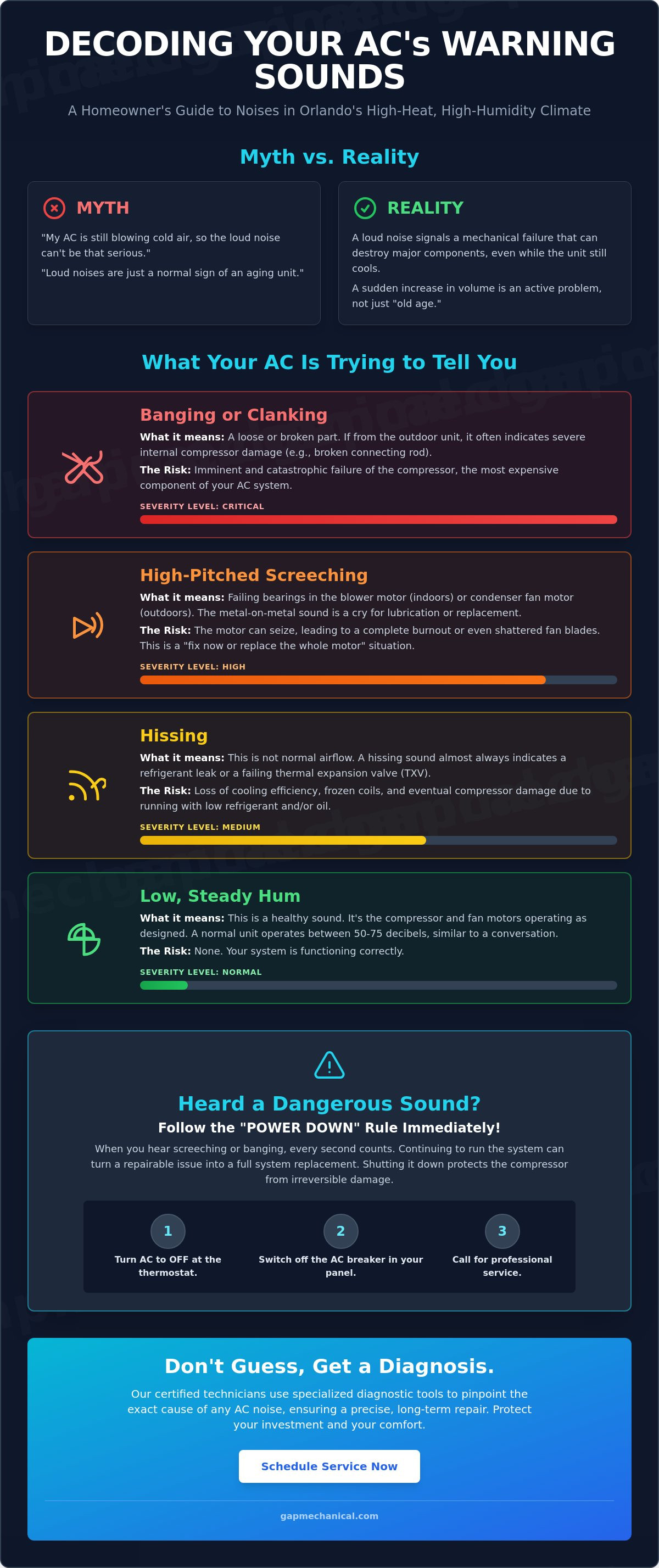
Many homeowners assume that an older unit is naturally louder. While wear and tear occur, modern HVAC systems are engineered to remain relatively quiet throughout their entire service life. A significant increase in volume is rarely just "old age." It is usually an active mechanical failure. A standard residential unit should operate between 50 and 75 decibels, which is comparable to the sound of a normal conversation. If your unit is drowning out your outdoor activities, it needs attention.
Why Central Florida Humidity Makes Noises Worse
Orlando's environment is particularly harsh on moving parts. High humidity leads to premature corrosion in fan motor bearings, creating high-pitched squealing. When you notice your AC making loud noise Orlando heat is usually the primary culprit behind the strain. High-cycle rates also wear out capacitors and contactors faster. We often find organic debris like pine needles inside cabinets. These items cause a rhythmic rattling that mimics a mechanical failure. Your air conditioner communicates its internal health through the sounds it produces. While a steady hum is standard, abrasive noises like screeching or banging are clear indicators of mechanical distress. If you encounter an AC making loud noise Orlando systems often exhibit these specific symptoms when internal components struggle against the relentless Florida heat. Learning to interpret these sounds can prevent a total system collapse and save you from the consideration of a full compressor replacement.
The Metal-on-Metal Screech (Fan Motor vs. Bearings)
A high-pitched, piercing screech usually points toward the blower motor or the outdoor fan motor. This sound typically indicates that the bearings have lost their lubrication or have reached the end of their service life. This is a "fix it now or replace the whole motor" situation. Ignoring this sound allows heat to build up within the motor housing. Eventually, the bearings can seize completely, which sometimes causes the fan blade to shatter under the sudden torque. Prompt AC repair can often save the motor before it burns out entirely.
Banging and Clanking (Loose Parts or Compressor Issues)
Banging and clanking are almost always signs of a loose or broken part. Inside the blower assembly, a loose fan blade might strike the housing with every rotation. However, if the banging originates from the outdoor unit, it is a "Category Red" emergency. This often signals a broken connecting rod or crankshaft within the sealed compressor. You might also hear "slugging," which occurs when liquid refrigerant enters the compressor instead of gas. This sound is a serious threat to the unit's longevity and requires immediate professional attention.
The Dreaded Hiss (Refrigerant Leaks and Valve Problems)
Some homeowners believe that hissing is just the sound of air moving through the ductwork. This is a myth. Refrigerant operates in a closed, pressurized system; it should never hiss. A persistent hissing sound usually indicates a refrigerant leak or a failing thermal expansion valve (TXV). Following Department of Energy maintenance tips can help you spot these issues during regular inspections. When refrigerant levels drop, the system pressure changes, often leading to evaporator coil icing. This restricts airflow and forces the unit to run longer, further increasing the risk of an AC making loud noise Orlando homeowners want to avoid. Every homeowner needs a mental soundboard to judge the health of their cooling system. In the humid Florida climate, sounds can change as components respond to heavy workloads. If you have an AC making loud noise Orlando technicians often find that what sounds like a catastrophe is simply a loose panel, while a faint, rhythmic click might hide a major electrical hazard. Distinguishing between these acoustic signatures is the first step in preventing a total system shutdown. You should expect a specific sequence of sounds when your system starts. First, a single, crisp click from the thermostat signals the call for cooling. This is followed by a brief delay and then the sound of the indoor blower motor starting. Finally, the outdoor unit engages with a steady, low-frequency hum. If your unit deviates from this pattern, it's time to pay closer attention to the specific type of noise being produced. Early detection through professional AC repair Orlando services ensures that minor mechanical imbalances don't evolve into significant compressor failures.
The Standard Start-up Click vs. Electrical Failure
When your system initiates, you should hear one distinct click from the outdoor unit. This is the contactor closing its points to send high-voltage power to the compressor and fan. If you hear a rapid-fire "chattering" sound instead, the electrical component is struggling to maintain a solid connection. This is often caused by pitted or burnt contacts, a common result of the high-cycle rates required by Orlando's summer heat. Ignoring this chattering leads to electrical arcing. Arcing generates extreme heat that can melt wiring insulation and poses a legitimate fire risk. If the clicking is rapid and the unit fails to start, shut the power off immediately.
Constant Humming: Vibration or Contact Problems?
A steady, low-volume hum is standard for a running motor. However, a loud, rattling hum often originates from the cabinet itself rather than the internal machinery. Central Florida's heavy rains and shifting soil can cause AC pads to become unlevel, leading to increased vibration. You can safely check this by gently pressing on the metal panels of the outdoor unit while it's running. If the noise stops or changes pitch, you have a vibration issue caused by loose housing screws or a cabinet contact problem. If the hum is "angry," metallic, or accompanied by a burning smell, it's likely a failing motor or a stressed capacitor. Technicians following the standards of EPA-recognized HVAC trade groups use specialized diagnostic tools to distinguish between these sounds and find the root cause. When you are dealing with an AC making loud noise Orlando weather often makes it difficult to hear the difference between a loose screw and a dying motor. If the sound is loud enough to be heard from inside the house with the windows closed, it has moved beyond "normal" operation. Taking action now protects the long-term stability of your cooling system. Hearing an AC making loud noise Orlando homeowners often feel tempted to wait and see if the sound resolves itself. This is a dangerous gamble. An unusual noise is a physical signal that a component is operating outside its design parameters. Ignoring these warnings typically leads to a total system failure. Taking immediate action is the only way to protect your equipment and your home's comfort during a Florida heatwave. The faster you act, the more likely you are to prevent a minor mechanical issue from becoming a catastrophic financial burden.
The Emergency Shutdown Protocol
Powering down your system is the most critical step you can take. When you hear grinding, screeching, or banging, the internal parts are likely experiencing extreme friction or electrical distress. Continuing to run the unit in this state causes "secondary damage." This occurs when a small, failing part, like a loose fan blade, destroys a healthy, significant part, like the compressor. Follow this safety protocol immediately: By following these steps, you stop the mechanical movement that causes further wear. It's the difference between a simple part replacement and a full system overhaul. If you've already shut the power down, it's time to request a professional AC repair diagnostic to find the root cause.
Visual Inspections Homeowners Can Safely Perform
Once the power is completely off, you can perform a safe external inspection. Do not attempt to open the electrical cabinet or reach inside the unit. Instead, look for obvious environmental factors that might cause noise. Start with the outdoor condenser. Look for large debris like palm fronds or pine needles that may have fallen into the fan cage. These items create a loud rattling sound that mimics a motor failure. Next, check your indoor air filter. An extremely clogged filter restricts airflow so severely that it creates a high-pitched whistling or "wooshing" sound as air is forced through tiny gaps. Finally, look for oil spots on the concrete pad near the outdoor unit. Refrigerant contains oil to lubricate the compressor; a visible oil stain often indicates a significant leak that is causing the AC making loud noise Orlando heat has likely exacerbated. If you see ice on the copper lines or oil on the pad, keep the system off until a technician arrives to prevent the compressor from seizing. Shutting down a system that is struggling is a vital first step, but restoring your home's comfort requires a technical deep dive. When you deal with an AC making loud noise Orlando experts from GAP Mechanical provide the precision required to pinpoint the exact failure point. We don't rely on guesswork or simple visual checks. Our team uses a methodical diagnostic process to ensure your system returns to peak performance without the risk of recurring issues. When you encounter an AC making loud noise Orlando homeowners often worry about the consideration of a full replacement. Central Florida's environment demands more from HVAC equipment than almost anywhere else in the country. High humidity and salt-tinged air accelerate the degradation of electrical and mechanical components. Our local expertise allows us to anticipate these regional challenges and address them before they lead to a complete system breakdown. We focus on long-term stability rather than quick, temporary fixes.
How GAP Mechanical Identifies the Root Cause
A professional diagnostic is much more than just listening to a rattle or a hum. Our technicians utilize specialized tools to see what's happening inside the sealed components of your unit. We use amp probes to measure the electrical draw of your motors. If a motor pulls more current than its rating, it's a clear sign of internal friction or failing bearings. We also employ manifold gauges to monitor refrigerant pressures in real time. These readings tell us if a hissing sound is a simple leak or a complex valve restriction. With over 25 years of experience in the local Orlando market, we've seen every possible cooling scenario. We understand how local debris and high-cycle rates impact your system's acoustics and longevity. This experience ensures we find the root cause quickly. It prevents you from paying for unnecessary part replacements that don't solve the core problem.
Restoring Quiet and Efficiency to Your System
Fixing the source of a noise does more than just restore peace to your backyard; it restores efficiency to your entire home. A system that isn't struggling against friction or incorrect pressures operates at its intended SEER rating. This leads to lower monthly power bills and a more consistent indoor temperature. Regular maintenance is the most effective way to prevent these noise emergencies from occurring in the first place. Choosing a licensed and insured contractor provides the security you need when inviting someone into your home. We take pride in our history of dependable service within the Orlando community. We offer transparent communication and straightforward solutions for every repair or installation. Don't let an aging or noisy unit compromise your comfort or your planning any longer. Schedule your diagnostic with GAP Mechanical today and ensure your system is ready for the Florida heat. Ignoring unusual sounds is the fastest way to turn a minor mechanical adjustment into a catastrophic compressor failure. You now have the tools to distinguish between a standard operational hum and a warning sign that requires immediate intervention. Remember the "Power Down" rule to protect your equipment from secondary damage. Taking action today ensures your system remains efficient and your home stays cool throughout the most demanding Florida afternoons. When you're dealing with an AC making loud noise Orlando residents can count on GAP Mechanical for definitive answers. We are licensed and insured Orlando HVAC experts with over 25 years of Central Florida experience and a 4.9-star Google rating. Our team uses advanced diagnostics to find the root cause and restore your peace of mind. Schedule Your AC Noise Diagnostic with GAP Mechanical today. We'll help you keep your cooling system running smoothly and quietly for years to come.
Is it dangerous if my AC is making a loud screeching noise?
Yes, a loud screeching sound is often a sign of high internal pressure or a failing fan motor bearing. This noise indicates that the unit is operating under extreme mechanical stress. You should shut the system down immediately to prevent the motor from burning out or the fan blades from shattering, which can cause significant internal damage.
Can I ignore a clicking sound if my AC is still blowing cold air?
You should not ignore persistent clicking because it usually points to a failing electrical contactor or relay. While the unit might still be cooling, the component is struggling to maintain a solid electrical connection. Replacing a small electrical part now is much more efficient than waiting for the entire system to fail during a heatwave.
Why does my AC make a loud bang when it turns off?
A loud bang during shutdown is frequently caused by ductwork "oil canning," where the metal panels flex due to pressure changes. It can also signal that the compressor's internal mounting springs have failed, causing the motor to hit the outer casing. Over time, these sudden movements can lead to refrigerant leaks or broken internal connections.
What causes a buzzing sound in my outdoor AC unit?
Buzzing in an outdoor unit typically indicates an electrical issue like a failing capacitor or a chattering contactor. Because an AC making loud noise Orlando homeowners experience is often tied to these electrical failures, it requires a professional check. If left unaddressed, these components can overheat and create a potential fire hazard within the electrical cabinet.
How much does it typically consideration to fix a noisy AC in Orlando?
The consideration of a repair depends entirely on which component is causing the sound. Simple fixes like tightening a loose housing panel or cleaning debris from the fan cage are relatively minor expenses. However, replacing a major component like a fan motor or a compressor involves a much higher commitment to both parts and specialized labor.
Is a hissing noise always a refrigerant leak?
Hissing is a common sign of a refrigerant leak, but it can also be caused by a high-pressure relief valve or a failing internal expansion valve. Both issues suggest that the system's pressure balance is incorrect. Since refrigerant is essential for cooling and lubrication, any hissing sound should be investigated by a licensed technician immediately.
How can I tell if the noise is coming from the indoor or outdoor unit?
You can isolate the source by standing near the indoor air handler and then the outdoor condenser while the unit is running. If the noise persists when you switch the thermostat to "fan only," the problem is likely the indoor blower motor. If the noise only occurs during a cooling cycle, the issue is typically in the outdoor unit.
Will a loud AC unit increase my monthly electric bill in Florida?
A noisy air conditioner is almost always less efficient and will increase your monthly power bills. Noise is essentially wasted energy caused by mechanical friction or electrical resistance. By addressing the AC making loud noise Orlando weather often causes, you restore the system's intended efficiency and reduce the strain on your wallet.