

AC Circuit Breaker Keeps Tripping: Orlando Troubleshooting Guide
Published September 25, 2026
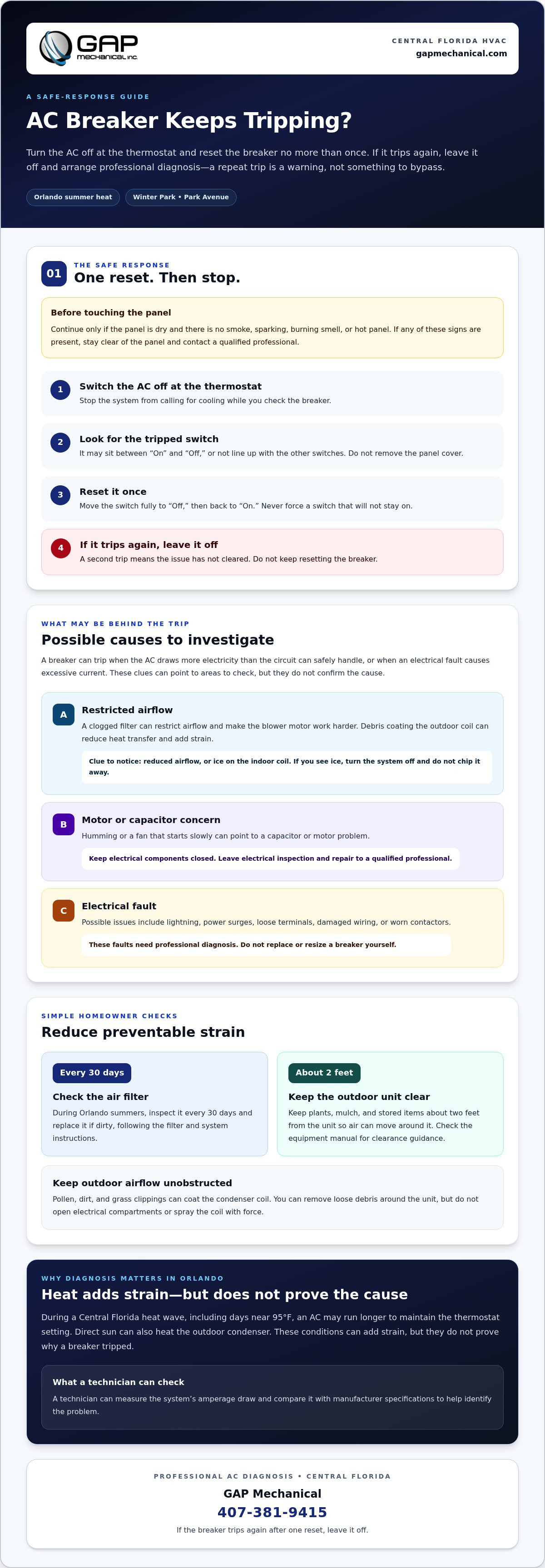
If your AC breaker trips, turn the system off and don’t keep resetting it. The breaker may be responding to excessive electrical current or a fault in the equipment or wiring. If it trips again after one reset, leave it off and arrange a professional diagnosis.
Orlando’s summer heat makes a loss of cooling especially uncomfortable. Near Winter Park’s Park Avenue, a struggling AC can have a hard time keeping up through a hot afternoon, but repeatedly resetting the breaker isn’t a safe way to restore cooling. A tripping breaker is a warning to investigate, not a problem to bypass.
This guide explains what you can safely check, what common signs may point to an airflow or equipment issue, and when the problem needs professional attention. You’ll also learn how a technician can test the system and how routine maintenance may help reduce preventable strain. The goal is a clear next step, without guessing at the cause or risking further damage.
Key Takeaways
- If your AC circuit breaker keeps tripping, switch the system off at the thermostat and don’t keep resetting the breaker.
- Check for a clogged air filter, since restricted airflow can make the blower motor work harder and draw more current.
- Humming or a fan that starts slowly can point to a capacitor or motor problem. Leave electrical components to a qualified professional.
- Lightning, power surges, loose terminals, damaged wiring, and worn contactors can cause electrical faults that need professional diagnosis.
- A technician can measure the system’s amperage draw against manufacturer specifications. For AC repair or maintenance in Central Florida, contact GAP Mechanical at 407-381-9415.
What to Do When Your AC Circuit Breaker Keeps Tripping
An AC breaker trips when the air conditioner draws more electricity than the circuit can safely handle, or when an electrical fault causes excessive current. Turn the system off and reset the breaker no more than once; if it trips again, leave it off and arrange professional diagnosis.
Follow these steps only if the electrical panel is dry and there are no signs of immediate danger, such as smoke, sparks, a burning smell, or a hot panel. If you notice any of these, stay clear of the panel and contact a qualified professional.
- Turn the AC off at the thermostat. This stops the system from calling for cooling while you check the breaker.
- Find the electrical panel. Look for a switch that is between the “On” and “Off” positions or does not line up with the others. Don’t remove the panel cover.
- Reset it once. Move the tripped switch fully to “Off,” then back to “On.” If it won’t stay on, don’t force it.
- Stop if it trips again. Leave the breaker off. Call an HVAC professional at 407-381-9415 for help diagnosing the cause.
A circuit breaker is designed to interrupt electrical flow when it detects a potentially unsafe condition. A repeat trip is a warning, not an invitation to keep trying. The underlying issue could involve the AC or its electrical circuit, and a technician can identify which before the system is switched back on.
Why Repeated Resets Are Risky
Breakers help protect wiring from overheating, which can lead to melted insulation or fire. If a fault remains, repeated resets may send current through damaged components or connections. That can increase heat and, in some cases, contribute to arcing, an electrical discharge across a gap. A second trip signals that the problem hasn’t cleared. Don’t keep resetting it.
How Orlando Heat Adds Strain
During a Central Florida heat wave, including days near 95°F, an AC may run longer to maintain the thermostat setting. An outdoor condenser in direct sun can also experience heat soak, meaning its components retain heat while operating in a hot environment. These conditions can add strain, but they don’t prove heat is the cause of a tripped breaker. A recurring trip still needs diagnosis. For related cooling problems, see AC Not Cooling House Below 80 Degrees Orlando.
Common Airflow Obstructions Causing Electrical Overload
A clogged filter or debris-covered outdoor coil can make an AC work harder to move air or release heat. That added strain may contribute to high electrical demand, but it doesn’t confirm the cause of a tripped breaker. If the AC circuit breaker keeps tripping, don’t keep resetting it; check accessible airflow obstructions and leave electrical diagnosis to a professional.
Check the Filter and Protect Blower Airflow
During Orlando summers, check your air filter every 30 days and replace it if it’s dirty, following the filter and system instructions. A clogged filter restricts airflow. Depending on the blower motor design, that resistance can increase the motor’s amp draw, meaning the amount of electrical current it uses. Reduced airflow can also interfere with heat transfer across the indoor coil.
If airflow remains restricted, the coil may get cold enough for moisture to freeze on it. Ice can further block airflow, while cooling performance drops. Turn the system off if you see ice, and don’t chip it away. For steps to take, read AC Unit Frozen Solid: What to Do.
Keep the Outdoor Coil Clear
The outdoor condenser coil releases heat from the refrigerant to the surrounding air. Pollen, dirt, and grass clippings can coat the coil and reduce that heat transfer. The refrigerant may then remain hotter and at higher pressure than it should, making the compressor work harder and potentially draw more amps.
In Winter Park gardens, keep plants, mulch, and stored items about two feet from the outdoor unit so air can move around it. Check the equipment manual for its clearance guidance. You can remove loose debris around the unit, but don’t open electrical compartments or spray the coil with force. A technician can inspect and clean components safely as part of AC maintenance.
Airflow trouble is different from a breaker fault, and the breaker itself may also vary by equipment and electrical setup. Eaton explains the types of circuit breakers, but don’t try to replace or resize one yourself. If the breaker trips again after a single reset, keep it off and contact GAP Mechanical for AC repair.
Mechanical Failures: Capacitors, Motors, and Compressors
A weak capacitor, failing motor, or compressor problem can make an AC struggle to start or run, increasing electrical demand and causing the breaker to trip. If the AC circuit breaker keeps tripping, leave it off after one reset. Listen for unusual sounds from a safe distance, but don’t open the equipment or handle its electrical parts.
The Failing AC Capacitor
A capacitor stores electrical energy and helps provide the starting boost, or “jolt,” that an AC motor needs. Some systems also use a capacitor to support motor operation after startup. Orlando’s heat and humidity put AC equipment through long operating periods, which can contribute to wear on electrical components over time.
A weak capacitor may cause humming, a fan that starts slowly, or a motor that struggles to get moving. A bulging casing or leaking oil is another visible warning sign. Don’t touch or attempt to replace a capacitor. It can retain a dangerous electrical charge even after power is switched off. A qualified technician can test it and determine whether it’s the cause of the problem.
Hard Starts, Stalled Motors, and Compressor Faults
“Hard starting” means the compressor has difficulty starting when the system calls for cooling. A failing capacitor or worn compressor can be part of the problem. During startup, the compressor may draw a brief surge of current. If it can’t start and continues to struggle, the overload may trip the breaker. A fan motor that stalls or a compressor that locks up can also create excessive current and cause a trip.
In Winter Haven, an older unit that hums but doesn’t start needs assessment, not repeated resets. A technician may consider whether a hard start kit is appropriate for the equipment, but it isn’t a universal fix. The cause and system compatibility should be checked first.
Why a Grounded Compressor Needs Prompt Diagnosis
A grounded compressor has an electrical fault that allows current to reach its metal casing. This is a serious failure that can cause the breaker to trip and presents an electrical hazard. Don’t touch the outdoor unit or try to restart it. Keep the breaker off and arrange professional diagnosis. Electrical troubleshooting by an unqualified person can create safety risks and may affect equipment warranty coverage.
For more background on troubleshooting a tripping AC circuit breaker, see the ARS guide. If you hear humming, notice a delayed fan start, or the breaker trips as the compressor starts, share those details with the technician. They can test the capacitor, motors, and compressor to identify the fault before recommending a repair.
Electrical System Faults and Wiring Problems
If an AC breaker trips repeatedly, the cause may be damaged wiring or a failing electrical component, not just a problem inside the air conditioner. In Orlando, lightning and power surges during storms can also stress HVAC electrical parts. Keep clear of exposed wires, scorch marks, or a burning smell, and don’t open the equipment cabinet to investigate.
Common faults include loose electrical terminals, burnt wires, pitted contactor points, and short circuits. A short circuit happens when electrical conductors make unintended contact, sometimes because damaged or melted insulation no longer separates them. This can create a sudden surge of current and trip the breaker. Treat scorch marks or a burning odor as a safety warning, not a DIY repair.
Loose Connections and Pitted Contactors
Vibration from normal equipment operation can contribute to loose connections over time. A loose terminal may interrupt the circuit or create a hot connection. Contactors, which switch power to components such as the compressor, can develop pitted or worn contact points. Damaged contacts may interfere with reliable operation and generate heat. A technician can inspect the connections and contactor safely, then determine whether a component needs repair or replacement.
Storm, Pest, and Moisture-Related Damage
After a lightning strike or power surge, an AC may stop working, behave inconsistently, or trip its breaker. Don’t assume the breaker itself is the only damaged part. A technician should check the equipment before it’s put back into operation.
Outdoor electrical compartments can also be vulnerable to insects or small animals. Ants or lizards may enter an enclosure and interfere with electrical components, potentially causing a short. In homes close to the coast or brackish water, salt-laden air can contribute to corrosion on exposed metal over time. These risks depend on the home’s location and conditions, so inspection is more reliable than guessing from a breaker trip alone.
A weak or faulty breaker is possible, though the AC or its wiring should also be checked before blaming the breaker. A qualified professional can test the circuit and equipment to identify the source. Don’t replace a breaker yourself or install a higher-rated one to stop trips. GAP Mechanical’s residential AC services cover AC repair and maintenance, including diagnosis of equipment-related electrical problems. For help with a recurring trip, contact GAP Mechanical about AC repair or call 407-381-9415.
Professional Diagnosis and Prevention Strategies
If the breaker trips again, leave it off and arrange a professional diagnosis. Before the appointment, note when the trip occurred, whether the AC had just started, and any unusual sounds or cooling changes. These observations can help narrow down the conditions technicians need to reproduce and investigate.
The GAP Mechanical Diagnostic Process
A technician evaluates the system to find the cause rather than treating the breaker trip as an isolated symptom. Ask what the tests show, which component or condition is responsible, and what needs attention before the AC is run again. Clear findings help you make an informed repair decision. For larger commercial properties and multi-unit buildings where high cooling loads intensify electrical demand, consulting an experienced commercial HVAC contractor Toronto can ensure complex electrical and mechanical faults are addressed before they cause prolonged disruption.
Preventative Maintenance for Orlando Homeowners
Regular maintenance gives a technician a chance to spot developing wear and cleanliness issues before they interrupt cooling. It can reduce preventable strain, though it can’t guarantee a breakdown won’t occur. If the breaker keeps tripping, don’t wait for another hot afternoon to act. Contact GAP Mechanical to arrange AC service or call 407-381-9415.
Protect Your Cooling and Address the Warning
If your AC circuit breaker keeps tripping, treat it as a signal to stop and find the cause, not as a switch to keep resetting. A single reset may be reasonable if it’s safe, but another trip means the system should remain off until it’s professionally diagnosed.
Airflow restrictions can add strain, while failing capacitors, motors, compressors, wiring, or connections may point to deeper equipment or electrical faults. In Orlando’s summer heat, timely diagnosis matters. Routine AC maintenance can also help catch dirty components and developing wear before they interrupt cooling.
For homeowners in Orlando and across Central Florida, GAP Mechanical has served the area since 2003. The company is licensed and insured under CAC 1813597 and has a 4.9-star Google rating. For a clear diagnosis and an appropriate repair plan, contact GAP Mechanical for expert AC repair in Orlando.
You don’t have to guess at the cause or risk another reset. Leave a repeatedly tripping breaker off and let a qualified professional help you move toward safe, dependable cooling.
Frequently Asked Questions
Can I just replace the circuit breaker if my AC keeps tripping it?
No. A tripping breaker may be reacting to a fault in the AC, wiring, or breaker itself. Replacing it without identifying the cause can leave the underlying problem unresolved. A professional can test the system and check the breaker against the equipment’s manufacturer requirements. Don’t install a breaker with a higher rating or attempt panel work yourself.
Why does my AC breaker only trip during the hottest part of the day?
Longer AC run times during a hot afternoon can put added demand on the system and expose a component that’s already struggling. A dirty coil, weak capacitor, or failing motor may be among the possibilities, but the timing alone can’t confirm the cause. Note when the breaker trips and describe any sounds or cooling changes to the technician.
Is it dangerous if my air conditioner trips the breaker once?
A single trip doesn’t identify the fault, but it is a warning to take seriously. Turn the AC off at the thermostat. If there’s smoke, a burning odor, sparks, or a hot electrical panel, keep clear and seek qualified help. If there are no danger signs, one reset may be attempted. If the breaker trips again, leave it off.
What is a grounded compressor and can it be fixed?
A grounded compressor has an electrical fault that allows current to reach its metal casing. It can cause a breaker to trip and requires professional diagnosis. Whether it can be repaired depends on the condition of the compressor and the system. Keep the breaker off and don’t touch the outdoor unit’s electrical parts while waiting for the equipment to be assessed.
Could a dirty air filter really cause my breaker to trip?
Yes, a badly clogged filter can restrict airflow and make some blower motors draw more current as they work against that resistance. Restricted airflow can also contribute to a frozen indoor coil. Check and replace the filter according to the equipment and filter instructions. A dirty filter may contribute to system strain, but recurring breaker trips still need a professional diagnosis. For property owners facing severe cooling challenges in arid or high-heat environments like the UAE, specialized providers such as AirConService24.com deliver targeted inspection and maintenance solutions to resolve persistent electrical strain.
Frequently Asked Questions
Can I just replace the circuit breaker if my AC keeps tripping it?
No. A tripping breaker may be reacting to a fault in the AC, wiring, or breaker itself. Replacing it without identifying the cause can leave the underlying problem unresolved. A professional can test the system and check the breaker against the equipment’s manufacturer requirements. Don’t install a breaker with a higher rating or attempt panel work yourself.
Why does my AC breaker only trip during the hottest part of the day?
Longer AC run times during a hot afternoon can put added demand on the system and expose a component that’s already struggling. A dirty coil, weak capacitor, or failing motor may be among the possibilities, but the timing alone can’t confirm the cause. Note when the breaker trips and describe any sounds or cooling changes to the technician.
Is it dangerous if my air conditioner trips the breaker once?
A single trip doesn’t identify the fault, but it is a warning to take seriously. Turn the AC off at the thermostat. If there’s smoke, a burning odor, sparks, or a hot electrical panel, keep clear and seek qualified help. If there are no danger signs, one reset may be attempted. If the breaker trips again, leave it off.
What is a grounded compressor and can it be fixed?
A grounded compressor has an electrical fault that allows current to reach its metal casing. It can cause a breaker to trip and requires professional diagnosis. Whether it can be repaired depends on the condition of the compressor and the system. Keep the breaker off and don’t touch the outdoor unit’s electrical parts while waiting for the equipment to be assessed.
Could a dirty air filter really cause my breaker to trip?
Yes, a badly clogged filter can restrict airflow and make some blower motors draw more current as they work against that resistance. Restricted airflow can also contribute to a frozen indoor coil. Check and replace the filter according to the equipment and filter instructions. A dirty filter may contribute to system strain, but recurring breaker trips still need a professional diagnosis.