

Why Your AC Smells Like Mildew in Orlando: Causes
Published July 11, 2026
When your AC smells like mildew in Orlando, the odor is almost always a result of excessive moisture trapped within the system combined with organic debris that has begun to grow mold. This common issue is particularly prevalent in Central Florida’s humid climate, where the perfect breeding ground for biological growth exists within the cooled components of your HVAC unit.
The Unforgiving Humidity of Central Florida
To understand why mildew develops in an AC unit, you must first understand the environment of Orlando. We live in a region where the atmosphere is consistently saturated with moisture, especially during the long, sweltering summer months. When your air conditioner runs, its primary job is to pull heat and humidity out of the air, condensing that moisture into water.
While that condensed water is intended to run down the drain, it doesn't always disappear cleanly. If the system isn't perfectly balanced, or if the unit is servicing an older home in areas like Winter Park or Dr. Phillips, that moisture can settle, collecting dust, pollen, and fine airborne particles. This combination—warm, damp conditions plus organic matter—is the ideal recipe for mold and mildew to take hold.
The sheer volume of humidity in Central Florida means that even a minor clog or slight operational inefficiency can lead to significant moisture retention. It is not uncommon for homeowners throughout the Orlando area to notice these telltale musty smells as the cooling season ramps up, signaling that the AC system is hosting an unseen biological issue.
The Anatomy of the Smell: Where Moisture Traps Form
An AC system is essentially a complex series of heat exchangers, fans, and drainage pathways. Each component has a function, but several specific parts act as prime locations for moisture accumulation and subsequent mildew growth.
The most critical areas to examine are the evaporator coil, the condensate drain pan, and the blower wheel. Here is a closer look at how moisture can become trapped in these key components:
- The Evaporator Coil: This is the heart of your cooling process, where the refrigerant absorbs heat and moisture from the indoor air. While it is designed to cool, if the coil becomes coated with dust or biological residue, the moisture it collects can stagnate and foster growth.
- The Condensate Drain Pan: This pan catches the water that drips off the cold evaporator coil. If the drain line becomes partially blocked—perhaps by algae or debris—the pan can overflow or hold standing water, creating a perfect, moist habitat for mold.
- The Blower Wheel (or Fan): This wheel pulls air across the evaporator coil. If it is coated in dust, lint, and airborne spores, it acts like a wet sponge. Instead of just moving clean air, the blower wheel can distribute spores and mildew into the living spaces of your home.
Understanding these locations helps clarify that the problem is rarely just "mold." It is usually a failure of the system to efficiently manage and remove the massive amount of humidity it is designed to handle in a Central Florida climate.
The Blower Wheel: The Often Forgotten Culprit
While many people focus on the coils or the drain lines, the blower wheel often holds the most significant secret to a mildew odor. The blower wheel is a carefully engineered component designed to move air, but its structure is perfect for trapping everything that passes through the unit—dust, pet dander, pollen, and humidity.
In the high-moisture environment of Orlando, the combination of fine dust and continuous humidity creates a rich environment for mold spores to settle and begin growing on the wheel’s surface. When the fan spins, it doesn't just move air; it acts as a delivery mechanism, pushing those spores directly into your living room, bedroom, and kitchen.
The signs that the blower wheel is the source of your smell can be subtle. You might notice the smell is strongest immediately after the AC turns on, or you might notice that the odor seems to travel with the airflow rather than being localized near the unit itself.
Addressing issues related to system performance and odors requires a comprehensive look at the entire unit. If you are experiencing persistent odors and are looking for expert help, you can review the AC repair Orlando checklist for professional guidance on common troubleshooting steps.
Hidden Moisture Traps and Drainage Failures
The condensate drain system is the plumbing of your AC unit. Its job is to safely remove the water generated by the cooling process. When this system fails, it creates immediate and localized issues.
A common failure point is the drain line itself. Over time, the lines can accumulate algae, mold, and mineral deposits from the water, causing a slow buildup. If the line clogs, the water has nowhere to go but into the drain pan, leading to overflow and saturation of the surrounding insulation and components.
Furthermore, structural issues in older Orlando homes can exacerbate this problem. If the AC unit is located in an area with high ambient moisture, or if the unit is placed in a location where airflow is restricted, the system cannot efficiently manage the humidity. This is especially true for properties built before modern moisture mitigation standards were widely adopted.
If you are dealing with a recurring smell, it is critical to assess whether the issue is confined to the internal components or if there are larger moisture control issues within the structure of your home. When considering complex repairs or system evaluations, it is helpful to review the questions to ask an HVAC contractor in Orlando to ensure all potential issues are addressed by the professional you hire.
Moving Beyond the Smell: A Proactive Maintenance Mindset
The good news is that mildew smells are not permanent. By adopting a proactive maintenance mindset, you can prevent the moisture cycle from turning into a biological hazard. Prevention requires consistency and a deep understanding of how your specific HVAC system works.
Regular upkeep is far more effective than waiting for the musty odor to become overwhelming. Maintenance should focus on two main areas: keeping the pathways clear and maintaining optimal airflow.
Here are the essential steps for maintaining a healthy, odor-free system:
- Regular Filter Changes: This is the simplest and most effective step. A clogged filter restricts airflow, which can cause the evaporator coil to run inefficiently and promote excessive moisture buildup.
- Coil Cleaning: Over time, dust and pollen settle on the delicate surfaces of the evaporator and condenser coils. Professional cleaning removes this organic matter, allowing the system to operate at peak efficiency and manage moisture correctly.
- Drain Line Inspection: Periodically checking the condensate drain line for obstructions prevents standing water and ensures the system can vent humidity effectively.
- Annual Professional Tune-Up: A thorough annual inspection, especially before the intense summer heat hits, allows a technician to assess the blower wheel, check the refrigerant levels, and ensure all components are operating within specification.
By focusing on these preventative measures, you are not just cleaning your unit; you are managing the moisture ecosystem of your home, ensuring that the air you breathe remains crisp and clean, even during the most humid months in Orlando.
Frequently Asked Questions
Q: How long does it take for an AC unit to develop a mildew smell?
A: The time frame varies, but in the high-humidity environment of Central Florida, mold and mildew can begin to grow surprisingly quickly—sometimes as little as a few weeks of consistent operation if organic material is present and moisture is trapped.
Q: Is a mildew smell always caused by a dirty filter?
A: While a dirty filter can contribute by restricting airflow and promoting moisture, the odor often originates deeper in the system, such as on the evaporator coil, the blower wheel, or within the condensate drain line.
Q: Should I run my AC fan constantly even when the cooling is turned off?
A: Running the fan (especially the indoor blower) when the AC unit is not actively cooling can help circulate air and slightly dry out the internal components, which can help prevent excessive moisture buildup, but this practice should be discussed with a professional to ensure it aligns with your system's design.
Q: Can I treat the smell myself without calling a professional?
A: For minor, surface smells, basic cleaning of the filter may help. However, if the odor is strong or persistent, it indicates growth inside the unit (like on the blower wheel or deep within the coils), which typically requires specialized tools and expertise to resolve safely.
Frequently Asked Questions
The Science of Mildew in HVAC Systems
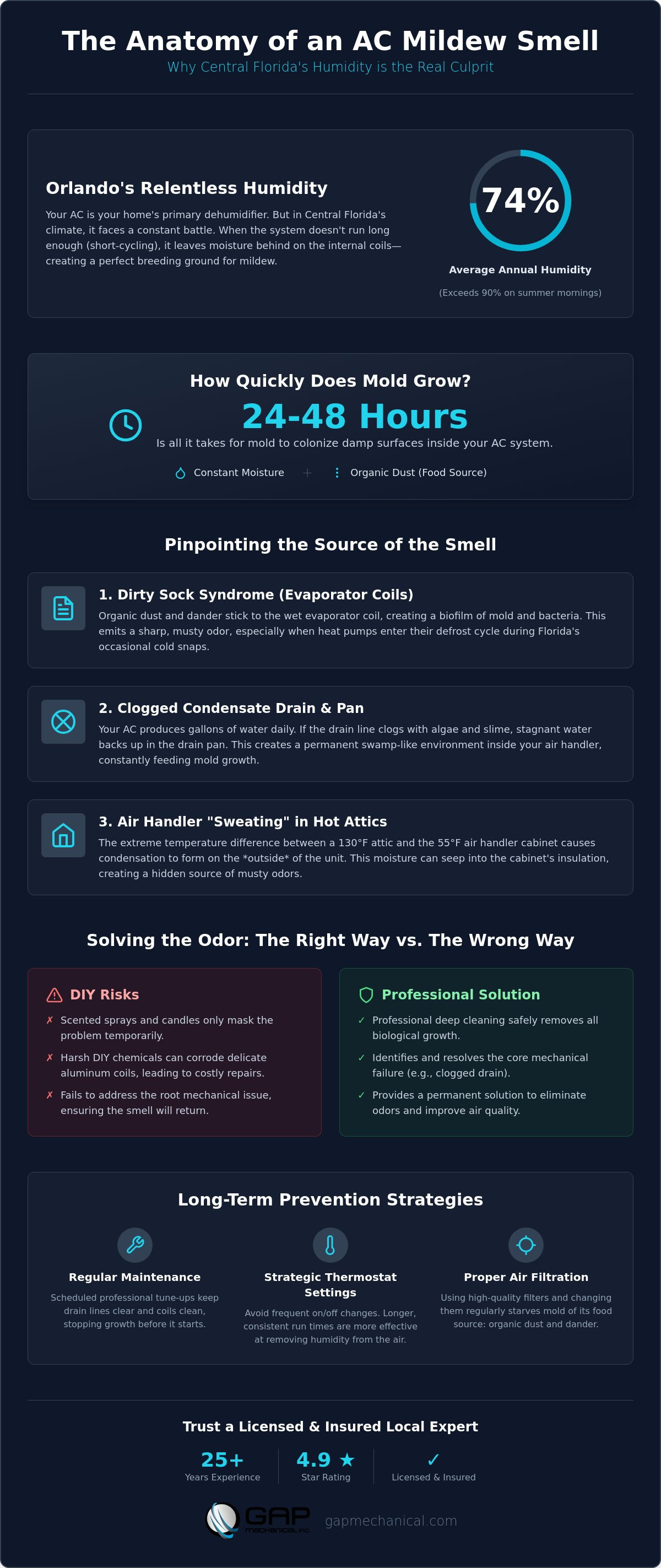
Mildew requires two things to thrive: a food source and consistent moisture. The organic dust that bypasses standard filters, consisting of skin cells and pet dander, provides the perfect nutrients. When this dust settles on a damp evaporator coil or inside a dark air handler, it creates a breeding ground. Understanding what indoor mold is helps clarify why standard fiberglass filters are often insufficient. These microscopic spores are small enough to pass through basic filtration. They settle in the damp, lightless interior of your unit where they can multiply undisturbed by UV light or airflow.
Orlando’s Climate: The Perfect Storm for Odors
Central Florida presents unique challenges during the spring and fall shoulder seasons. During these months, your AC may not run long enough to move air through the entire system. This leads to stagnant pockets of air where moisture accumulates on the coils. Additionally, many Orlando homes feature air handlers installed in unconditioned attics. This creates a thermal bridge effect. The extreme temperature difference between a 130 degree attic and a 55 degree cooling coil causes the unit's cabinet to sweat. This exterior condensation can seep into cabinet insulation, fueling the very odors you're trying to escape. Pinpointing the exact location of an odor is the first step toward a permanent fix. When your AC smells like mildew Orlando technicians typically inspect three specific areas: the evaporator coil, the condensate drain line, and the primary drain pan. These components are designed to handle moisture, but they also serve as the most common sites for biological accumulation. A musty scent is rarely an isolated event. It is usually a mechanical warning that your drainage system is failing to keep up with Central Florida’s heavy condensation loads. Stagnant water is the enemy of fresh indoor air. When moisture cannot exit the system, it creates a localized environment where biofilm, often called "slime," begins to coat internal surfaces. This buildup doesn't just stay in the pan. It can travel up the internal cabinet walls and into the insulation, making the smell nearly impossible to remove with simple over the counter sprays. Identifying the specific source of the growth is essential for ensuring the air moving through your home remains clean and safe.
What is Dirty Sock Syndrome?
Dirty Sock Syndrome occurs when mold and bacteria colonize the evaporator coils of your air conditioner. As the system pulls air from your home, organic matter like dust and dander sticks to the wet coil fins. This creates a thick biofilm that emits a sharp, "locker room" odor. This issue is particularly prevalent in the heat pump systems used throughout Central Florida. During the occasional cold snaps in Orlando, these systems switch into defrost cycles. The sudden shift in temperature releases the trapped odors into your ductwork all at once. Understanding the health effects of mold exposure is vital, as these spores are circulated directly into your living spaces every time the blower motor kicks on.
The Role of the Condensate Drain and Pan
Your air conditioner produces several gallons of water every day. This moisture must flow seamlessly through the condensate drain line to exit your home. However, the combination of high heat and standing water in Orlando leads to rapid "algae blooms" inside these pipes. This biological growth acts like a plug, causing water to back up into the drain pan. Stagnant water in a pan quickly turns into a breeding ground for odors. Beyond the smell, a clogged line can lead to property damage or trigger a system shut-off. If you suspect your drainage system is backing up, a professional AC repair can clear the blockage and treat the pan to prevent the slime from returning. Keeping these lines clear is essential for maintaining your system's efficiency and your home's air quality. Distinguishing between routine maintenance and a mechanical repair is vital for your system's longevity. While homeowners can manage basic upkeep, deep-seated biological growth requires a technician's specialized tools. When your AC smells like mildew Orlando humidity makes it tempting to reach for a quick fix. However, masking agents like scented sprays or candles only hide the symptom. These products often release volatile organic compounds that degrade your indoor air quality without touching the root cause. If the odor persists after basic maintenance, it is time to schedule a professional AC repair Orlando residents trust for long-term results. Quick fixes often cause more harm than good. A common mistake is pouring bleach into the drain pan or spraying harsh household cleaners onto the coils. Bleach is highly corrosive to the aluminum fins that make up your evaporator coil. Over time, these chemicals can eat through the metal, leading to significant refrigerant leaks. Professional intervention ensures that the cleaning process is effective without compromising the integrity of your HVAC equipment.
Safe Steps for Orlando Homeowners
Safe maintenance starts with your air filter. High-MERV filters trap the organic dander that feeds mildew, but they must be changed every 30 to 60 days in Florida. You should also clear any grass clippings or leaves from your outdoor condenser to maintain proper airflow. Finally, check the exterior exit point of your condensate drain line. If you see stagnant water or heavy algae, a wet-dry vac can often clear superficial blockages before they back up into your indoor air handler.
When Professional Intervention is Required
Deep cleaning goes beyond what a homeowner can see. Professionals use specialized, non-corrosive foams that penetrate deep into the evaporator coil fins to dissolve biofilm. A comprehensive service also includes a mechanical inspection of the blower motor and internal housing. We often recommend the installation of UV light systems as a permanent biological deterrent. These lights neutralize spores before they can colonize your system. With over 25 years of experience in Central Florida, we understand that a clean system is the only way to ensure a healthy home. Relying on a 4.9-star rated expert ensures the job is done right the first time. Prevention is the most effective tool for managing Central Florida odors. Once biological growth takes hold, it requires professional intervention to remove. By adopting a few simple habits, you can stop the cycle before it begins. One of the most common mistakes involves thermostat settings. While it's tempting to leave the fan in the "On" position for constant circulation, this often backfires. When the compressor shuts off, a fan set to "On" continues to blow air over the saturated evaporator coils. This evaporates the water back into your home instead of allowing it to drain, spiking indoor humidity levels and creating the very conditions where your AC smells like mildew Orlando residents find so frustrating. Always set your thermostat fan to "Auto." This ensures the blower motor only runs when the system is actively cooling and removing moisture. In a climate where humidity averages 74%, every minute of proper drainage counts. If you're unsure about your system's current configuration or its ability to handle moisture, there are specific questions to ask an HVAC contractor in Orlando during your next visit. These questions help you understand if your equipment is sized correctly for humidity removal or if a setting adjustment is needed to keep your air handler dry.
The Importance of Routine Maintenance
Routine maintenance is the first line of defense against "dirty sock syndrome." A bi-annual tune-up before the summer peak allows a technician to clear the drain pan and treat the coils before growth begins. This professional cleaning prevents the initial "seed" of mildew from taking root in the dark, damp corners of your unit. Beyond odor control, clean coils improve heat transfer. This leads to shorter, more efficient run times. Regular checks also ensure that your condensate drain line remains clear of the algae blooms common in our region, stopping stagnant water before it becomes a liability.
Humidity Control Upgrades for Central Florida
Mechanical upgrades offer long-term stability for homes prone to moisture issues. Whole-home dehumidifiers work alongside your AC to pull gallons of water from the air daily. This is especially helpful during the rainy season when temperatures are mild but humidity is extreme. Many modern smart thermostats also feature dedicated dehumidification modes. These systems can slow the blower fan to extract more moisture during a cooling cycle or "overcool" slightly to reach a target humidity percentage. These integrated solutions provide a level of comfort and air quality that standard portable units simply cannot match. Ensure your home stays fresh by scheduling a professional maintenance visit today. When your AC smells like mildew Orlando climate conditions are usually the primary driver. Only a local expert understands the specific mechanical vulnerabilities of systems operating in Central Florida's extreme humidity. GAP Mechanical brings 25+ years of experience to every service call. We've seen how the region's moisture impacts everything from residential heat pumps to complex commercial refrigeration units. This deep local history allows our technicians to identify the root cause of odors quickly and accurately. We don't just treat the symptom; we solve the mechanical failure that allowed the odor to develop. Choosing a licensed and insured contractor is essential for protecting your home or business. Our 4.9-star Google rating reflects a long standing commitment to providing permanent solutions rather than temporary masking agents. We prioritize technical discipline and transparency in every interaction. Whether you're managing a single family home in Winter Park or a commercial facility in Kissimmee, you deserve a contractor who understands the local building codes and environmental challenges unique to our region.
The GAP Mechanical Approach to Odor Remediation
Our diagnostic process goes beyond a surface level inspection. We utilize industry-standard tools to reach the dark, inaccessible areas of your air handler where mildew thrives. Our technicians use safe, professional-grade cleaning agents that effectively dissolve biofilm without damaging sensitive aluminum components. This methodical approach ensures that every trace of growth is removed from the evaporator coils and drain pans. We maintain a neighborly commitment to the Central Florida community, treating every system with the care and precision it requires to run reliably in our demanding climate.
Protecting Your asset and Health
Maintaining a clean system is a direct commitment to your property's value and your family's comfort. Removing biological buildup from your evaporator coils does more than just eliminate smells. It reduces the mechanical strain on your blower motor and compressor. This extends the operational lifespan of your most significant AC components and ensures the system maintains peak energy efficiency. A clean system also promotes better respiratory health by ensuring the air circulating through your home is free from circulating spores. Don't wait for a minor musty scent to evolve into a major mechanical failure or a costly system replacement. Taking action early prevents small issues from becoming significant repairs. Transitioning from a smelly AC to fresh home comfort starts with a thorough professional inspection. Trust the steady, experienced hands of a local guide to restore your indoor air quality and protect your HVAC asset. Contact us today to schedule your professional maintenance or repair service. Managing the intersection of extreme humidity and HVAC performance is a constant challenge in Orlando. As we've explored, a musty odor is a mechanical warning that moisture is trapped within your system. Whether the cause is a clogged condensate line or biological growth on your evaporator coils, ignoring the scent can lead to decreased efficiency and respiratory concerns. If your AC smells like mildew Orlando weather is the catalyst, but a specialized deep cleaning is the permanent solution. Masking the scent with sprays is a temporary fix that fails to address the root cause. Protecting your indoor air quality requires a combination of smart thermostat habits and expert intervention. By keeping your fan on "Auto" and scheduling bi-annual tune-ups, you can prevent biofilm from taking root. When a deep-seated odor persists, rely on a team that understands the unique challenges of the Florida climate. With over 25 years of Central Florida HVAC experience and a 4.9-star Google rating, our licensed and insured professionals are ready to help. Contact GAP Mechanical for Professional AC Odor Removal in Orlando to reclaim your comfort. You deserve a home that feels as clean as it looks.
Is it safe to breathe air from an AC that smells like mildew?
It is generally not recommended to ignore persistent odors, as they indicate active biological growth inside your system. Breathing in these spores can trigger allergic reactions or asthma symptoms in sensitive individuals. When your AC smells like mildew Orlando humidity has likely created a breeding ground that requires professional remediation. Addressing the source of the odor promptly protects both your respiratory health and the mechanical integrity of your cooling system.
Can I use bleach to clean my AC drain line in Orlando?
You should never use bleach to clear a condensate drain line. Bleach is highly corrosive and can damage the aluminum fins of your evaporator coil or the glue holding your PVC drain pipes together. Instead, use a specialized, non-corrosive drain cleaner or a simple vinegar solution. If the blockage is severe, a professional technician can clear the line using high-pressure tools that won't compromise your system's components.
How much does it typically consideration to have AC coils professionally cleaned?
The requirements for professional coil cleaning depend on the current condition of your unit and the severity of the biological growth. A licensed technician will perform a comprehensive diagnostic to see if the coils can be cleaned in place or if they require a more intensive service. This verification ensures that the cleaning process is thorough enough to eliminate odors permanently without damaging the delicate aluminum fins or other critical internal parts.
Why does my AC smell like mildew only when it first turns on?
This occurs because moisture remains on the evaporator coils after the previous cooling cycle concludes. In the dark, damp environment of the air handler, this stagnant water quickly develops a musty scent. When the blower motor restarts, it pushes a concentrated burst of this odor into your living space before the cooling process can remove the moisture. Regular maintenance ensures that the coils drain properly, preventing this water from sitting long enough to produce a smell.
Will a dirty air filter cause a mildew smell in my home?
A clogged or dirty air filter is a major contributor to indoor odors. Filters trap organic materials like skin cells and pet dander, which serve as a primary food source for mildew. When combined with the heavy moisture found in Orlando homes, these trapped particles begin to decay and emit a musty scent. Changing your high-MERV filter every 30 to 60 days is a simple way to maintain fresh indoor air and prevent growth.
What is the "Dirty Sock Syndrome" and is it common in Florida?
Dirty Sock Syndrome is the term for bacteria and mold accumulation on evaporator coils, resulting in a distinct, pungent odor. It is extremely common in Central Florida, particularly in homes with heat pumps. The syndrome often worsens during seasonal shifts when the system transitions between heating and cooling modes. Professional coil treatment is the most effective way to neutralize the bacteria and stop the sharp, locker room smell from recurring in your home.
How often should I have my AC serviced in Orlando to prevent odors?
We recommend professional maintenance twice per year to keep your system odor-free. A bi-annual schedule allows a technician to clear the condensate drain line before the heavy summer rains and inspect the coils for early signs of growth. This proactive approach is the best way to ensure that your AC smells like mildew Orlando humidity doesn't become a recurring problem for your family or your business's customers.
Can a mildew smell indicate a gas leak in my HVAC system?
A mildew smell is biological in nature and does not indicate a gas leak. Gas leaks are characterized by a sharp, sulfuric odor similar to rotten eggs. If you detect a sulfur smell, you should immediately evacuate the premises and contact your local gas company. Mildew odors, while unpleasant, are a mechanical issue related to moisture management and biological growth within the air handler or the condensate drainage system.