

Walk-In Cooler Not Cold Enough? Winter Park Checklist
Published September 27, 2026
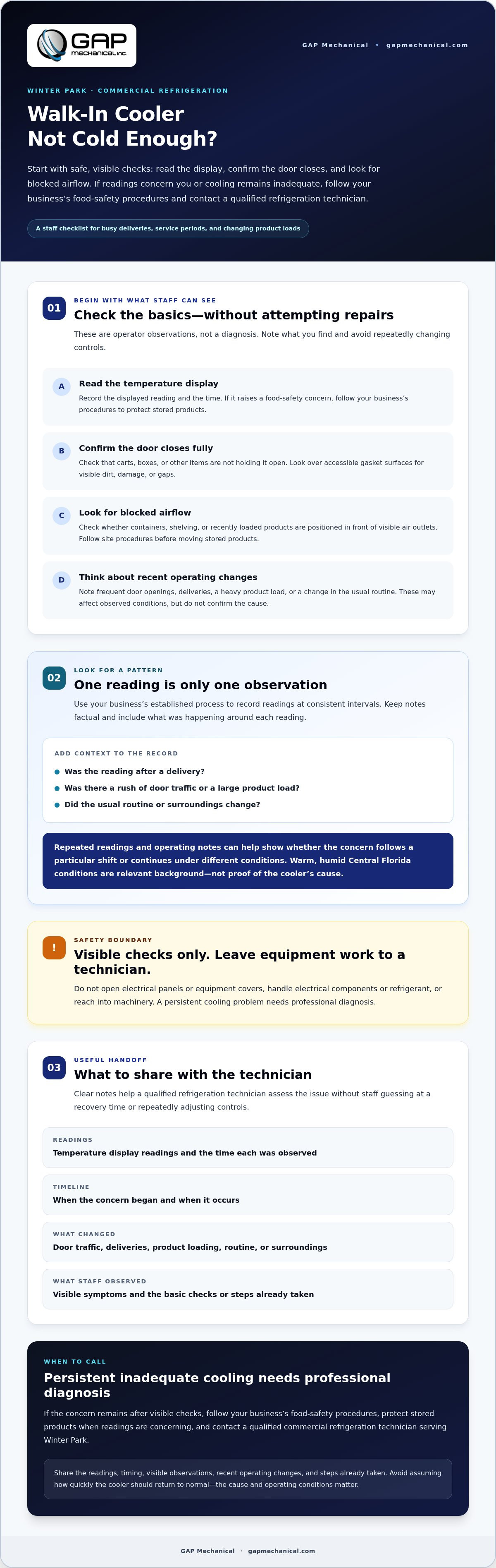
When troubleshooting a walk-in cooler that is not cold enough, check the display, confirm the door closes, look for blocked airflow, and note recent operating changes. If readings concern you, follow your business’s food-safety procedures to protect stored products. Contact a refrigeration technician if the issue persists.
For Winter Park businesses, frequent deliveries and busy service can mean more door traffic and changing product loads. Around Park Avenue or elsewhere in the city, record what staff observe rather than repeatedly adjusting controls. Keep checks to visible conditions. Don’t open equipment panels or handle electrical components or refrigerant.
This checklist helps staff distinguish safe operating observations from problems that need professional diagnosis. Note temperature readings, when the concern occurs, and any unusual signs. Share those details with a technician so they can assess the cooler and recommend next steps.
Key Takeaways
- Start with safe, visible checks: read the display, confirm the door closes, and make sure stored items aren’t blocking airflow.
- During troubleshooting a walk-in cooler that is not cold enough, follow your business’s food-safety procedures and protect products if readings are concerning.
- Consider whether frequent door openings, incoming deliveries, or a heavy product load may be affecting cooler conditions.
- Record temperature readings, when the issue began, visible symptoms, recent changes, and steps already taken before contacting a technician.
- If basic checks don’t resolve persistent inadequate cooling, contact a qualified commercial refrigeration technician serving Winter Park.
Troubleshooting a walk-in cooler that is not cold enough: what should you check first?
Check the temperature display, confirm the door closes fully, look for visible airflow obstructions, and consider recent changes in use or loading. These are operator checks, not repairs. If readings raise a food-safety concern, follow your business’s procedures to protect stored products and record what you observe.
For safe troubleshooting, stay with what you can see and access during normal operation. Don’t open electrical panels, handle refrigerant, remove equipment covers, or reach into machinery. A basic understanding of how refrigeration works can explain why airflow matters, but finding the cause of a persistent cooling problem requires a qualified technician.
An operator check records visible conditions and recent changes. A repair diagnosis tests the refrigeration system and belongs to a qualified technician.
Is the cooler door closing and sealing properly?
Check that the door shuts completely after each use and that carts, boxes, or other items aren’t keeping it ajar. Look over accessible gasket surfaces for visible dirt, damage, or gaps. Don’t dismantle or adjust door hardware as part of this initial check.
Consider how often the door is being opened, too. A Winter Park kitchen receiving frequent deliveries or handling a busy service period may have more door traffic. Note whether the concern began alongside a change in door use, and share that timing with the technician.
Can stored products or blocked airflow affect cooling?
Look for containers, shelving, or recently loaded products positioned in front of visible air outlets. Keep airflow paths clear where practical, but don’t move food into conditions that conflict with your business’s handling procedures. If product placement needs to change, follow site procedures and use approved storage locations.
A large delivery or a different loading pattern can change conditions inside the cooler. Record what arrived, when it was loaded, and where it was placed. That context can help a technician assess whether the concern followed an operating change or points to a mechanical problem.
Also note the display reading and any recent changes to normal operation, such as a different door routine or loading schedule. Avoid repeatedly changing controls to chase a reading. If the display remains concerning after these visible checks, continue following your site’s food-safety procedures and arrange professional refrigeration diagnosis.
How operating conditions affect walk-in cooler temperature
Repeated door openings, heavy product loads, and blocked airflow can affect the conditions staff observe inside a walk-in cooler. They’re useful context when troubleshooting a walk-in cooler that is not cold enough, but they don’t prove the cause. Record readings and operating changes rather than repeatedly adjusting controls. In Winter Park, a delivery arriving during a busy service period may mean more door traffic and a different loading pattern at the same time.
A pattern of readings tells more than one isolated temperature check. Consistent records can show whether a concern appears after a particular operating shift or continues under different conditions. That information helps a technician assess the issue without staff guessing at a recovery time, which depends on the cause and circumstances.
What should staff observe during normal operation?
Use the business’s established process to note the displayed temperature and time at consistent intervals. Keep the record factual and include what was happening around each reading. For example, note whether it followed a delivery, a rush of door traffic, a large product load, or a change in the usual routine.
Avoid repeatedly changing the controls to make a reading look better. Doing so can make it harder to understand how the cooler was operating. Follow site food-safety procedures if readings are concerning, and don’t assume the unit will return to normal within a particular timeframe. The actual cause and operating conditions matter.
Could the cooler’s location or surroundings matter?
Note unusual heat exposure, changes in the surrounding room, or nearby work that may have altered the cooler’s environment. Central Florida’s warm, humid conditions are relevant background for Winter Park businesses, but they don’t establish that weather or room conditions caused a cooling problem. Keep observations separate from conclusions about equipment failure.
The U.S. Department of Energy provides guidance on walk-in coolers and freezers for general technical context. For a service discussion, combine relevant room observations with time-stamped readings and notes about operations. This gives a refrigeration technician a clearer picture than a single report that the cooler feels warm.
If the logged pattern remains concerning, a commercial refrigeration technician can assess whether operating conditions or an equipment fault is involved. Winter Park businesses can use GAP Mechanical’s contact page to discuss commercial refrigeration service.
Which walk-in cooler problems need a technician rather than another adjustment?
Call a qualified refrigeration technician if the cooler remains too warm after basic, visible checks, the problem returns, or staff notice unusual operating conditions. A door or airflow issue may be visible, but persistent inadequate cooling can involve controls or refrigeration components that require professional diagnosis.
Refrigerant and electrical diagnosis belong to qualified technicians, not kitchen staff. Don’t test wiring, bypass controls, handle refrigerant, remove equipment covers, or dismantle components. These steps can expose employees to hazards and may complicate diagnosis. The same safety standard applies across all cooling equipment; whether maintaining commercial walk-ins or home kitchen appliances with the help of services like HomeFix, internal component repairs should always be left to trained professionals.
What signs suggest a mechanical or control problem?
Report what staff can safely observe without deciding what caused it. Useful details include:
- Unusual sounds that weren’t part of the cooler’s normal operation.
- Visible ice buildup, noting where it appears without scraping or removing it.
- Cooling that seems to start and stop abnormally or more often than usual.
- Fans that appear not to operate during normal observation, if visible without reaching into the equipment or removing a guard.
These signs can help direct an inspection, but they don’t identify a failed part. A technician must determine whether the issue involves a component, control, or refrigerant system. For added background, see this overview of troubleshooting common walk-in cooler problems. Use it as general information, not as a reason to open or service equipment yourself.
When should a business stop troubleshooting?
Stop making adjustments and arrange qualified help if readings remain concerning, the issue returns after simple checks, or staff spot an unusual condition. Keep employees away from exposed electrical parts, moving components, and service panels. Follow your business’s food-safety procedures while the concern is addressed.
When troubleshooting a walk-in cooler that is not cold enough, the safe boundary is clear: staff can report observations, but they shouldn’t attempt repairs. Share recorded symptoms and operating details with the technician so the service visit can focus on diagnosis. Winter Park businesses can review commercial refrigeration service information from GAP Mechanical when professional help is needed.
What information should you gather before requesting walk-in cooler service?
Before requesting service, gather temperature readings, the times they were taken, when the concern began, recent operating changes, visible symptoms, and steps staff have already tried. Share what the cooler stores and any operating constraints, such as delivery schedules or limited access to alternate storage. Clear notes help a technician understand the situation before diagnosing the equipment.
Which observations help narrow down the issue?
Keep a concise record. Include facts, not guesses about what has failed.
- Write down displayed readings and the time of each reading, following your site’s established process.
- Note whether the problem is continuous or intermittent, and when staff first noticed it.
- Record relevant changes, such as deliveries, extended door openings, cleaning, or work near the cooler.
- Describe visible ice, alarms, display messages, or unusual sounds without treating them as proof of a specific fault.
- List the actions staff took, including any control adjustments, and when they were made.
This information is especially useful when troubleshooting a walk-in cooler that is not cold enough because it helps distinguish a recurring pattern from a one-time observation. Don’t open equipment or attempt repairs to collect more details. Report only what staff can safely see during normal operation.
How can staff protect products while waiting?
Follow your business’s established food-safety and product-disposition procedures if readings are concerning. Preserve relevant temperature records, and limit unnecessary door openings while still allowing safe, normal access and work. Don’t apply a universal temperature threshold based on general advice. Confirm the appropriate guidance for your business and the products stored.
Tell the technician how the cooler is used, what products it holds, and any operational constraints that may affect inspection or service. For example, explain whether staff need to coordinate around receiving or service periods. These details help set expectations, but they don’t guarantee a repair timeline or outcome before a professional diagnosis.
Once your notes are ready, share them when arranging service. GAP Mechanical offers commercial refrigeration service in Central Florida. Contact GAP Mechanical about walk-in cooler service to discuss the issue and provide the information you’ve gathered.
When should a Winter Park business call for walk-in cooler repair?
Contact a commercial refrigeration professional when basic checks don’t resolve the concern, the cooling problem returns, or the cooler’s readings remain concerning. Repeatedly changing controls won’t identify an underlying fault. A qualified technician can assess the equipment and determine what steps are appropriate.
For businesses in Winter Park, Orlando, and Winter Haven, dependable cooler operation supports daily food storage and service. GAP Mechanical provides commercial refrigeration service throughout Central Florida.
What should you expect from a professional diagnosis?
A technician will review the reported symptoms and assess the equipment before recommending next steps. The findings determine whether further service is needed. The specific repair, timing, and outcome can’t be confirmed before diagnosis.
Share your recorded readings and operating history. Include when the issue began, whether it comes and goes, and any recent changes in door traffic, deliveries, or loading. You can review GAP Mechanical’s commercial HVAC and refrigeration information to learn more about its commercial services.
How can businesses reduce repeat cooling disruptions?
Consistent staff practices can help avoid preventable operating issues, though they can’t rule out equipment faults. Make door closure part of normal staff routines, keep visible airflow paths clear, and follow the equipment-specific maintenance guidance for your cooler.
If a cooling concern returns, document when it happens and what the cooler was doing at the time. That history can help a technician assess recurring patterns rather than relying on a single observation. During troubleshooting, keep staff checks to safe, visible observations. Leave equipment diagnosis and repairs to qualified professionals.
Winter Park businesses with unresolved cooling concerns can review GAP Mechanical’s commercial refrigeration information and contact the company to discuss service in Central Florida.
Keep Your Winter Park Cooler on Track
Start with checks staff can safely make, follow your business’s product-handling procedures, and keep a clear record of readings and operating changes. If the concern persists or returns, stop adjusting controls and arrange a professional diagnosis. That’s the safest next step when troubleshooting a walk-in cooler that is not cold enough.
GAP Mechanical offers commercial refrigeration service in Central Florida, including Orlando, Winter Park, and Winter Haven. Clear notes about symptoms, timing, and cooler use can help make the service conversation more productive.
Contact GAP Mechanical about commercial refrigeration to discuss the issue and arrange the next step.
Frequently Asked Questions
Why is my walk-in cooler running but not getting cold enough?
A walk-in cooler may run without cooling adequately because of frequent door openings, blocked airflow, heavy product loading, changing operating conditions, or a mechanical issue. Those observations don’t confirm the cause. Check only safe, visible conditions, record readings and times, and follow your business’s procedures to protect stored products. If the concern continues after basic checks, contact a commercial refrigeration technician for diagnosis.
Can a dirty or damaged door gasket make a walk-in cooler too warm?
Yes. If a door gasket is dirty, damaged, or obstructed, the door may not close or seal properly, allowing unwanted air exchange. A visible gasket issue may not be the only reason the cooler is too warm. Check accessible areas for dirt, damage, or anything blocking closure, then document what you see. If the door or cooling problem remains unresolved, arrange professional refrigeration service.
What should I do if my walk-in cooler temperature keeps rising?
Follow your business’s food-safety and product-handling procedures, record the displayed reading and time, and limit unnecessary door openings while maintaining safe access. Contact a qualified commercial refrigeration technician if readings remain concerning. Don’t use a universal temperature threshold to make product decisions; follow applicable guidance and internal procedures. Keep away from electrical panels and refrigerant components, and leave equipment repairs to a qualified professional.
When should I call a technician for a walk-in cooler that is not cold enough?
Call when safe operating checks don’t resolve the concern, readings remain troubling, or unusual sounds, visible ice, or recurring symptoms appear. Troubleshooting a walk-in cooler that is not cold enough shouldn’t involve testing electrical components or handling refrigerant. Those diagnoses require a qualified technician. GAP Mechanical offers commercial refrigeration service for businesses in Central Florida, including Orlando, Winter Park, and Winter Haven. Contact the company to discuss the issue.
Frequently Asked Questions
Is the cooler door closing and sealing properly?
Check that the door shuts completely after each use and that carts, boxes, or other items aren’t keeping it ajar. Look over accessible gasket surfaces for visible dirt, damage, or gaps. Don’t dismantle or adjust door hardware as part of this initial check. Consider how often the door is being opened, too. A Winter Park kitchen receiving frequent deliveries or handling a busy service period may have more door traffic. Note whether the concern began alongside a change in door use, and share that timing with the technician.
Can stored products or blocked airflow affect cooling?
Look for containers, shelving, or recently loaded products positioned in front of visible air outlets. Keep airflow paths clear where practical, but don’t move food into conditions that conflict with your business’s handling procedures. If product placement needs to change, follow site procedures and use approved storage locations. A large delivery or a different loading pattern can change conditions inside the cooler. Record what arrived, when it was loaded, and where it was placed. That context can help a technician assess whether the concern followed an operating change or points to a mechanical problem. Also note the display reading and any recent changes to normal operation, such as a different door routine or loading schedule. Avoid repeatedly changing controls to chase a reading. If the display remains concerning after these visible checks, continue following your site’s food-safety procedures and arrange professional refrigeration diagnosis. Repeated door openings, heavy product loads, and blocked airflow can affect the conditions staff observe inside a walk-in cooler. They’re useful context when troubleshooting a walk-in cooler that is not cold enough, but they don’t prove the cause. Record readings and operating changes rather than repeatedly adjusting controls. In Winter Park, a delivery arriving during a busy service period may mean more door traffic and a different loading pattern at the same time. A pattern of readings tells more than one isolated temperature check. Consistent records can show whether a concern appears after a particular operating shift or continues under different conditions. That information helps a technician assess the issue without staff guessing at a recovery time, which depends on the cause and circumstances.
What should staff observe during normal operation?
Use the business’s established process to note the displayed temperature and time at consistent intervals. Keep the record factual and include what was happening around each reading. For example, note whether it followed a delivery, a rush of door traffic, a large product load, or a change in the usual routine. Avoid repeatedly changing the controls to make a reading look better. Doing so can make it harder to understand how the cooler was operating. Follow site food-safety procedures if readings are concerning, and don’t assume the unit will return to normal within a particular timeframe. The actual cause and operating conditions matter.
Could the cooler’s location or surroundings matter?
Note unusual heat exposure, changes in the surrounding room, or nearby work that may have altered the cooler’s environment. Central Florida’s warm, humid conditions are relevant background for Winter Park businesses, but they don’t establish that weather or room conditions caused a cooling problem. Keep observations separate from conclusions about equipment failure. The U.S. Department of Energy provides guidance on walk-in coolers and freezers for general technical context. For a service discussion, combine relevant room observations with time-stamped readings and notes about operations. This gives a refrigeration technician a clearer picture than a single report that the cooler feels warm. If the logged pattern remains concerning, a commercial refrigeration technician can assess whether operating conditions or an equipment fault is involved. Winter Park businesses can use GAP Mechanical’s contact page to discuss commercial refrigeration service. Call a qualified refrigeration technician if the cooler remains too warm after basic, visible checks, the problem returns, or staff notice unusual operating conditions. A door or airflow issue may be visible, but persistent inadequate cooling can involve controls or refrigeration components that require professional diagnosis. Refrigerant and electrical diagnosis belong to qualified technicians, not kitchen staff. Don’t test wiring, bypass controls, handle refrigerant, remove equipment covers, or dismantle components. These steps can expose employees to hazards and may complicate diagnosis.
What signs suggest a mechanical or control problem?
Report what staff can safely observe without deciding what caused it. Useful details include: These signs can help direct an inspection, but they don’t identify a failed part. A technician must determine whether the issue involves a component, control, or refrigerant system. For added background, see this overview of troubleshooting common walk-in cooler problems. Use it as general information, not as a reason to open or service equipment yourself.
When should a business stop troubleshooting?
Stop making adjustments and arrange qualified help if readings remain concerning, the issue returns after simple checks, or staff spot an unusual condition. Keep employees away from exposed electrical parts, moving components, and service panels. Follow your business’s food-safety procedures while the concern is addressed. When troubleshooting a walk-in cooler that is not cold enough, the safe boundary is clear: staff can report observations, but they shouldn’t attempt repairs. Share recorded symptoms and operating details with the technician so the service visit can focus on diagnosis. Winter Park businesses can review commercial refrigeration service information from GAP Mechanical when professional help is needed. Before requesting service, gather temperature readings, the times they were taken, when the concern began, recent operating changes, visible symptoms, and steps staff have already tried. Share what the cooler stores and any operating constraints, such as delivery schedules or limited access to alternate storage. Clear notes help a technician understand the situation before diagnosing the equipment.
Which observations help narrow down the issue?
Keep a concise record. Include facts, not guesses about what has failed. This information is especially useful when troubleshooting a walk-in cooler that is not cold enough because it helps distinguish a recurring pattern from a one-time observation. Don’t open equipment or attempt repairs to collect more details. Report only what staff can safely see during normal operation.
How can staff protect products while waiting?
Follow your business’s established food-safety and product-disposition procedures if readings are concerning. Preserve relevant temperature records, and limit unnecessary door openings while still allowing safe, normal access and work. Don’t apply a universal temperature threshold based on general advice. Confirm the appropriate guidance for your business and the products stored. Tell the technician how the cooler is used, what products it holds, and any operational constraints that may affect inspection or service. For example, explain whether staff need to coordinate around receiving or service periods. These details help set expectations, but they don’t guarantee a repair timeline or outcome before a professional diagnosis. Once your notes are ready, share them when arranging service. GAP Mechanical offers commercial refrigeration service in Central Florida. Contact GAP Mechanical about walk-in cooler service to discuss the issue and provide the information you’ve gathered. Contact a commercial refrigeration professional when basic checks don’t resolve the concern, the cooling problem returns, or the cooler’s readings remain concerning. Repeatedly changing controls won’t identify an underlying fault. A qualified technician can assess the equipment and determine what steps are appropriate. For businesses in Winter Park, Orlando, and Winter Haven, dependable cooler operation supports daily food storage and service. GAP Mechanical provides commercial refrigeration service throughout Central Florida.
What should you expect from a professional diagnosis?
A technician will review the reported symptoms and assess the equipment before recommending next steps. The findings determine whether further service is needed. The specific repair, timing, and outcome can’t be confirmed before diagnosis. Share your recorded readings and operating history. Include when the issue began, whether it comes and goes, and any recent changes in door traffic, deliveries, or loading. You can review GAP Mechanical’s commercial HVAC and refrigeration information to learn more about its commercial services.
How can businesses reduce repeat cooling disruptions?
Consistent staff practices can help avoid preventable operating issues, though they can’t rule out equipment faults. Make door closure part of normal staff routines, keep visible airflow paths clear, and follow the equipment-specific maintenance guidance for your cooler. If a cooling concern returns, document when it happens and what the cooler was doing at the time. That history can help a technician assess recurring patterns rather than relying on a single observation. During troubleshooting, keep staff checks to safe, visible observations. Leave equipment diagnosis and repairs to qualified professionals. Winter Park businesses with unresolved cooling concerns can review GAP Mechanical’s commercial refrigeration information and contact the company to discuss service in Central Florida. Start with checks staff can safely make, follow your business’s product-handling procedures, and keep a clear record of readings and operating changes. If the concern persists or returns, stop adjusting controls and arrange a professional diagnosis. That’s the safest next step when troubleshooting a walk-in cooler that is not cold enough. GAP Mechanical offers commercial refrigeration service in Central Florida, including Orlando, Winter Park, and Winter Haven. Clear notes about symptoms, timing, and cooler use can help make the service conversation more productive. Contact GAP Mechanical about commercial refrigeration to discuss the issue and arrange the next step.
Why is my walk-in cooler running but not getting cold enough?
A walk-in cooler may run without cooling adequately because of frequent door openings, blocked airflow, heavy product loading, changing operating conditions, or a mechanical issue. Those observations don’t confirm the cause. Check only safe, visible conditions, record readings and times, and follow your business’s procedures to protect stored products. If the concern continues after basic checks, contact a commercial refrigeration technician for diagnosis.
Can a dirty or damaged door gasket make a walk-in cooler too warm?
Yes. If a door gasket is dirty, damaged, or obstructed, the door may not close or seal properly, allowing unwanted air exchange. A visible gasket issue may not be the only reason the cooler is too warm. Check accessible areas for dirt, damage, or anything blocking closure, then document what you see. If the door or cooling problem remains unresolved, arrange professional refrigeration service.
What should I do if my walk-in cooler temperature keeps rising?
Follow your business’s food-safety and product-handling procedures, record the displayed reading and time, and limit unnecessary door openings while maintaining safe access. Contact a qualified commercial refrigeration technician if readings remain concerning. Don’t use a universal temperature threshold to make product decisions; follow applicable guidance and internal procedures. Keep away from electrical panels and refrigerant components, and leave equipment repairs to a qualified professional.
When should I call a technician for a walk-in cooler that is not cold enough?
Call when safe operating checks don’t resolve the concern, readings remain troubling, or unusual sounds, visible ice, or recurring symptoms appear. Troubleshooting a walk-in cooler that is not cold enough shouldn’t involve testing electrical components or handling refrigerant. Those diagnoses require a qualified technician. GAP Mechanical offers commercial refrigeration service for businesses in Central Florida, including Orlando, Winter Park, and Winter Haven. Contact the company to discuss the issue.