

Orlando Heat Pump Not Heating in Florida Winter: What to Do
Published September 29, 2026
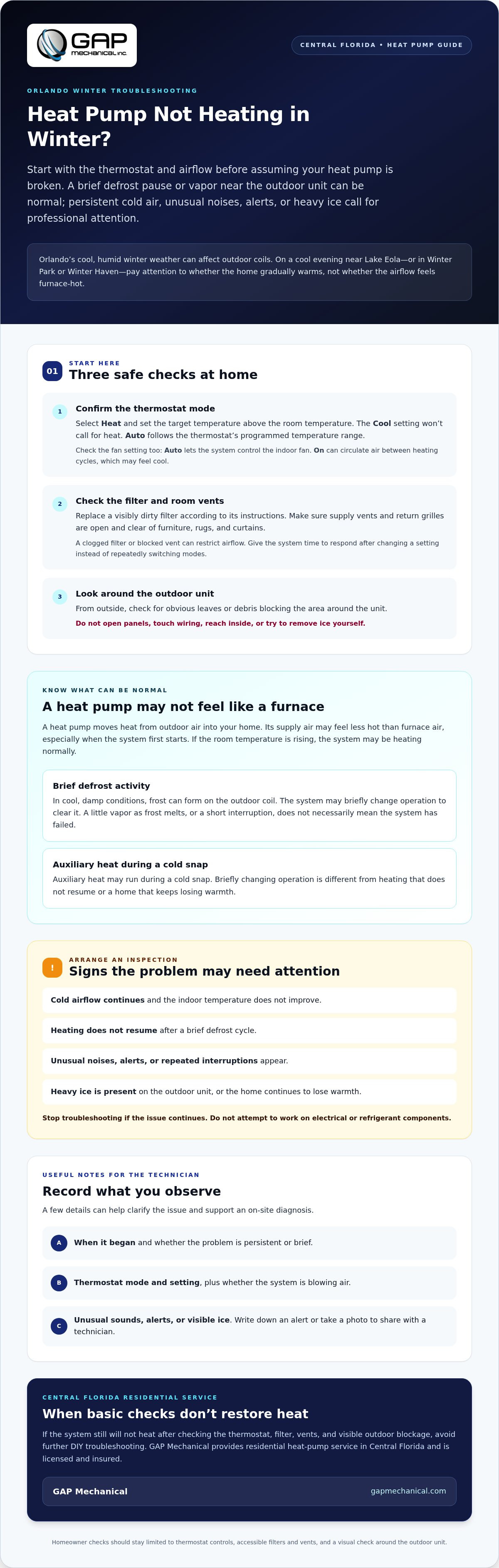
If you’re searching “heat pump not heating in winter Florida,” start with a few simple checks before assuming your Orlando heat pump is broken. Confirm the thermostat is set to Heat, the target temperature is above the room temperature, and the air filter isn’t restricting airflow. On a cool evening near Lake Eola, a brief pause or a little steam outdoors can happen during defrost. Auxiliary heat may also run during a cold snap.
Weak or cool airflow can be concerning, but it doesn’t always mean the system needs repair. Orlando’s mild, humid winter weather can still contribute to frozen outdoor coils, while restricted airflow or a defrost problem may need professional attention. This guide covers safe checks, normal heat-pump behavior, and warning signs that call for an HVAC professional.
Before requesting service, note the thermostat setting, whether the system is blowing air, and any unusual sounds or ice on the outdoor unit. These observations can help clarify what to do next. Don’t try to troubleshoot electrical or refrigerant components yourself.
Key Takeaways
- If your heat pump is not heating in a Florida winter, start with basic thermostat and airflow checks before assuming the equipment has failed.
- Compare the system’s behavior with normal heat-pump operation to decide whether persistent symptoms need inspection.
- Stop troubleshooting if the issue continues or involves unusual noises, alerts, or heavy ice. Note what you observe for the technician.
- Recording when the problem began and the system’s settings can help an HVAC professional diagnose the issue on-site.
- GAP Mechanical provides residential heat-pump service in Central Florida and is licensed and insured.
Why is your heat pump not heating during a Florida winter?
Check the thermostat and airflow before assuming the equipment has failed. If you’re searching “heat pump not heating in winter Florida,” confirm the system is set to Heat, the target temperature is above the room temperature, and the filter and vents aren’t restricting airflow. Orlando, Winter Park, and Winter Haven can all have cool winter nights, so a system that can’t keep your home comfortable deserves attention.
A heat pump moves heat from outdoor air into your home rather than generating heat the way many furnaces do. An air-source heat pump can provide warmth when the outdoor air feels cool, but the air from its vents may not feel as hot as air from a furnace. On a chilly Winter Park evening, focus on whether the home gradually warms, not whether the airflow feels furnace-hot.
What should you check first when a heat pump blows cool air?
Start at the thermostat. Set it to Heat and raise the target temperature a few degrees above the current room reading. Check the fan setting, too. Auto lets the system control the indoor fan, while On can keep it running between heating cycles and circulate air that feels cool.
Distinguish mildly cool-feeling airflow from air that seems unheated. Heat-pump supply air can feel less warm than expected, especially when the system first starts. If the room temperature is rising, the system may be heating normally. If the air stays cold and the indoor temperature doesn’t improve, check that return grilles and supply vents aren’t blocked by furniture or other items.
Can a heat pump briefly change its operation in cold weather?
Yes. In cool, damp conditions, frost can form on the outdoor coil. The heat pump may briefly enter a defrost cycle to clear it, temporarily changing how it operates. You might see vapor near the outdoor unit as frost melts. A short interruption or visible vapor alone doesn’t necessarily mean the system has failed.
Notice what happens after the cycle. Heating should resume. Persistent cold airflow, repeated unusual interruptions, or a home that continues to lose warmth are reasons to arrange an inspection. Don’t try to remove ice or open equipment panels yourself.
Which safe checks can help restore heat at home?
If your heat pump still isn’t warming the house, work through a few simple checks before assuming a repair is needed. In Orlando, Winter Park, or Winter Haven, a thermostat setting, dirty filter, blocked vent, or visible debris around the outdoor unit may affect operation. Limit your checks to controls and areas you can reach safely.
How do thermostat settings affect heat-pump heating?
Choose Heat to request warmth. Cool won’t call for heating, while Auto follows the thermostat’s programmed temperature range and may change between heating and cooling as needed. For a clear test, select Heat and set the target temperature above the room temperature.
After changing a setting, give the system time to respond instead of repeatedly switching modes or adjusting the target. For a plain-language overview of how a heat pump works, Penn State Extension explains the basic process of moving heat. If the thermostat displays an alert or error message, write it down or take a photo to share with a technician.
What airflow checks are safe for homeowners?
Follow these steps, and stop if a check requires opening equipment or handling electrical parts.
- Inspect the filter. If it’s visibly dirty, replace it according to the filter and system instructions. A clogged filter can restrict airflow through the system.
- Check vents. Make sure supply vents, which deliver air into rooms, and return grilles, which draw air back to the system, are open and unobstructed. Move furniture, rugs, or curtains that cover them.
- Look around the outdoor unit. From outside, check for obvious leaves or other debris blocking the area. Don’t open panels, reach inside, touch wiring, or try to remove ice yourself.
These steps may resolve a simple airflow or setting issue, but they won’t identify every mechanical fault. If the system still won’t heat after you’ve checked the controls, filter, vents, and visible outdoor blockage, avoid further DIY troubleshooting. You can contact an HVAC professional for guidance on arranging a diagnosis.
How can you tell normal heat-pump operation from a problem?
Brief changes in airflow or outdoor-unit operation during a Florida cold snap can be part of normal defrost operation. In contrast, inadequate heat that persists, repeated interruptions, unusual sounds, or a thermostat alert that won’t clear shouldn’t be dismissed as routine. If you’re wondering whether “heat pump not heating in winter Florida” points to a fault, check whether the system resumes heating and the home becomes more comfortable.
| Possible normal behavior | Signs that need inspection |
|---|---|
| Airflow or outdoor-unit operation changes briefly during defrost, then normal heating resumes. | Cool air continues and the indoor temperature doesn’t recover. |
| Water or visible vapor appears near the outdoor unit as frost clears. | Unusual ice buildup remains, or frost appears to keep accumulating. |
| The system pauses or changes sound briefly as its operation shifts. | The system repeatedly shuts down, makes unusual noises, or displays an alert that persists. |
What heat-pump behavior may be normal during a Florida cold snap?
During defrost, a heat pump temporarily changes how it operates to clear frost from its outdoor coil. You may notice a brief change in airflow, a pause in heating, or vapor near the outdoor unit. The key is what happens afterward: heating should return. Don’t assume unusual ice buildup or a prolonged loss of heat is normal, even during a cool, damp Orlando night.
Which symptoms mean it is time to stop troubleshooting?
Stop relying on basic checks if the home stays cold, the system keeps interrupting operation, or you hear new or concerning sounds. A thermostat alert that remains after the simple checks in the previous section is another reason to arrange an inspection. A symptom alone can’t confirm a refrigerant, compressor, or electrical problem. Those components need professional diagnosis.
- Persistent cool airflow or no improvement in indoor comfort.
- Repeated shutdowns or unusual noises.
- Unusual ice buildup or a continuing thermostat alert.
If a breaker trips, don’t keep resetting it. Leave it off and contact an HVAC professional rather than risking further damage or an electrical hazard. Carrier’s heat-pump troubleshooting checklist can help you review basic homeowner checks, but it can’t replace an inspection. When safe checks don’t restore dependable heat, professional diagnosis is the sensible next step.
What should you do if your heat pump still will not heat?
If the safe checks haven’t restored dependable heat, stop troubleshooting and arrange a professional diagnosis. Note what the system is doing instead of opening equipment or attempting repairs. For homeowners in Orlando, a clear record of symptoms can help an HVAC technician understand what happens on a cool night and what you’ve already checked.
GAP Mechanical provides residential HVAC service in Central Florida, including heat-pump service. You can review its residential HVAC service information to learn more about the services offered.
What information should you share with an HVAC technician?
Describe what you observe, not what you think has failed. A symptom can guide an inspection, but it can’t confirm the cause on its own. Before requesting service, note:
- Thermostat settings: The selected mode, target temperature, room temperature if shown, and any alerts or error messages.
- System behavior: Whether the heat pump runs continuously, cycles off repeatedly, or doesn’t start.
- Airflow: Whether air from the vents feels cool, seems weak, or is absent.
- Sounds and outdoor observations: Any new or unusual noises, visible ice, or other changes around the outdoor unit. Don’t touch wiring or open panels to investigate.
- Recent changes: When the problem began, whether it followed a thermostat adjustment, and when you last changed the filter.
When is a professional heat-pump inspection appropriate?
Request an inspection if basic checks haven’t restored heat, cold airflow continues, the system repeatedly stops, or an alert remains on the thermostat. Don’t repeatedly reset a tripped breaker or try to access electrical or refrigerant components. Those steps can create safety risks and won’t identify the underlying issue.
Before the visit, prepare questions about the diagnostic process and what the technician finds. GAP Mechanical is licensed and insured in Florida. If your heat pump still won’t provide dependable heat, contact GAP Mechanical about heat-pump service to discuss the next step.
How can Central Florida homeowners get dependable heat-pump help?
If basic checks haven’t restored reliable heat, the next step is an on-site assessment, not a diagnosis based on symptoms alone. A technician can evaluate how the system is operating and consider the details you observed. For homeowners in Orlando, Winter Park, and Winter Haven asking what to do about a “heat pump not heating in winter Florida,” an assessment can replace guesswork with a clearer understanding of the problem.
GAP Mechanical provides residential HVAC service in Central Florida, including heat-pump service. The service visit should focus on the reported issue and the system’s condition, without assuming in advance that a particular component has failed or that replacement is necessary.
What happens after you request heat-pump service?
Be ready to explain when the trouble began and what the system has done since. A technician can assess the reported symptoms and observe the system’s operation. Your notes provide useful context, especially if the problem comes and goes or the thermostat displays an alert.
How should you decide between repair and replacement?
Let the inspection and the system’s condition guide that decision. Persistent cool airflow doesn’t by itself establish whether repair or replacement is appropriate. Ask the technician to explain what they found, which options they recommend, and why. You can then consider the information and make an informed decision.
If replacement becomes part of the discussion, keep that decision separate from diagnosing the current heating issue. For residential HVAC assistance, contact GAP Mechanical to discuss the next step. Keep your notes and thermostat alerts handy so you can clearly describe what’s happening.
Take the next step toward reliable heat
If your heat pump isn’t keeping your Orlando home comfortable, start with the safe basics: confirm the thermostat settings and check the filter and airflow. A brief change during defrost can be normal, but ongoing cool air, repeated shutdowns, unusual noises, or persistent alerts call for professional diagnosis. These clues can help you decide whether a simple setting may be involved or whether it’s time to stop troubleshooting.
For a heat pump not heating in winter Florida concern, note when the issue began, what the thermostat displays, and how the system behaves. Share those observations with the technician instead of trying to diagnose internal components yourself.
GAP Mechanical has served Central Florida since 2003. If safe checks haven’t restored dependable heat, contact GAP Mechanical for residential HVAC help.
Frequently Asked Questions
Why is my heat pump blowing cold air in heat mode?
First, confirm the thermostat is set to Heat and its target temperature is above the room temperature. Airflow may briefly change during normal operation, including a defrost cycle. For the search “heat pump not heating in winter Florida,” the key question is whether the cool air continues. If the home doesn’t warm or the system repeatedly stops, don’t open equipment panels. Arrange a professional diagnosis.
Is it normal for a heat pump to steam in winter?
Yes, a short-lived cloud near the outdoor unit can appear as frost melts during defrost. Vapor alone doesn’t prove the heat pump has a fault. Check whether the system resumes heating and the outdoor unit clears. Persistent ice, continued loss of heat, or repeated unusual operation shouldn’t be assumed normal. Arrange an inspection by an HVAC professional if these signs persist.
What can I safely check if my heat pump is not heating?
Check that the thermostat is set to Heat and the target temperature is above the room temperature. Inspect the air filter and replace it if visibly dirty, following its instructions. Make sure supply and return vents are open and unobstructed. Look for obvious blockage around the outdoor unit, but don’t remove panels or touch wiring. If these checks don’t help, note alerts or unusual sounds and contact an HVAC professional.
When should I call an HVAC technician for a heat pump that will not heat?
Arrange professional service if cool air continues, the system repeatedly shuts down, a thermostat alert remains, or the home doesn’t warm after basic safe checks. Don’t keep resetting a tripped breaker or attempt electrical repairs. Before contacting a technician, note the thermostat mode and target temperature, when the problem began, and what you’ve observed. These details help explain the issue without guessing at its cause.
Frequently Asked Questions
What should you check first when a heat pump blows cool air?
Start at the thermostat. Set it to Heat and raise the target temperature a few degrees above the current room reading. Check the fan setting, too. Auto lets the system control the indoor fan, while On can keep it running between heating cycles and circulate air that feels cool. Distinguish mildly cool-feeling airflow from air that seems unheated. Heat-pump supply air can feel less warm than expected, especially when the system first starts. If the room temperature is rising, the system may be heating normally. If the air stays cold and the indoor temperature doesn’t improve, check that return grilles and supply vents aren’t blocked by furniture or other items.
Can a heat pump briefly change its operation in cold weather?
Yes. In cool, damp conditions, frost can form on the outdoor coil. The heat pump may briefly enter a defrost cycle to clear it, temporarily changing how it operates. You might see vapor near the outdoor unit as frost melts. A short interruption or visible vapor alone doesn’t necessarily mean the system has failed. Notice what happens after the cycle. Heating should resume. Persistent cold airflow, repeated unusual interruptions, or a home that continues to lose warmth are reasons to arrange an inspection. Don’t try to remove ice or open equipment panels yourself. If your heat pump still isn’t warming the house, work through a few simple checks before assuming a repair is needed. In Orlando, Winter Park, or Winter Haven, a thermostat setting, dirty filter, blocked vent, or visible debris around the outdoor unit may affect operation. Limit your checks to controls and areas you can reach safely.
How do thermostat settings affect heat-pump heating?
Choose Heat to request warmth. Cool won’t call for heating, while Auto follows the thermostat’s programmed temperature range and may change between heating and cooling as needed. For a clear test, select Heat and set the target temperature above the room temperature. After changing a setting, give the system time to respond instead of repeatedly switching modes or adjusting the target. For a plain-language overview of how a heat pump works, Penn State Extension explains the basic process of moving heat. If the thermostat displays an alert or error message, write it down or take a photo to share with a technician.
What airflow checks are safe for homeowners?
Follow these steps, and stop if a check requires opening equipment or handling electrical parts. These steps may resolve a simple airflow or setting issue, but they won’t identify every mechanical fault. If the system still won’t heat after you’ve checked the controls, filter, vents, and visible outdoor blockage, avoid further DIY troubleshooting. You can contact an HVAC professional for guidance on arranging a diagnosis. Brief changes in airflow or outdoor-unit operation during a Florida cold snap can be part of normal defrost operation. In contrast, inadequate heat that persists, repeated interruptions, unusual sounds, or a thermostat alert that won’t clear shouldn’t be dismissed as routine. If you’re wondering whether “heat pump not heating in winter Florida” points to a fault, check whether the system resumes heating and the home becomes more comfortable.
What heat-pump behavior may be normal during a Florida cold snap?
During defrost, a heat pump temporarily changes how it operates to clear frost from its outdoor coil. You may notice a brief change in airflow, a pause in heating, or vapor near the outdoor unit. The key is what happens afterward: heating should return. Don’t assume unusual ice buildup or a prolonged loss of heat is normal, even during a cool, damp Orlando night.
Which symptoms mean it is time to stop troubleshooting?
Stop relying on basic checks if the home stays cold, the system keeps interrupting operation, or you hear new or concerning sounds. A thermostat alert that remains after the simple checks in the previous section is another reason to arrange an inspection. A symptom alone can’t confirm a refrigerant, compressor, or electrical problem. Those components need professional diagnosis. If a breaker trips, don’t keep resetting it. Leave it off and contact an HVAC professional rather than risking further damage or an electrical hazard. Carrier’s heat-pump troubleshooting checklist can help you review basic homeowner checks, but it can’t replace an inspection. When safe checks don’t restore dependable heat, professional diagnosis is the sensible next step. If the safe checks haven’t restored dependable heat, stop troubleshooting and arrange a professional diagnosis. Note what the system is doing instead of opening equipment or attempting repairs. For homeowners in Orlando, a clear record of symptoms can help an HVAC technician understand what happens on a cool night and what you’ve already checked. GAP Mechanical provides residential HVAC service in Central Florida, including heat-pump service. You can review its residential HVAC service information to learn more about the services offered.
What information should you share with an HVAC technician?
Describe what you observe, not what you think has failed. A symptom can guide an inspection, but it can’t confirm the cause on its own. Before requesting service, note: These details help distinguish a one-time change in operation from an ongoing heating problem. If possible, take a photo of a thermostat alert so you can share its exact wording.
When is a professional heat-pump inspection appropriate?
Request an inspection if basic checks haven’t restored heat, cold airflow continues, the system repeatedly stops, or an alert remains on the thermostat. Don’t repeatedly reset a tripped breaker or try to access electrical or refrigerant components. Those steps can create safety risks and won’t identify the underlying issue. Before the visit, prepare questions about the diagnostic process and what the technician finds. GAP Mechanical is licensed and insured in Florida. If your heat pump still won’t provide dependable heat, contact GAP Mechanical about heat-pump service to discuss the next step. If basic checks haven’t restored reliable heat, the next step is an on-site assessment, not a diagnosis based on symptoms alone. A technician can evaluate how the system is operating and consider the details you observed. For homeowners in Orlando, Winter Park, and Winter Haven asking what to do about a “heat pump not heating in winter Florida,” an assessment can replace guesswork with a clearer understanding of the problem. GAP Mechanical provides residential HVAC service in Central Florida, including heat-pump service. The service visit should focus on the reported issue and the system’s condition, without assuming in advance that a particular component has failed or that replacement is necessary.
What happens after you request heat-pump service?
Be ready to explain when the trouble began and what the system has done since. A technician can assess the reported symptoms and observe the system’s operation. Your notes provide useful context, especially if the problem comes and goes or the thermostat displays an alert. Share whether the unit runs continuously, stops and restarts, or doesn’t start; whether airflow is weak, cool, or absent; and whether you noticed unusual sounds or visible changes around the outdoor unit. Mention recent filter changes or thermostat adjustments, too. These observations are useful, but they don’t confirm the cause on their own.
How should you decide between repair and replacement?
Let the inspection and the system’s condition guide that decision. Persistent cool airflow doesn’t by itself establish whether repair or replacement is appropriate. Ask the technician to explain what they found, which options they recommend, and why. You can then consider the information and make an informed decision. If replacement becomes part of the discussion, keep that decision separate from diagnosing the current heating issue. For residential HVAC assistance, contact GAP Mechanical to discuss the next step. Keep your notes and thermostat alerts handy so you can clearly describe what’s happening. If your heat pump isn’t keeping your Orlando home comfortable, start with the safe basics: confirm the thermostat settings and check the filter and airflow. A brief change during defrost can be normal, but ongoing cool air, repeated shutdowns, unusual noises, or persistent alerts call for professional diagnosis. These clues can help you decide whether a simple setting may be involved or whether it’s time to stop troubleshooting. For a heat pump not heating in winter Florida concern, note when the issue began, what the thermostat displays, and how the system behaves. Share those observations with the technician instead of trying to diagnose internal components yourself. GAP Mechanical has served Central Florida since 2003. If safe checks haven’t restored dependable heat, contact GAP Mechanical for residential HVAC help.
Why is my heat pump blowing cold air in heat mode?
First, confirm the thermostat is set to Heat and its target temperature is above the room temperature. Airflow may briefly change during normal operation, including a defrost cycle. For the search “heat pump not heating in winter Florida,” the key question is whether the cool air continues. If the home doesn’t warm or the system repeatedly stops, don’t open equipment panels. Arrange a professional diagnosis.
Is it normal for a heat pump to steam in winter?
Yes, a short-lived cloud near the outdoor unit can appear as frost melts during defrost. Vapor alone doesn’t prove the heat pump has a fault. Check whether the system resumes heating and the outdoor unit clears. Persistent ice, continued loss of heat, or repeated unusual operation shouldn’t be assumed normal. Arrange an inspection by an HVAC professional if these signs persist.
What can I safely check if my heat pump is not heating?
Check that the thermostat is set to Heat and the target temperature is above the room temperature. Inspect the air filter and replace it if visibly dirty, following its instructions. Make sure supply and return vents are open and unobstructed. Look for obvious blockage around the outdoor unit, but don’t remove panels or touch wiring. If these checks don’t help, note alerts or unusual sounds and contact an HVAC professional.
When should I call an HVAC technician for a heat pump that will not heat?
Arrange professional service if cool air continues, the system repeatedly shuts down, a thermostat alert remains, or the home doesn’t warm after basic safe checks. Don’t keep resetting a tripped breaker or attempt electrical repairs. Before contacting a technician, note the thermostat mode and target temperature, when the problem began, and what you’ve observed. These details help explain the issue without guessing at its cause.