

Commercial AC Maintenance: Orlando Business Guide
Published August 22, 2026
Commercial AC maintenance in Orlando is not merely a repair service; it is a critical operational strategy designed to protect your business uptime against Central Florida's extreme climate. Consistent, preventative care ensures your HVAC infrastructure can handle the sustained humidity, intense 90°+ heat, and sudden afternoon storms that define the Orlando business landscape.
The Unique Stress of the Central Florida Commercial Environment
Operating a business in Central Florida presents unique challenges for any HVAC system. Unlike climates with predictable seasonal temperature swings, Orlando experiences relentless, high-load conditions. The combination of extreme humidity and sustained high temperatures puts incredible strain on cooling units, regardless of their initial age or efficiency rating.
In areas like Millenia, Winter Park, or the commercial corridors near Dr. Phillips, businesses rely on their HVAC systems to maintain a safe, comfortable, and productive environment. However, the local climate doesn't just test the system; it tests the components. Condensation from the high humidity, the corrosive effects of salt air near coastal areas, and the relentless cycle of high-load operation accelerate wear and tear far beyond what might occur in a less demanding climate.
For a business owner, an HVAC failure during peak summer—when temperatures routinely crest above 90 degrees—is not just an inconvenience; it is a potential disruption to operations and a risk to employee health. Understanding this environmental stress is the first step toward proactive management.
Why Reactive Repair Fails in Orlando's Climate
Many property managers wait for the unit to fail before calling a technician. This reactive approach, while seemingly efficient in the short term, is inherently risky in the Orlando market. A system that has been pushed past its limits by a heatwave or the strain of a major storm is more likely to suffer a catastrophic failure.
When a commercial unit breaks down in the middle of a demanding workday, the repair process becomes complicated. Technicians must not only diagnose the immediate issue but also assess the underlying systemic fatigue caused by prolonged environmental stress. Furthermore, a sudden failure often leads to emergency service calls, which are inherently more complex and time-consuming than scheduled maintenance.
A proactive maintenance schedule shifts the focus from crisis management to operational reliability. By addressing minor issues—like clogged drains or slightly reduced refrigerant levels—before they escalate, you protect your business continuity. As an EPA-certified company serving Orlando since 2003, we emphasize that preventative care is the most reliable path to minimizing unexpected downtime.
The Lifecycle of Commercial Cooling Systems
Every commercial HVAC unit has a lifespan, and its performance degrades over time, especially under the intense pressure of the Central Florida climate. Maintenance is the process of extending that lifespan and ensuring peak operational performance. It involves a systematic inspection, cleaning, and tuning process.
A comprehensive maintenance plan goes far beyond simply changing filters. It involves a deep dive into the mechanical components of the system, ensuring every moving part is functioning within specification. This detailed review is essential for both efficiency and longevity.
The maintenance process generally focuses on several critical areas:
- Airflow Management: Ensuring ducts are sealed and registers are clear of debris, allowing the system to distribute cooled air as designed.
- Refrigerant Integrity: Checking refrigerant levels and identifying potential leaks before they lead to system underperformance.
- Electrical Systems: Inspectings wiring, capacitors, and motors to prevent overheating and electrical failure, a common issue in high-heat environments.
- Condensate Drainage: Ensuring the drain pan and lines are clear of mold and algae, which thrive in Orlando's humidity and can cause serious water damage.
- Outdoor Unit Health: Cleaning coils and assessing the condenser fan and compressor for signs of fatigue or foreign debris.
When considering the long-term health and suitability of your current infrastructure, understanding the full lifecycle of your equipment is crucial. For a detailed look at how systems age and what options exist for replacement, review the Commercial AC Replacement in Orlando Guide.
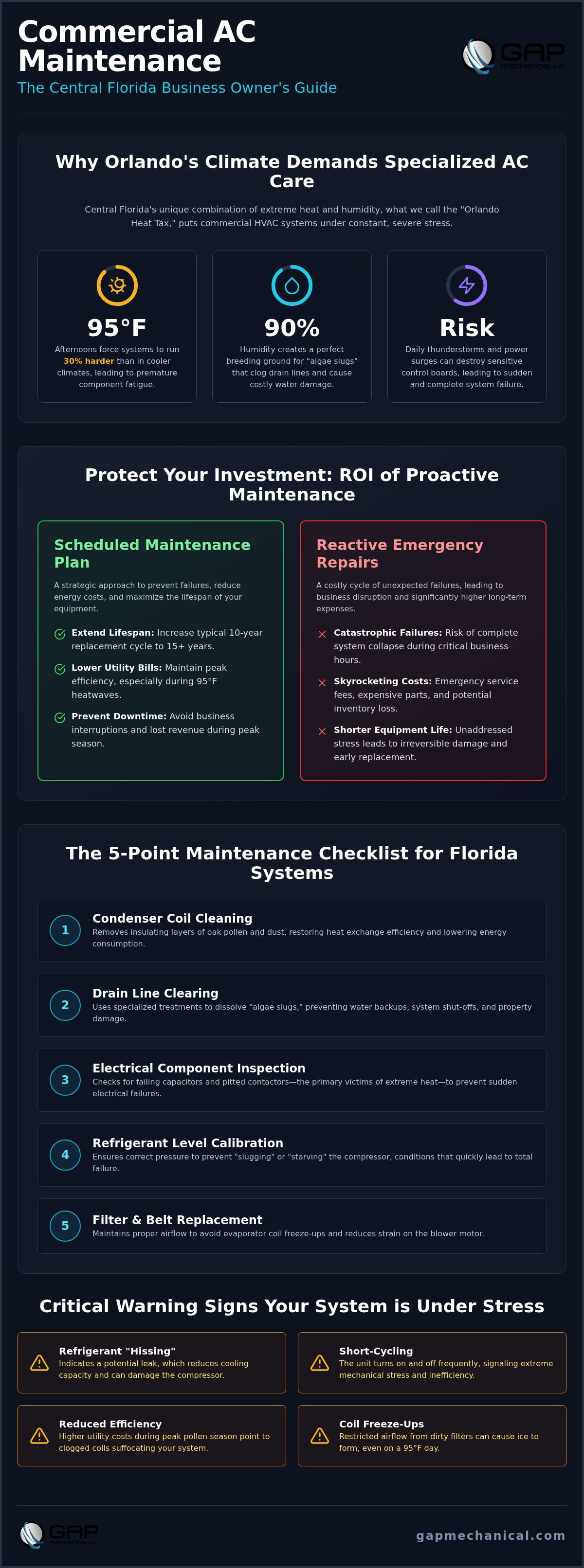
Recognizing the Silent Warning Signs
Often, the most critical indicators of system stress are subtle and easy to overlook. These "silent warnings" are the system communicating that it needs attention before it initiates a full shutdown. Ignoring these signs is the primary cause of premature system failure.
Business owners should be highly attuned to changes in their environment, even if the unit hasn't completely failed yet. Here are the primary indicators that your commercial AC system requires professional evaluation:
- Increased Energy Usage: If your utility bills are rising without a corresponding increase in operational hours, it suggests the system is working harder to achieve the same temperature, indicating inefficiency.
- Uneven Temperatures: If certain areas of your office or storefront remain noticeably warmer than others, the system may have airflow restrictions or localized component failure.
- Unusual Noises: Strange sounds—squealing, grinding, loud rattling, or persistent humming—are often signs of bearing wear, loose components, or struggling motors.
- Visible Water Issues: Any condensation pooling near the outdoor unit, or water dripping from the indoor unit, indicates a serious issue with the drainage or cooling process.
- Reduced Cooling Power: If the temperature inside your business takes significantly longer to drop, or if the thermostat seems to be fighting the system, the cooling capacity is likely diminished.
Keeping a detailed record of these observations allows you to provide specific, actionable intelligence to your HVAC service provider, ensuring the technicians can arrive prepared for the necessary repairs. If you ever need to perform preliminary checks or understand common failure points, consult the AC Repair Orlando Checklist.
Beyond Maintenance: Strategic Infrastructure Planning
While diligent maintenance can significantly extend the life of a commercial HVAC unit, there is a point where the fundamental design or age of the equipment limits its ability to handle modern demands, especially the extreme heat of Central Florida. Even the best maintenance cannot overcome the limitations of obsolete technology.
Strategic infrastructure planning involves looking beyond the current maintenance schedule and considering the long-term functional needs of your business. As technology advances, new HVAC systems are designed with better efficiency ratings and more resilient components, making them better suited to combat the sustained humidity and high temperatures of the Orlando area.
A professional assessment of your existing system—including its capacity, age, and operational history—can determine if continued maintenance is the best path forward, or if a strategic upgrade is necessary to meet your business's evolving needs and ensure sustained operational excellence.
Frequently Asked Questions
How often should a commercial AC system in Orlando be maintained?
For optimal performance and to mitigate the effects of Central Florida's high humidity and heat load, commercial HVAC systems should undergo professional preventative maintenance at least twice per year, typically during the spring and before the peak summer season begins.
What is the biggest risk of neglecting commercial AC maintenance in Orlando?
The biggest risk is an unplanned, catastrophic system failure during the peak cooling season. This leads to severe business downtime, discomfort for employees, and potentially higher emergency service expenses compared to scheduled maintenance.
Does the high humidity in Orlando affect my AC maintenance needs?
Yes, significantly. High humidity places extra strain on the cooling coil and increases the likelihood of moisture buildup and mold growth in drainage systems. Maintenance must prioritize thorough coil cleaning and condensate line inspection to prevent water damage and ensure proper dehumidification.
When should a business owner consider replacing their commercial AC unit instead of just maintaining it?
A business owner should consider replacement when the system is approaching the end of its expected lifespan, when its current efficiency cannot keep pace with modern energy standards, or when the consistent repair needs begin to outweigh the operational expense of a new, more efficient system.
Frequently Asked Questions
How often should a commercial AC be serviced in Orlando?
Commercial systems in Central Florida require service at least four times per year. Our extreme heat and humidity force units to run nearly 3,500 hours annually, which is double the national average. Quarterly visits allow technicians to clear algae from drain lines and clean condenser coils before the heavy pollen season. This proactive schedule prevents the "Orlando Heat Tax" from causing a total system collapse during the hottest months of July and August.
What is the average consideration of a commercial HVAC maintenance contract?
The consideration of a maintenance contract varies based on the number of rooftop units and the complexity of your facility. While industry averages for a single professional tune-up in Central Florida often range between $79 and $189, a comprehensive contract is typically customized to your specific mechanical load. These agreements are designed to provide a predictable annual expense that offsets the high consideration of emergency repairs, which can be triple the consideration of a scheduled visit.
Can regular maintenance really lower my business's energy bills?
Regular maintenance is the most effective way to reduce monthly utility overhead. A system with dirty condenser coils or restricted airflow can consume up to 30% more electricity to reach the same setpoint. By ensuring the refrigerant charge is calibrated and the electrical components are efficient, you can save hundreds of per month. Professional commercial AC maintenance Orlando ensures your system meets the latest SEER2 efficiency standards, keeping your operational considerations as low as possible.
What are the signs that my commercial AC unit needs to be replaced instead of repaired?
You should consider replacement if your unit is over 12 years old or requires repairs that consideration more than half the value of a new system. Frequent "short-cycling" and rising energy bills are also clear indicators of mechanical fatigue. With the 2026 EPA refrigerant regulations approaching, older units using R-410A may become more disruptive to service. Investing in a new, high-efficiency system often provides a better long-term return than keeping an aging rooftop unit on life support.
Does GAP Mechanical offer emergency commercial AC repair in Orlando?
We provide priority scheduling for our contract customers during standard business hours to handle urgent mechanical failures. While we don't offer 24/7 emergency service, our "Dependable Expert" approach ensures that maintenance clients are at the top of our list during the peak summer rush. If your system loses cooling during the critical 12 PM to 5 PM window, our licensed technicians work quickly to diagnose the issue and restore comfort to your facility.
How does Orlando humidity affect commercial HVAC lifespan?
Orlando's 90% humidity significantly shortens HVAC lifespan by accelerating the corrosion of sensitive copper coils and electrical components. Moisture buildup in the condensate pan leads to biological growth, which creates "algae slugs" that block drain lines and cause water damage. Without specialized care, a commercial unit in Florida may only last 10 years. Regular commercial AC maintenance Orlando helps combat these environmental stressors, allowing many local businesses to extend their equipment's operational life to 15 years or more.
What is included in a standard commercial AC tune-up?
A standard tune-up includes a comprehensive inspection of all mechanical and electrical systems. Technicians clean the condenser coils to remove Central Florida pollen, clear the primary and secondary drain lines, and check capacitors for heat-related wear. We also calibrate refrigerant levels to prevent compressor "slugging" and replace filters to maintain proper airflow. This detailed process ensures your system is pressurized correctly and ready to handle the high heat loads typical of our region.