

How to Tell If an AC Capacitor Is Bad in Orlando
Published October 13, 2026
A humming outdoor unit that will not start can point to a failing AC capacitor, but the sound alone cannot confirm the cause. Knowing how to tell if ac capacitor is bad means recognizing possible warning signs, making safe observations, and leaving electrical testing to an HVAC technician.
In Orlando, long cooling seasons, high humidity, spring pollen, and summer storms keep air conditioners working hard. If your system struggles to start, cools inconsistently, or shuts off unexpectedly, note what you observe rather than opening the equipment. The same approach applies in Clermont, Lake Mary, Sanford, Apopka, Oviedo, Kissimmee, Winter Garden, Ocoee, and Winter Park.
This guide explains which symptoms may suggest a capacitor issue, what you can safely check, and when to arrange professional AC repair. These steps can help you describe the problem clearly without mistaking a symptom for a diagnosis.
Key Takeaways
- To understand how to tell if ac capacitor is bad, watch for trouble starting, an outdoor fan that will not run, or cooling that stops unexpectedly. These signs are clues, not confirmation.
- A capacitor helps certain AC motors start or run, so a fault can interrupt the compressor or condenser fan.
- Check thermostat settings and observe the system from a safe distance. Do not remove panels, touch wiring, or test or discharge a capacitor.
- If startup trouble or interrupted cooling continues, arrange professional AC diagnosis to identify the cause.
How to Tell If an AC Capacitor Is Bad: Signs to Notice
A struggling AC start, an outdoor fan that does not run, or cooling that stops unexpectedly can point to a failing capacitor. None of these symptoms proves the capacitor is faulty. Other electrical or mechanical problems can produce similar behavior.
Which AC symptoms can point to a failing capacitor?
A capacitor helps certain AC motors start or keep running. It stores and releases electrical energy to support motor operation. Learn more about how a motor capacitor functions in electrical equipment.
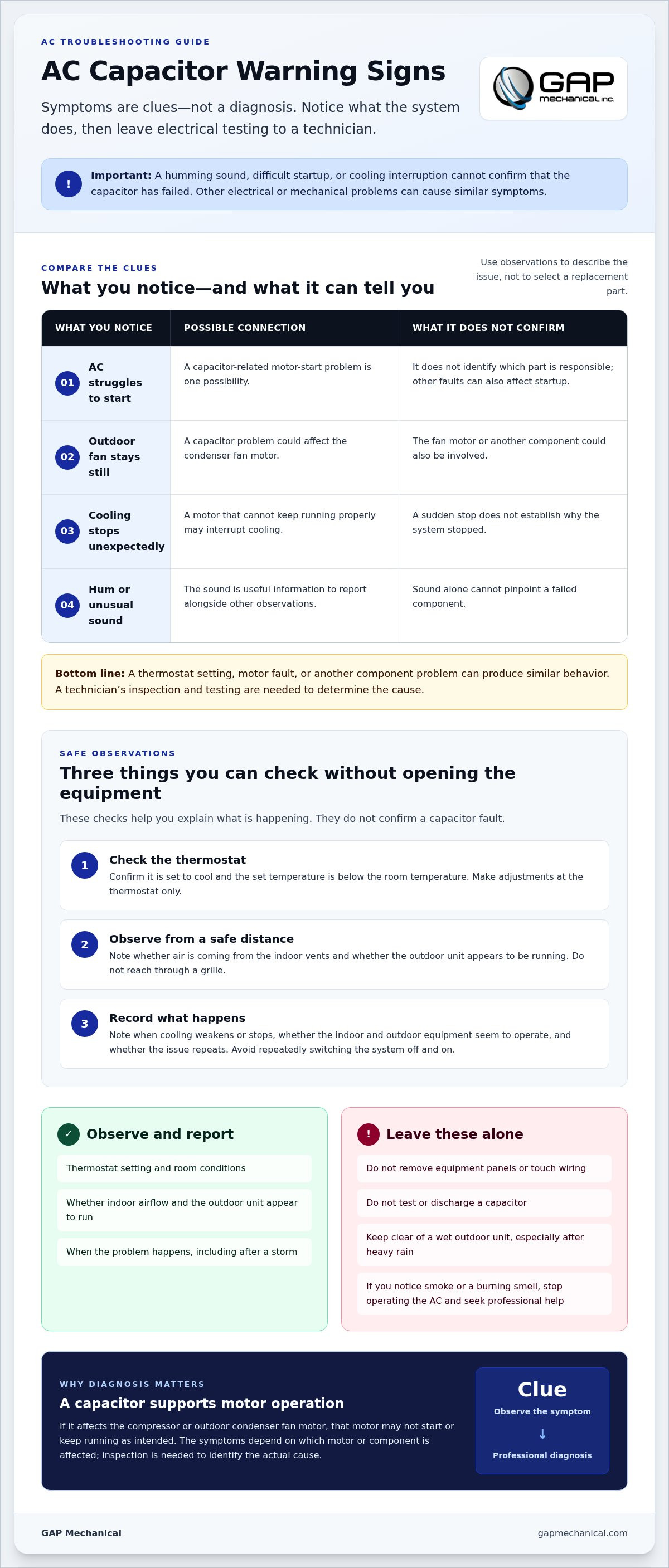
- The AC struggles to start: The system may take repeated attempts to begin cooling or fail to start. This can indicate a motor-start problem, but it does not identify which part is responsible.
- The outdoor fan does not run: If the indoor system is operating but the outdoor fan stays still, a capacitor problem is one possibility. The fan motor or another component could also be involved.
- Cooling stops unexpectedly: A motor that cannot keep running properly may interrupt cooling. A sudden change in operation does not establish why the system stopped.
Use symptoms to recognize a possible problem, not to choose a replacement part. A technician’s inspection and testing are needed to determine the cause.
Why can the same symptoms have other causes?
Start with the simple checks. A thermostat set incorrectly may prevent a cooling call, while a fault elsewhere can affect startup, fan operation, or cooling. A hum or other unusual sound is useful information to report, but it cannot pinpoint the failed part.
For example, if an AC near Orlando’s Mills 50 district stops cooling during a humid afternoon, the weather explains why the interruption feels urgent, not what caused it. Note what the system does and when it happens. Whether the issue occurs at startup, after the system has been running, or after a storm can help a technician assess the problem.
Why a Bad AC Capacitor Can Interrupt Cooling
A capacitor can interrupt cooling if it affects an AC motor it supports. If the compressor or outdoor condenser fan motor cannot start or keep running as intended, the system may not move heat outdoors effectively. Cooling indoors can then falter. The symptoms depend on which motor or component is affected.
What does the capacitor do inside an AC system?
An AC capacitor is an electrical component that helps certain motors start or continue running. It supports motor operation; it does not cool the home by itself.
The compressor moves refrigerant through the system so heat can transfer from indoors to outdoors. The condenser fan motor turns the outdoor fan, which moves air across the outdoor coil to help release heat. If a capacitor serving either motor is not working properly, that motor may not operate as intended and cooling can be interrupted.
Why don’t symptoms identify the failed part?
A thermostat setting can keep the system from calling for cooling. A motor fault or another component problem can also disrupt operation. For that reason, an outdoor fan that will not run is a sign to investigate, not proof that the capacitor is responsible.
In Orlando and nearby Central Florida communities, a cooling interruption during a humid stretch can feel urgent, but the weather does not identify the failed part. A technician evaluates the AC system and its components to determine whether the capacitor or another issue is affecting operation.
If the problem persists, arrange professional AC diagnosis rather than handling an electrical component yourself. An assessment helps connect what you observed to the actual cause.
What Orlando Homeowners Can Safely Check
You can gather useful information without opening the AC equipment. These checks will not confirm whether a capacitor has failed, but they can help you explain what the system is doing before a technician evaluates it.
A safe observation checklist before requesting help
- Check the thermostat. Confirm it is set to cool and that the set temperature is below the room temperature. Make adjustments at the thermostat only.
- Observe system operation. From a safe distance, note whether air is coming from the indoor vents and whether the outdoor unit appears to be running. Do not remove a panel or reach through a grille.
- Record what happens. Note when cooling weakens or stops, whether the indoor and outdoor equipment seem to operate, and whether the issue repeats. Avoid repeatedly switching the system off and on to see if it will restart.
These observations can help answer how to tell if ac capacitor is bad without turning a visual check into an electrical repair attempt. Orlando’s heat and afternoon storms can put AC equipment through demanding conditions, but weather alone does not identify a failed component. For example, a homeowner in College Park might note that cooling stopped after a storm and share that timing with the technician, while leaving the diagnosis to a professional.
When should you stop and leave the equipment alone?
Do not touch wiring or electrical components, and do not test or discharge a capacitor. Keep clear of an outdoor unit that is wet, especially after heavy rain. If you notice smoke or a burning smell, stop operating the AC and seek professional help. Do not remove equipment panels to investigate.
Share your observations with a qualified technician so the system can be inspected safely. To arrange an assessment, contact GAP Mechanical for AC help.
When to Arrange AC Capacitor Repair in Orlando
Arrange professional diagnosis if the AC repeatedly struggles to start, cooling keeps cutting out, or the outdoor fan is not running. These symptoms can point to a capacitor issue, but they can also result from another system fault. Do not keep restarting the equipment or attempt electrical checks to force it back into operation.
What does professional diagnosis add?
A technician can inspect the capacitor alongside the compressor, outdoor fan motor, thermostat, and related system components. Testing the system helps distinguish a failing capacitor from another fault interrupting cooling. A symptom alone is not enough to select a repair.
Understanding how to tell if ac capacitor is bad also means knowing where observation ends and diagnosis begins. Describe what happened, when it happened, and whether it repeated. A technician can use that information while evaluating the AC system and determining the appropriate next step.
A practical next step for Central Florida homes
In Central Florida, an AC that falters during a humid spell can quickly affect indoor comfort. Make a note of the timing and what you observed, then share those details during service. You do not need to identify the failed part yourself.
GAP Mechanical is a family-run HVAC company serving Central Florida since 2003 and is licensed under CAC 1813597. If startup trouble, interrupted cooling, or a non-running outdoor fan persists, request professional AC diagnosis.
Take the Next Step Toward Reliable Cooling
The question of how to tell if ac capacitor is bad has a clear limit: observations can describe a problem, but they cannot identify the failed component. You do not need to reach a diagnosis before getting help. A clear account of what happened gives a technician a useful starting point for evaluating your system.
If the AC continues to act unpredictably, avoid opening the equipment or attempting electrical work. Professional diagnosis can identify what is affecting operation and guide the next step for your home.
Request AC repair help from GAP Mechanical to arrange a professional assessment. A diagnosis can clarify the issue and help you move forward with the appropriate repair.
Frequently Asked Questions
Is it safe to check an AC capacitor myself?
You can safely observe the thermostat and whether the indoor and outdoor units appear to run, but do not open the equipment or touch electrical parts. A capacitor can present an electrical hazard even when the system is off. Note what happens during a cooling call, then leave the cabinet closed. A qualified HVAC technician should handle capacitor testing, handling, and replacement.
Can an AC run with a bad capacitor?
It may fail to start, stop cooling, or have trouble running if a capacitor is not working correctly. The behavior depends on the system and the affected component. If you are wondering how to tell if ac capacitor is bad, operation alone cannot confirm it. For example, an AC that runs indoors while the outdoor unit stays off needs diagnosis, not a guess based on that single sign.
What does a failing AC capacitor sound like?
Some systems may hum or sound as if a motor is struggling to start, but noise alone cannot identify a failed capacitor. Mechanical or electrical problems elsewhere may create similar sounds. Note whether the noise occurs at startup or during operation, and whether cooling changes at the same time. Do not open the unit to investigate. Arrange professional diagnosis if the sound continues.
How long can I run an AC with a suspected bad capacitor?
There is no reliable timeframe that applies to every AC system. Repeated unsuccessful starts or interrupted operation can place strain on system components. If the unit struggles, stops cooling, or behaves unusually, stop repeated restart attempts and arrange an HVAC diagnosis. In Orlando’s warm, humid conditions, continued loss of cooling can also affect indoor comfort, so do not rely on a suspected fault resolving on its own.
Frequently Asked Questions
Which AC symptoms can point to a failing capacitor?
A capacitor helps certain AC motors start or keep running. It stores and releases electrical energy to support motor operation. Learn more about how a motor capacitor functions in electrical equipment. Use symptoms to recognize a possible problem, not to choose a replacement part. A technician’s inspection and testing are needed to determine the cause.
Why can the same symptoms have other causes?
Start with the simple checks. A thermostat set incorrectly may prevent a cooling call, while a fault elsewhere can affect startup, fan operation, or cooling. A hum or other unusual sound is useful information to report, but it cannot pinpoint the failed part. For example, if an AC near Orlando’s Mills 50 district stops cooling during a humid afternoon, the weather explains why the interruption feels urgent, not what caused it. Note what the system does and when it happens. Whether the issue occurs at startup, after the system has been running, or after a storm can help a technician assess the problem. A capacitor can interrupt cooling if it affects an AC motor it supports. If the compressor or outdoor condenser fan motor cannot start or keep running as intended, the system may not move heat outdoors effectively. Cooling indoors can then falter. The symptoms depend on which motor or component is affected.
What does the capacitor do inside an AC system?
An AC capacitor is an electrical component that helps certain motors start or continue running. It supports motor operation; it does not cool the home by itself. The compressor moves refrigerant through the system so heat can transfer from indoors to outdoors. The condenser fan motor turns the outdoor fan, which moves air across the outdoor coil to help release heat. If a capacitor serving either motor is not working properly, that motor may not operate as intended and cooling can be interrupted.
Why don’t symptoms identify the failed part?
A thermostat setting can keep the system from calling for cooling. A motor fault or another component problem can also disrupt operation. For that reason, an outdoor fan that will not run is a sign to investigate, not proof that the capacitor is responsible. In Orlando and nearby Central Florida communities, a cooling interruption during a humid stretch can feel urgent, but the weather does not identify the failed part. A technician evaluates the AC system and its components to determine whether the capacitor or another issue is affecting operation. If the problem persists, arrange professional AC diagnosis rather than handling an electrical component yourself. An assessment helps connect what you observed to the actual cause. You can gather useful information without opening the AC equipment. These checks will not confirm whether a capacitor has failed, but they can help you explain what the system is doing before a technician evaluates it.
When should you stop and leave the equipment alone?
Do not touch wiring or electrical components, and do not test or discharge a capacitor. Keep clear of an outdoor unit that is wet, especially after heavy rain. If you notice smoke or a burning smell, stop operating the AC and seek professional help. Do not remove equipment panels to investigate. Share your observations with a qualified technician so the system can be inspected safely. To arrange an assessment, contact GAP Mechanical for AC help. Arrange professional diagnosis if the AC repeatedly struggles to start, cooling keeps cutting out, or the outdoor fan is not running. These symptoms can point to a capacitor issue, but they can also result from another system fault. Do not keep restarting the equipment or attempt electrical checks to force it back into operation.
What does professional diagnosis add?
A technician can inspect the capacitor alongside the compressor, outdoor fan motor, thermostat, and related system components. Testing the system helps distinguish a failing capacitor from another fault interrupting cooling. A symptom alone is not enough to select a repair. Understanding how to tell if ac capacitor is bad also means knowing where observation ends and diagnosis begins. Describe what happened, when it happened, and whether it repeated. A technician can use that information while evaluating the AC system and determining the appropriate next step.
Is it safe to check an AC capacitor myself?
You can safely observe the thermostat and whether the indoor and outdoor units appear to run, but do not open the equipment or touch electrical parts. A capacitor can present an electrical hazard even when the system is off. Note what happens during a cooling call, then leave the cabinet closed. A qualified HVAC technician should handle capacitor testing, handling, and replacement.
Can an AC run with a bad capacitor?
It may fail to start, stop cooling, or have trouble running if a capacitor is not working correctly. The behavior depends on the system and the affected component. If you are wondering how to tell if ac capacitor is bad, operation alone cannot confirm it. For example, an AC that runs indoors while the outdoor unit stays off needs diagnosis, not a guess based on that single sign.
What does a failing AC capacitor sound like?
Some systems may hum or sound as if a motor is struggling to start, but noise alone cannot identify a failed capacitor. Mechanical or electrical problems elsewhere may create similar sounds. Note whether the noise occurs at startup or during operation, and whether cooling changes at the same time. Do not open the unit to investigate. Arrange professional diagnosis if the sound continues.
How long can I run an AC with a suspected bad capacitor?
There is no reliable timeframe that applies to every AC system. Repeated unsuccessful starts or interrupted operation can place strain on system components. If the unit struggles, stops cooling, or behaves unusually, stop repeated restart attempts and arrange an HVAC diagnosis. In Orlando’s warm, humid conditions, continued loss of cooling can also affect indoor comfort, so do not rely on a suspected fault resolving on its own.