

How to Protect Your AC Unit from Theft in Orlando
Published October 15, 2026
Layered deterrents make an outdoor AC unit harder to target than a single security measure alone. To understand how to protect your AC unit from theft in Orlando, combine visibility, a suitable physical barrier, and a way to notice tampering. Any cage or enclosure must preserve airflow and leave technicians room to service the equipment.
An exposed condenser can be vulnerable, especially when it’s out of view. Lighting, cameras, alarms, and cages can each play a role, but the right mix depends on the property and how the unit is positioned. Florida’s scrap-metal rules also make anonymous cash sales harder, adding another deterrent.
This guide explains how to layer practical security measures without blocking airflow or service access. You’ll also learn what signs may point to tampering, such as cut lines or a system that suddenly stops operating normally, and when to arrange an HVAC inspection.
Key Takeaways
- Learn how to protect your AC unit from theft with layered deterrents suited to your Orlando property.
- Understand how a condenser barrier and an alarm serve different roles, and why neither should compromise airflow or service access.
- Use clearer sightlines and lighting to make the area around your outdoor unit less concealed.
- Know what to do if you spot possible tampering, including documenting visible damage and arranging an HVAC inspection when needed.
Why outdoor AC units can be vulnerable to theft
In Orlando, a practical way to protect your AC unit from theft is to combine visibility, physical deterrents, and detection rather than rely on one measure. The right approach depends on where the condenser sits and how easily someone could approach it unnoticed.
A ground-level unit tucked beside a home may be less visible than equipment in an open yard. For example, dense landscaping along a side yard can hide a condenser from the street and make activity harder for neighbors to see. That doesn’t mean every property faces the same risk, but placement, lighting, and sightlines can affect how exposed a unit is.
What makes a condenser an accessible target?
Secluded placement and poor lighting can reduce visibility, while overgrown shrubs or fences can obstruct views of the equipment. Copper components may also attract theft. The general pattern is described in Copper Theft. Look at the condenser from the street, nearby windows, and common paths around your property to spot areas where activity could go unnoticed.
Why one security measure may not be enough
Each layer serves a different purpose. Visible lighting and clear sightlines make the equipment easier to observe. A suitable physical barrier can limit direct access, while an alarm can signal or announce tampering. An alarm doesn’t physically stop removal, and a barrier won’t improve visibility on its own. No single measure can guarantee a unit won’t be stolen, so consider how these approaches work together while keeping the condenser accessible for airflow and service.
- Visibility: Make the area easier to see.
- Barrier: Add a physical obstacle without enclosing the unit improperly.
- Detection: Choose a way to notice suspicious activity.
Do AC cages and alarms stop unit theft?
A condenser cage and an alarm serve different purposes. A properly placed barrier can make direct access more difficult, while an alarm can alert someone to possible tampering. Neither guarantees that a unit will remain untouched, so consider each as one layer in a broader plan for how to protect your AC unit from theft.
When a protective cage may make sense
A purpose-built cage may be worth considering when an outdoor unit is especially accessible, such as beside an open walkway or in a secluded side yard. It should fit around the equipment without blocking airflow or leaving too little room for a technician to inspect and service the condenser. Professional placement helps account for those practical requirements; a barrier that crowds the unit can create problems instead of solving them.
What an AC theft alarm can and cannot do
A tamper alarm detects a disturbance and can produce an audible alert, depending on the system. That signal may draw attention, but the alarm doesn’t physically stop someone from handling or removing equipment, and it can’t promise a particular response. The Police Department Advice on AC Theft Prevention discusses cages and alarms as prevention measures, reinforcing the value of thinking beyond a single device.
Use the two measures for complementary roles: a barrier can limit access, and detection can make activity more noticeable. Keep the condenser’s airflow and service access in view when considering any enclosure. If an existing cage is followed by unusual AC operation, arrange an HVAC inspection rather than assuming the equipment is unaffected. GAP Mechanical can help with AC inspection and repair questions when physical damage or a change in operation needs attention.
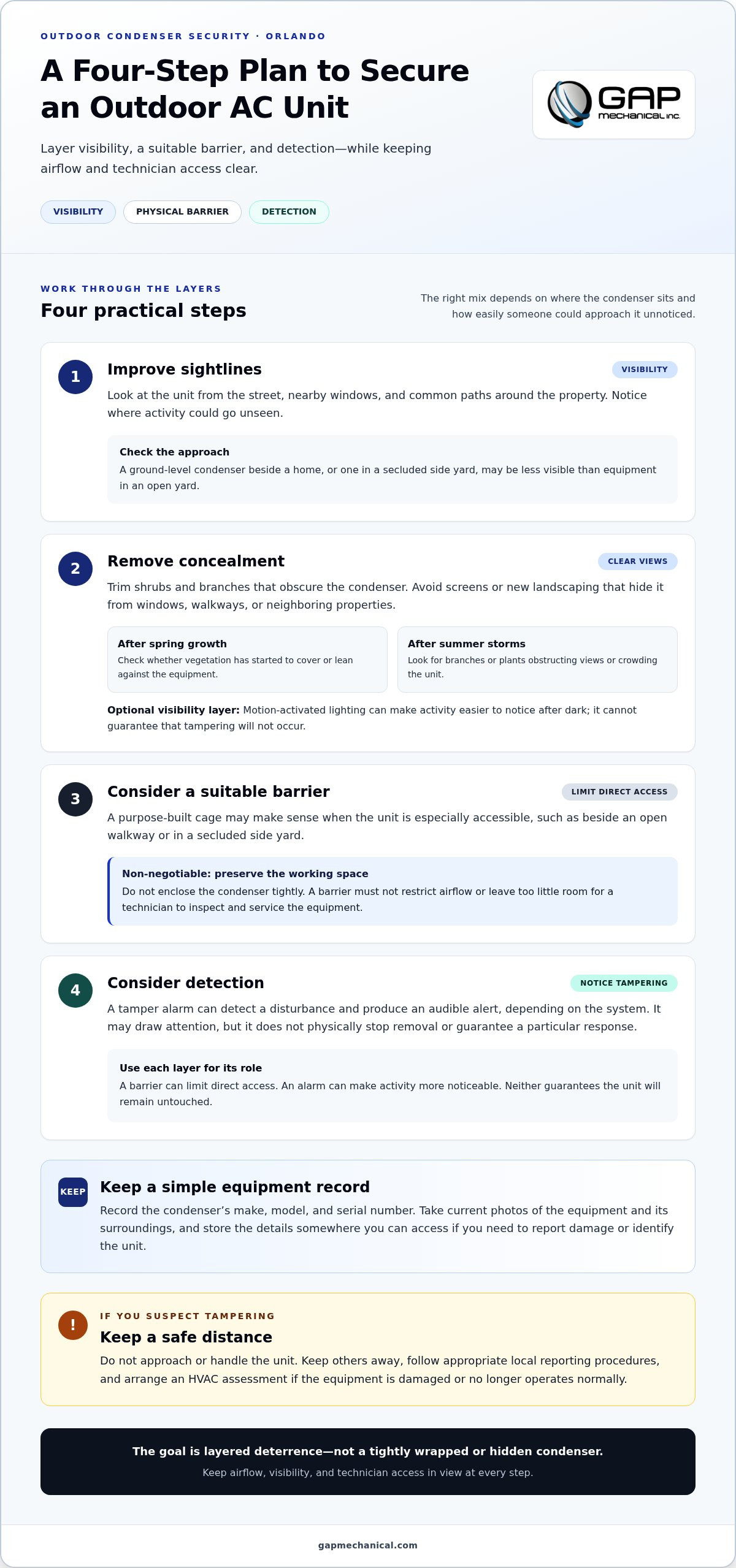
How to secure an outdoor AC unit without blocking airflow
Protecting an outdoor condenser in Orlando doesn’t mean wrapping it or hiding it behind a screen. Work in a practical sequence: improve visibility, remove concealment, consider a suitable barrier, then consider detection. Keep airflow and technician access clear at every step.
Improve visibility around the condenser
Trim shrubs and branches that obscure the unit, and avoid adding screens that conceal it from windows, walkways, or neighboring properties. Motion-activated lighting can make activity easier to notice after dark, though it can’t guarantee a unit won’t be tampered with. In Central Florida, check the area after spring growth and summer storms, which can leave vegetation leaning against or covering equipment.
Keep barriers and landscaping service-friendly
If you add a barrier, don’t enclose the condenser tightly. Restricted airflow can interfere with operation, and a cramped setup can make inspection or repair harder. Leave the equipment accessible so a technician can safely reach it. A barrier should be planned around the unit, not treated as a reason to block its working area.
Use this order to make the area more visible while preserving access:
- Improve sightlines: Trim growth and consider motion-activated lighting.
- Remove concealment: Keep new landscaping and screens from hiding the unit.
- Consider a barrier: Choose one that doesn’t restrict airflow or service access.
- Consider detection: Add an alarm as another way to notice possible tampering.
Keep a record of the condenser’s make, model, and serial number, and take current photos of the equipment and its surroundings. Store the details where you can access them if you need to report damage or identify the unit. These simple records can also help a technician understand what equipment is present.
For advice about AC operation or a unit that needs inspection after changes around it, contact GAP Mechanical about AC service.
What to do if your AC unit is tampered with in Orlando
If you suspect someone has damaged or tried to remove your outdoor AC unit, don’t approach or handle it. Keep others away, follow appropriate local reporting procedures, and arrange an HVAC assessment if the unit is damaged or isn’t operating normally.
Signs the unit needs an HVAC inspection
From a safe distance, look for visible damage or signs that parts have been disturbed. These clues don’t confirm what has failed, but they are reasons to stop using the system and have a qualified HVAC technician inspect it.
- Damage to the cabinet or nearby equipment
- Components that appear displaced or missing
- Wiring that appears exposed or disturbed
- A sudden change in operation, such as the AC no longer running normally
Don’t try to reposition parts, touch wiring, or diagnose the problem by appearance. If you can safely record the scene without going near the equipment, take photos of visible damage. Note the unit’s make, model, and serial number, along with the date you noticed the issue. These details can support your records and help explain what happened.
Get help with AC damage in the Orlando area
Once the area is safe, report suspected theft or tampering through the appropriate local channels. If the unit has visible damage or its operation has changed, leave it off and have a technician assess it before using it again. Damage around the condenser may not reveal the full condition of the equipment, so avoid assuming it is safe based only on what you can see.
GAP Mechanical provides AC repair when tampering affects operation. Learn more about residential AC services or contact GAP Mechanical about AC damage to arrange the next step. Knowing how to protect your AC unit from theft also means recognizing when prevention has failed and getting the equipment assessed safely.
Keep your AC protection plan current
A security setup should change when your property changes. New landscaping, a fence, or a side-yard renovation can alter how visible the condenser is and how easily a technician can reach it. Recheck the area after outdoor projects and keep equipment records updated so useful details are at hand if you need them.
That ongoing attention is the practical side of how to protect your AC unit from theft. If you suspect tampering or notice that the system no longer operates normally, leave the equipment alone and arrange a professional assessment. GAP Mechanical is a licensed and insured HVAC contractor (CAC 1813597) with EPA-certified technicians, serving Central Florida since 2003.
For help assessing AC damage in Orlando, contact GAP Mechanical about AC damage. A qualified inspection can help identify what needs attention so you can make a clear next decision.
Frequently Asked Questions
Can a cage prevent an AC unit from being stolen?
A cage may make access more difficult, but it can’t promise theft prevention. Consider how its design fits the condenser’s layout and how it will be opened for maintenance or repairs. Keep any instructions or keys with your equipment records, and check that the enclosure is secure after service visits or nearby yard work.
Are AC theft alarms worth considering?
An alarm may be useful if its alert can be noticed and acted on. Before relying on one, understand what event activates it, how the alert is delivered, and how to test that it’s working. Include those checks in your regular home-security routine, particularly after a power interruption or work around the condenser.
Can landscaping help protect an outdoor AC unit?
Yes, landscaping can support a more observable setup, but it isn’t a substitute for a physical security measure. When planning a planting bed, account for how tall and wide plants may grow, not just their size on planting day. Choose a layout that won’t require frequent disturbance around the condenser as plants mature.
What should I do if my AC unit looks tampered with?
Arrange an HVAC assessment if you suspect tampering, and share a clear timeline of when the system last worked normally and what changed afterward. Note any new sounds, interruptions, or differences in cooling. Those details can help a technician assess the equipment and determine whether AC repair is needed, without relying on a guess about the cause.
Frequently Asked Questions
What makes a condenser an accessible target?
Secluded placement and poor lighting can reduce visibility, while overgrown shrubs or fences can obstruct views of the equipment. Copper components may also attract theft. The general pattern is described in Copper Theft. Look at the condenser from the street, nearby windows, and common paths around your property to spot areas where activity could go unnoticed.
Can a cage prevent an AC unit from being stolen?
A cage may make access more difficult, but it can’t promise theft prevention. Consider how its design fits the condenser’s layout and how it will be opened for maintenance or repairs. Keep any instructions or keys with your equipment records, and check that the enclosure is secure after service visits or nearby yard work.
Are AC theft alarms worth considering?
An alarm may be useful if its alert can be noticed and acted on. Before relying on one, understand what event activates it, how the alert is delivered, and how to test that it’s working. Include those checks in your regular home-security routine, particularly after a power interruption or work around the condenser.
Can landscaping help protect an outdoor AC unit?
Yes, landscaping can support a more observable setup, but it isn’t a substitute for a physical security measure. When planning a planting bed, account for how tall and wide plants may grow, not just their size on planting day. Choose a layout that won’t require frequent disturbance around the condenser as plants mature.
What should I do if my AC unit looks tampered with?
Arrange an HVAC assessment if you suspect tampering, and share a clear timeline of when the system last worked normally and what changed afterward. Note any new sounds, interruptions, or differences in cooling. Those details can help a technician assess the equipment and determine whether AC repair is needed, without relying on a guess about the cause.