

Heat Pump Maintenance in Orlando: 2026 Guide
Published July 15, 2026
Regular heat pump maintenance in Orlando is essential for maximizing efficiency and ensuring consistent comfort throughout all seasons. Due to Central Florida’s extreme humidity, intense summer heat waves, and unpredictable afternoon thunderstorms, proactive care prevents costly breakdowns and keeps your home climate-controlled when you need it most.
The Unique Climate Challenges of Central Florida HVAC
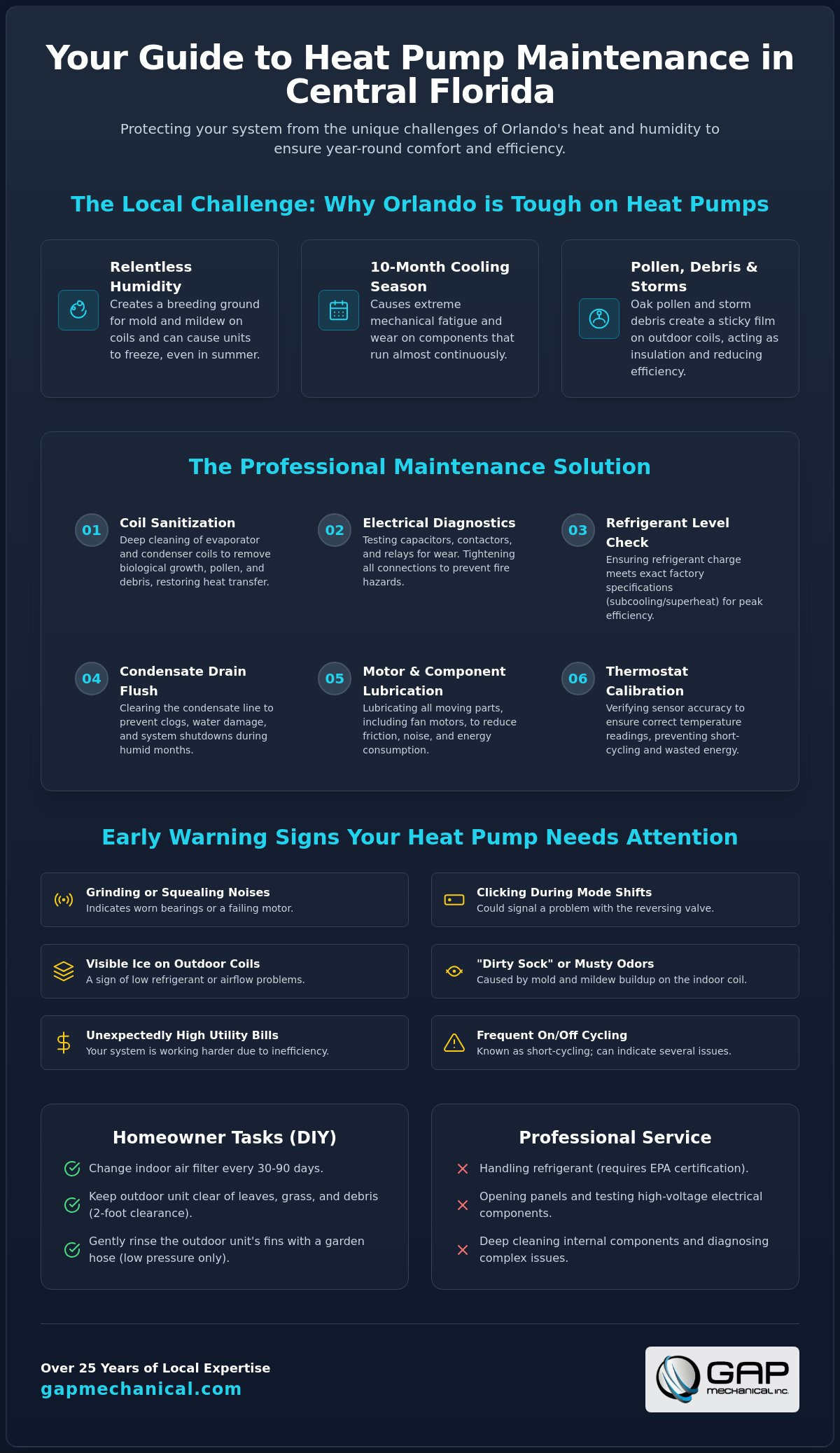
Living in Orlando means dealing with one of the most challenging climates in the United States. Our heat pumps are designed to handle the transition from subtropical moisture to blazing 90°+ summer highs, and then back again during cooler months. However, the constant high humidity and the presence of intense moisture from afternoon storms put unique strains on your HVAC system.
In neighborhoods across Orlando—from the established areas of Winter Park to the rapidly growing communities in Lake Nona—the air quality and moisture levels are consistently high. This environment means that your heat pump isn't just cooling the air; it is actively managing massive amounts of moisture. If the system is struggling to move or dissipate this moisture efficiently, performance drops drastically, leading to both discomfort and increased energy demands.
Many homeowners treat HVAC care as an afterthought until the unit fails. This is a critical mistake. A well-maintained unit operates quietly, reliably, and efficiently. Ignoring routine care allows minor issues—like a slightly clogged drain or a mildly restricted airflow—to compound into major failures during the most critical times of the year.
Understanding the Three Pillars of Heat Pump Health
A heat pump is a complex machine that moves heat rather than generating it. To keep it running optimally, you must focus on three core areas: airflow, electrical components, and moisture management. These three pillars support the longevity of your system and ensure you have reliable cooling and heating, regardless of what the forecast in Orlando throws at you.
1. Airflow Integrity
Airflow is arguably the most important factor. If air cannot move freely across the indoor coils (evaporator) or be expelled effectively by the outdoor unit (condenser), the unit overheats, struggles, and fails to dehumidify the air properly. In the humid Orlando summer, poor airflow equals poor dehumidification.
- Check all return vents to ensure they are not blocked by furniture, rugs, or drapes.
- Inspect supply vents to confirm they are open and unobstructed.
- Look for signs of forced air bypassing the unit, which is often a sign of ductwork issues.
- Ensure that outdoor units are not placed in areas where debris or overgrown landscaping restricts the necessary air intake.
2. Coil and Component Health
The indoor coils and outdoor coils are the workhorses of your system. They exchange heat. If they are covered in dust, dirt, or mildew, heat exchange becomes inefficient. This forces the compressor to work harder, which accelerates wear and tear on the entire system.
- Inspect the outdoor unit for excessive dirt, leaves, or bird droppings. These substances act as insulators, dramatically reducing performance.
- Check the electrical connections and the visible parts of the unit for any signs of corrosion or unusual wear.
- Regular professional cleaning ensures that the fins—the delicate metal slats that facilitate heat transfer—are clean and fully operational.
3. Moisture and Drainage Management
This pillar is specific to Central Florida's environment. Your heat pump removes humidity from the air, and this water must be safely channeled away via a condensate drain. If this drain clogs, you risk water damage inside your home or system failure.
- Listen for gurgling or strange noises coming from the indoor unit, which can indicate a partial blockage in the drain line.
- Verify that the condensate drain line has a proper slope to ensure gravity is pulling the water out effectively.
- Regular professional service includes flushing and clearing these lines, especially after heavy rains and storm activity common in our region.
Preventing Seasonal Stress: Pre-Season Checkups
The transition between seasons is when HVAC systems are most vulnerable. As the summer heat begins to fade, or as the cooler temperatures of fall set in, the system needs to be thoroughly tested to ensure it is ready for the coming load. This is not just about basic maintenance; it's about performance optimization.
A professional pre-season inspection goes far beyond changing a filter. It involves testing refrigerant levels, checking electrical gauges, measuring operating temperatures, and ensuring the safety controls are functioning perfectly. This proactive approach minimizes the chances of a sudden, catastrophic failure when you need reliable comfort the most.
If you notice any unusual sounds, strange odors, or sudden drops in performance during these transitions, it is crucial to address it immediately. For complex troubleshooting and service needs, understanding professional protocols is key. You can review detailed information on AC repair Orlando.
The Importance of Ductwork and Home Integrity
While the heat pump itself is the hero, the ductwork is its circulatory system. In many older homes across Orlando, the ductwork can suffer from leaks, improper insulation, and poor design. If air is leaking into the attic or behind walls, the unit is working incredibly hard to cool a space that isn't even fully sealed, wasting energy and reducing comfort.
A complete system audit should include inspecting the entire duct system. Leaks can significantly undermine the efficiency of your heat pump, regardless of how clean the coils are. Furthermore, ensuring the attic and crawl spaces are properly sealed and insulated is just as vital as the maintenance inside the unit itself, especially when dealing with the intense temperature swings Central Florida experiences.
This holistic approach—looking at the unit, the ducts, and the home envelope—is what separates standard maintenance from true system optimization.
Knowing When to Call the Experts
Sometimes, maintenance isn't enough. Minor issues can escalate quickly, especially when dealing with the relentless demands of a subtropical climate. Recognizing the signs that require specialized intervention is crucial. Should you notice persistent ice buildup on the lines, a loss of cooling capacity, or strange electrical smells, it is time to call a licensed professional.
When you decide to bring a contractor onto your property, you are making a significant decision about the long-term health of your home. It is wise to be informed. Before any service or repair begins, review a detailed guide on what questions to ask. You can access a comprehensive resource regarding an hiring checklist to ensure you are getting qualified, reliable service.
Our commitment to quality service is backed by years of experience serving the Orlando community. As a licensed entity (CAC 1813597) and EPA-certified provider, we prioritize safety and performance in every service call, maintaining a highly rated 4.9 Google rating since 2003.
Considering Long-Term System Strategy
While maintenance keeps your current system running optimally, sometimes the unit simply reaches the end of its useful life. Modern heat pump technology offers dramatically better efficiency, improved dehumidification capabilities, and quieter operation than older units. When planning for the future of your home’s comfort, understanding the possibilities is key.
If your current unit is struggling to keep up with the extreme heat or if you are considering upgrading to a more efficient model, exploring options for a complete system overhaul is a prudent long-term strategy. A modern heat pump can fundamentally change the way your home manages its climate, offering superior performance and reliability against the unique pressures of Central Florida's environment. For detailed information on transitioning your home to a modern, efficient system, consult resources on heat pump installation.
Frequently Asked Questions
Q: How often should I have a heat pump professionally maintained in Orlando?
A: Given the high humidity and rigorous demands of Central Florida’s climate, it is recommended to have a professional heat pump maintenance check at least twice a year—once before the peak cooling season and once before the peak heating season—to ensure optimal performance during transitions.
Q: What are the most common signs that my heat pump needs attention?
A: Common signs include running the unit continuously without achieving the desired temperature, strange noises like rattling or screeching, visible ice buildup on the lines, or a noticeable drop in air pressure.
Q: Does humidity affect the lifespan of my heat pump?
A: Yes, high humidity increases the workload on the system, forcing it to run longer and harder to remove moisture from the air. Consistent maintenance ensures the system is efficient enough to handle this added moisture load without prematurely wearing out components.
Q: Should I clean the outdoor condenser unit myself?
A: Light debris removal is fine, but comprehensive cleaning of the coils, fans, and electrical components requires specialized tools and expertise. Professional maintenance is necessary to ensure the heat exchange process is maximized and safe.
Frequently Asked Questions
How often should I schedule heat pump maintenance in Orlando?
Schedule professional service twice per year, once in the spring and once in the fall. Orlando's extended cooling season means your unit works significantly harder than systems in northern climates. Regular heat pump maintenance Orlando visits ensure that the reversing valve and electrical components are ready for the shift between seasons. This bi-annual schedule prevents the mechanical fatigue that leads to mid-summer breakdowns when the heat is at its peak.
Does a heat pump require more maintenance than a standard air conditioner?
Yes, heat pumps require more frequent attention because they operate during both the summer and winter. A standard air conditioner only runs during the cooling season, but a heat pump provides year-round climate control. This constant operation increases wear on the blower motor and capacitors. Professional service ensures the defrost board and reversing valve function correctly, which are components that a standard AC unit simply doesn't have.
Why is my heat pump blowing lukewarm air in the summer?
Lukewarm air often indicates dirty condenser coils or a low refrigerant charge. In our humid climate, coils quickly become caked with dust and pollen, which insulates the unit and prevents proper heat transfer. If the air isn't cold, your system is likely running longer cycles and consuming more energy. This issue requires a licensed technician to verify refrigerant pressures and perform a deep chemical cleaning of the evaporator and condenser coils.
Can I perform heat pump maintenance myself?
You can handle basic upkeep like monthly filter changes and clearing weeds from around the outdoor unit. However, technical tasks like checking refrigerant levels or testing high-voltage capacitors require professional tools and licensing. Attempting DIY repairs on electrical circuits is dangerous and can void your manufacturer's warranty. Most major brands require documented professional service to honor parts replacements if a component fails prematurely due to neglect.
What are the benefits of a heat pump maintenance plan?
A maintenance plan provides priority service and ensures you never miss a critical bi-annual tune-up. These plans focus on asset protection by catching small electrical issues before they destroy the compressor. Properly maintained systems can reduce energy consumption by 15% to 20% compared to neglected units. You also gain peace of mind knowing that a local expert has verified the safety and efficiency of your home's primary climate system.
Is it normal for a heat pump to have ice on it during the winter?
A light layer of frost is normal during a defrost cycle, but a thick block of ice indicates a mechanical failure. In Orlando's humid winters, moisture can freeze on the coils when temperatures drop. The system should automatically enter a defrost mode to melt this. If the ice remains or grows thicker, your defrost control board or sensor is likely faulty and needs immediate professional attention to prevent permanent compressor damage.
How long do heat pumps typically last in the Central Florida climate?
Most heat pumps in Central Florida last between 10 and 15 years when they receive regular professional care. The high humidity and near-constant operation in Orlando place more strain on these units than in other regions. Without maintenance, a system's lifespan can drop significantly due to component overheating and biological growth. Consistent service is the most effective way to reach the upper end of that lifespan and maintain your home's efficiency.
Will maintenance help lower my Orlando utility bills?
Yes, routine heat pump maintenance Orlando services can significantly lower your monthly utility considerations. When components are clean and calibrated, the system reaches your desired temperature faster and runs shorter cycles. This reduces the total kilowatt hours used each month. Research indicates that properly maintained HVAC systems can operate up to 20% more efficiently than those with dirty coils or failing capacitors, leading to direct savings on your power bill.