← Back to Blog
Commercial HVAC Maintenance Orlando: 2026 Strategic Guide

Commercial HVAC Maintenance Orlando: 2026 Strategic Guide

Published September 2, 2026

A commercial HVAC system that's low on refrigerant by just 10% can drive your monthly operating costs up by 20% before you even notice a change in temperature. In the 90% humidity of Central Florida, these hidden inefficiencies don't just drain your budget; they lead to mold growth and air quality complaints that can disrupt your entire operation. You've likely felt the stress of an unpredictable repair bill during a peak summer heatwave or worried about meeting the latest health and safety standards. Managing a facility in this region is a constant battle against corrosive air and relentless heat.

This 2026 strategic guide to commercial HVAC maintenance Orlando will show you how to transform your cooling system from a liability into a predictable asset. You'll discover how proactive care protects your business from humidity-driven failures and keeps your utility bills manageable. We'll walk through the impact of the 2026 A2L refrigerant transition, specific strategies for zero-downtime operations, and the exact steps needed to lower energy consumption by up to 15% through Department of Energy guidelines. It's time to gain peace of mind with a system that's as reliable as your business.

Key Takeaways

  • Understand how Orlando’s 90% humidity levels accelerate biological growth on evaporator coils and why local maintenance protocols must differ from national standards.
  • Learn what happens during a professional commercial HVAC maintenance Orlando visit, including critical electrical audits and mechanical inspections of pulleys and belts.
  • Compare the long-term ROI of scheduled tune-ups against the "40% energy rule" to see how a dirty system drastically inflates your monthly utility bills.
  • Identify the specific steps for establishing a monthly preventive care schedule, with a heavy focus on the condensate drain lines that fail most often in Florida.
  • Discover the operational and liability benefits of partnering with a licensed, insured contractor over a general handyman for complex commercial cooling systems.

The Impact of Orlando’s Climate on Commercial HVAC Systems

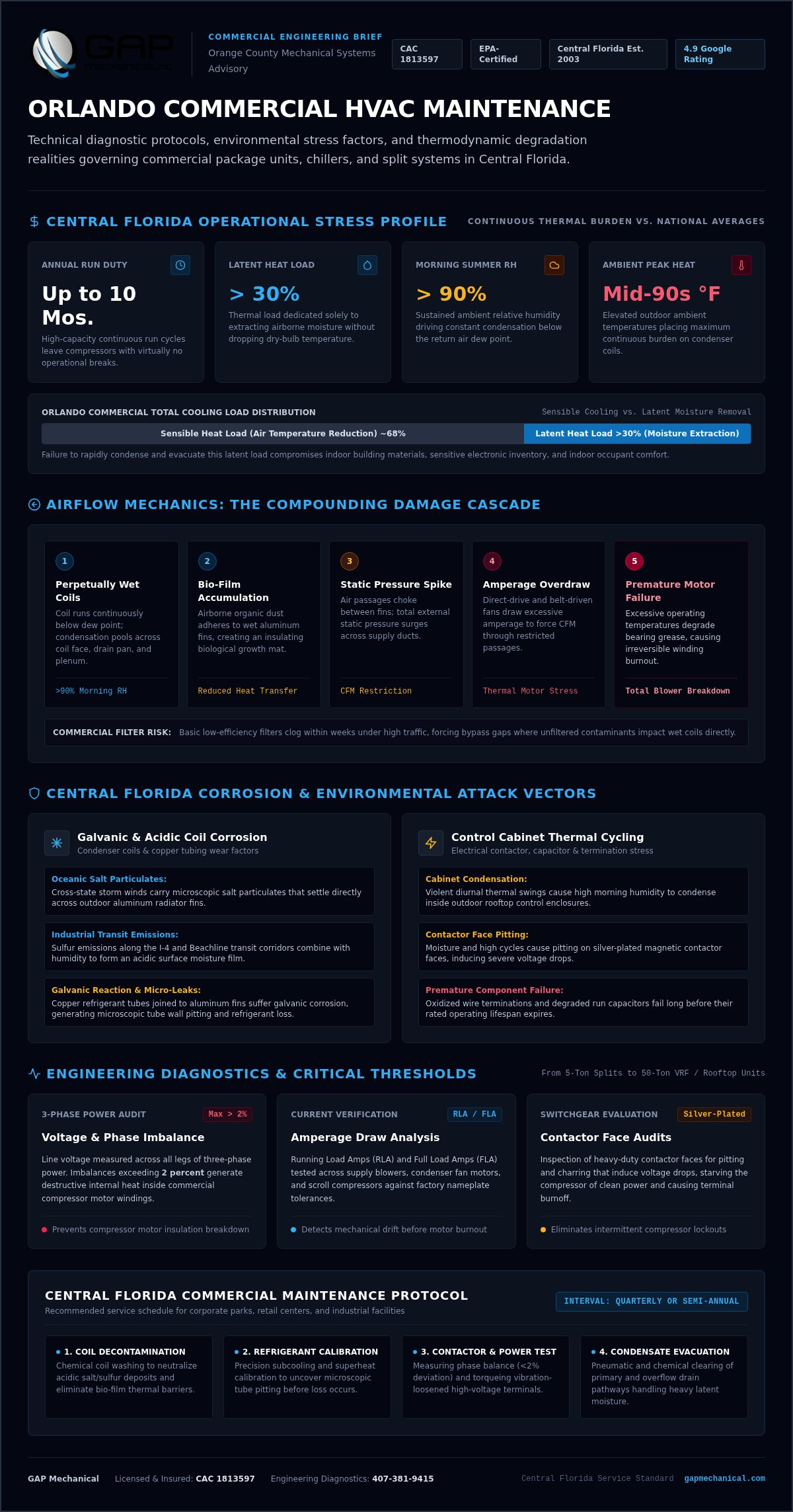
Orlando's environment is uniquely hostile to mechanical equipment. Standard national maintenance protocols often overlook the sheer volume of moisture our local systems must process daily. "Florida-grade" maintenance is a specialized approach that prioritizes intense moisture management and corrosion resistance over simple mechanical checks. In Central Florida, it's common for leaky ductwork to account for a 25% loss of cooled air, making local expertise essential for maintaining system pressure and efficiency. Latent heat load represents the energy your system spends removing water vapor from the air rather than lowering the actual temperature, which is a massive burden in our 90% humidity environment.

The "Inland Salt Air" effect is another factor many facility managers ignore until it's too late. While Orlando is miles from the coast, the combination of high humidity and specific wind patterns carries corrosive elements that cause "pitting" in aluminum fins. This degradation reduces the surface area available for heat exchange. When these fins degrade, the compressor must run longer cycles to achieve the same cooling effect, leading to a cascade of mechanical wear.

Humidity and Biological Growth in Commercial Ductwork

When humidity levels consistently exceed 60%, evaporator coils become a primary site for biological growth. In Orlando, where outdoor levels often hit 90%, the condensate pans and coils stay perpetually damp. This creates a thick layer of organic material that acts as an insulator, preventing the refrigerant from absorbing heat effectively. It's a common cause of "dirty sock syndrome" and tenant complaints in high-traffic offices.

Restricted airflow doesn't just hurt comfort; it kills hardware. Your blower motor must work significantly harder to push air through clogged, slime-covered coils. This increased load leads to premature bearing failure and overheating. Standard residential filters are insufficient for these conditions. High-occupancy buildings in Winter Park or downtown Orlando require higher MERV-rated filters and frequent changes to prevent bypass air from depositing contaminants directly onto the wet coils.

Corrosion and Component Wear in Central Florida

The chemical reaction between constant moisture and electrical contactors leads to carbon buildup and "pitting." This increases electrical resistance, which can cause contactors to weld shut or fail to engage entirely. Because of these relentless conditions, outdoor condenser units in Orlando often age 30% faster than those in drier climates. Without regular commercial HVAC maintenance Orlando, a system designed to last 15 years might fail in 10.

Protection requires a proactive stance against the elements. Effective maintenance includes:

  • Applying specialized anti-corrosive coil coatings to prevent aluminum oxidation.
  • Performing deep-cleans of the condenser fins to remove trapped organic debris and salt.
  • Checking electrical terminals for signs of "green" corrosion or loose connections caused by thermal expansion.

Consistent care ensures these microscopic issues don't turn into a total system seizure during a July heatwave. You can find more about specialized services on our commercial services page.

What Happens During a Professional Commercial HVAC Maintenance Visit?

Professional commercial HVAC maintenance Orlando isn't a simple "check-up." It's a comprehensive technical audit. Our technicians begin with a full electrical system analysis. We measure voltage and amperage across every motor and compressor. When these numbers drift from manufacturer specs, it's a sign of high resistance and impending failure. We also prioritize the condensate system. Given our local 90% humidity, we clear drain lines and test pumps to prevent the catastrophic office flooding that occurs when water backs up into the building structure. Every visit follows a disciplined process to ensure no component is overlooked.

During a standard professional visit, we focus on:

  • Electrical Safety: Testing for pitted contactors and loose wiring that create fire hazards.
  • Mechanical Integrity: Lubricating bearings and inspecting belt tension to prevent energy waste.
  • System Pressure: Verifying refrigerant levels to ensure the unit meets manufacturer efficiency standards.
  • Drainage: Chemically treating condensate pans to prevent biological blockages.

Multi-Point Electrical and Mechanical Inspections

We specifically hunt for pitted contactors and loose wiring. In Central Florida, the combination of heat and moisture causes electrical terminals to oxidize. This creates fire risks and mechanical stress. We also test capacitor health using a multimeter. Capacitors are like batteries that start your motors; if they're weak, your compressor will struggle to turn over during a 95-degree afternoon. Mechanical parts require equal attention. We lubricate moving bearings and check belt tension. If a belt is too loose, it slips and squeals, wasting energy. If it's too tight, it puts excessive pressure on the blower motor bearings, leading to a costly replacement.

Refrigerant Levels and Leak Detection

Proper refrigerant management is the backbone of efficiency. "Topping off" is a myth that masks underlying leaks. If your system is low, we find the leak's origin rather than just adding more gas. This saves you from the recurring costs of refrigerant, which has become significantly more expensive due to new 2026 regulations. We verify the charge using subcooling and superheat calculations. These technical readings ensure the refrigerant is changing state at the exact right moment in the cycle. It's the difference between a system that merely "runs" and one that operates at peak performance. If you're concerned about your system's efficiency, you can reach out for a professional assessment to keep your operations running smoothly.

Calculating the ROI: Maintenance vs. Emergency Repairs

Calculating the return on investment for commercial HVAC maintenance Orlando requires looking beyond the immediate service invoice. HVAC systems typically account for 40% of a commercial building’s total energy consumption. When a system is neglected, that percentage spikes as components struggle against friction and filth. A scheduled tune-up is a controlled, predictable expense. In contrast, an emergency weekend compressor replacement involves premium labor rates and the risk of business closure. If the system doesn't receive regular care, these costs become inevitable. Beyond the hardware, consistent maintenance protects the manufacturer's warranty on expensive rooftop units. Most manufacturers require documented proof of professional service to honor parts replacements. Without this paper trail, a facility manager might face the full cost of a major component failure out of pocket.

The "soft" ROI of climate control is equally significant for business stability. Consistent temperatures and humidity levels directly impact employee productivity and tenant retention. Commercial tenants are less likely to renew a lease if they've spent the summer dealing with a failing AC or humidity-related air quality issues. Keeping the air stable keeps your building occupied and profitable.

Energy Efficiency and Operational Costs

A 10% drop in system airflow often leads to a 20% increase in power usage as the blower motor works longer to meet demand. We frequently see this in Orlando offices where filters haven't been changed or coils are blocked. Thermostat calibration is another critical factor. An uncalibrated sensor causes "short-cycling," where the unit turns on and off too frequently. This wears out the starter components and prevents the system from dehumidifying the space. Clean coils are the foundation of this process because any layer of grime acts as a thermal insulator that physically blocks the transfer of heat from your building to the refrigerant.

Extending Equipment Lifespan in Central Florida

The average lifespan of an Orlando commercial unit is often shorter than the national average due to the high duty cycle. Our systems run nearly year-round with very little downtime. While a neglected unit might fail at the 10-year mark, regular maintenance can push that same hardware to a 15-year lifecycle. This five-year extension provides massive capital expenditure benefits. It allows business owners to delay the high cost of a full system replacement and keep that capital available for other business needs. Delaying a major replacement also provides tax advantages by allowing for longer depreciation schedules on existing assets.

Commercial HVAC maintenance Orlando

A Facility Manager’s Guide to Preventive Care

Effective preventive care requires a disciplined internal schedule. In high-traffic Orlando buildings like retail centers or medical offices, the volume of airborne particulates is significantly higher than in a standard warehouse. This necessitates a monthly inspection routine. A primary focus for every Florida facility manager must be the condensate drain line. Because our humidity averages 90%, these lines are constant conduits for water. If they aren't monitored, biological sludge will inevitably trigger a float switch or, worse, overflow into the ceiling tiles. Documenting these internal checks alongside your professional commercial HVAC maintenance Orlando logs is critical. Insurance adjusters and health inspectors look for these records during claims or compliance audits. Having a clear paper trail proves you've met the required standards of care for the property.

Monthly Filter and Drain Line Checks

MERV ratings determine the balance between air purity and system strain. Retail environments with high foot traffic often require MERV 11 or 13 filters to trap fine dust, whereas a standard office might operate efficiently with a MERV 8. Using the wrong rating can lead to the airflow drops that eventually damage blower motors. While changing filters, inspect the drain pan for "sludge." This thick, jelly-like substance is a mix of dust and biological growth common in our climate. If you see it, the line needs immediate clearing to prevent water damage. Finally, walk the perimeter of your outdoor units. Central Florida's rapid foliage growth and summer storm debris can easily obstruct condenser coils, forcing the system to work harder against restricted airflow.

Recognizing Early Warning Signs of Failure

Systems rarely fail without warning. You should listen for grinding or squealing sounds, which often indicate bearing wear in the blower motor or condenser fan. Repetitive clicking usually signals an electrical issue with a contactor or relay. Beyond sound, track "hot spots" within your building. If one zone is consistently warmer than others, it's a sign of a duct leak or a failing zone damper. Finally, monitor your monthly utility bills. A sudden, unexplained spike in consumption is often the first indicator that a component is failing or the system is struggling with an invisible mechanical load. If you notice any of these red flags, it's time to schedule a professional inspection before a total system shutdown occurs.

Partnering with GAP Mechanical for Reliable Orlando Cooling

GAP Mechanical has served as a steady hand for Orlando and Winter Park businesses for over 25 years. We understand that commercial cooling is more than a luxury; it's a critical risk-mitigation strategy for your inventory, data centers, and tenant relationships. Choosing a licensed and insured contractor is essential for managing commercial liability. A general handyman often lacks the specialized diagnostic tools and high-limit insurance coverage required to work on high-tonnage rooftop units. Our team provides the technical competence and formal verification needed to satisfy both manufacturer warranty requirements and building code inspectors. We focus on reliability and long-term stability so you can focus on running your business.

You can find more details about our specialized approach on our commercial services page.

25+ Years of Local Expertise in Winter Park and Orlando

Local knowledge is the foundation of effective commercial HVAC maintenance Orlando. We've spent decades studying how Central Florida's weather patterns and building codes impact mechanical longevity. This deep regional experience allows us to anticipate failures that national providers might miss. As a family-owned business with a 4.9-star Google rating, we've built our reputation on transparency and neighborly commitment. We don't use hyperbolic marketing or high-pressure sales tactics. Instead, we offer straightforward technical advice and dependable service. We also provide military discounts as a token of our appreciation for the community that has supported us since our founding.

Custom Maintenance Plans for Your Business

We don't believe in one-size-fits-all contracts. Every facility has unique tonnage requirements and occupancy loads that dictate its maintenance needs. A high-traffic retail center in downtown Orlando requires a different strategy than a climate-controlled warehouse in Winter Park. We assess your specific equipment and facility history to create a plan that maximizes your ROI. One of the primary benefits of our partnership is the dedicated technician model. Having a professional who understands the specific quirks and history of your system ensures faster diagnostics and more accurate preventative care. This continuity of care is what prevents mid-day system seizures and keeps your monthly utility bills predictable.

It's time to gain peace of mind with a cooling system you can trust. Schedule your commercial HVAC assessment today to ensure your facility is prepared for the relentless Florida heat.

Securing Your Facility’s Operational Future

Managing a commercial property in Central Florida requires constant vigilance against humidity and heat. By prioritizing commercial HVAC maintenance Orlando, you move from reactive repairs to a strategy of long-term stability. You've learned how proactive electrical audits and moisture management prevent the catastrophic failures that disrupt business operations and inflate utility costs. Protecting your rooftop units isn't just about cooling; it's about preserving your capital and ensuring tenant satisfaction.

GAP Mechanical brings 25+ years of Central Florida experience to every service call. As a licensed and insured contractor with a 4.9-star Google rating, we provide the steady hand your business needs to navigate the 2026 refrigerant transitions and local climate challenges. Our team is ready to help you establish a maintenance schedule that fits your specific occupancy and tonnage requirements. Protect your business with professional commercial HVAC maintenance today. Your facility deserves a cooling system that works as hard as you do.

Frequently Asked Questions

How often does a commercial HVAC system need maintenance in Orlando?

At a minimum, a commercial system in Central Florida requires professional service twice per year. Many high-traffic buildings or medical offices benefit from quarterly inspections to manage the heavy cooling load. Our 90% humidity levels and extreme heat put constant stress on mechanical parts. Regular checks prevent biological growth on coils and drainage blockages that are common in this region. Consistent scheduling ensures your system remains reliable during the peak summer months.

What is the typical cost of a commercial HVAC maintenance contract?

Maintenance costs vary based on the total tonnage, the number of units, and the specific needs of your facility. Factors like building height and equipment accessibility also influence the service fee. While specific pricing depends on the scope of work, investing in a contract is always more cost-effective than emergency repairs. We provide tailored assessments to ensure your plan covers all critical electrical and mechanical components without the burden of unnecessary overhead costs.

Can regular maintenance really lower my business's energy bills?

Professional commercial HVAC maintenance Orlando can reduce energy consumption by 15% to 20% according to industry data. When coils are clean and motors are lubricated, the system doesn't have to work as long to reach the set temperature. Even a small refrigerant leak or a dirty filter can force the compressor to run extra cycles. This increased efficiency directly translates to lower monthly utility costs for your property and improved operational stability.

What are the most common causes of commercial AC failure in Florida?

Biological growth in condensate lines and electrical component corrosion are the leading causes of failure in Orlando. The constant high humidity leads to "sludge" that blocks drain lines, triggering automatic system shutdowns. Additionally, the heat causes electrical contactors to pit and wear out faster than in drier climates. Regular maintenance identifies these "silent" issues before they lead to a total mechanical seizure during a July heatwave, protecting you from unexpected downtime.

Is it worth repairing an old commercial unit or should I replace it?

This depends on the age of the unit and the cost of the required repair. If a repair costs more than 50% of a new system's value or the unit is over 12 years old, replacement is usually the better financial move. Newer systems also utilize A2L refrigerants required by 2026 regulations, offering significantly better efficiency. We analyze your system's history to help you decide if a repair or a new installation is more logical.

What qualifications should I look for in an Orlando commercial HVAC contractor?

You should always prioritize a licensed and insured contractor with verified local experience. Look for a provider with a strong reputation, such as our 4.9-star Google rating. It's essential that the technicians are EPA certified, especially with the new 2026 refrigerant standards. A contractor who understands Orlando building codes and the unique challenges of Florida humidity will provide much more reliable results than a general handyman or a national firm without regional expertise.

How does humidity affect commercial air conditioning efficiency?

High humidity increases the "latent heat load," which is the energy required to remove moisture from the air. When humidity is at 90%, your system spends more energy dehumidifying than actually cooling the space. This process puts extra strain on the evaporator coils and the compressor. If the system isn't maintained, this moisture can lead to ice buildup or biological growth, further reducing the unit's ability to transfer heat effectively and driving up costs.

What is included in a standard GAP Mechanical commercial tune-up?

Our comprehensive tune-up includes a full electrical audit, mechanical inspection, and condensate system clearing. We measure voltage and amperage, check belt tension, and lubricate all moving parts to prevent friction. Technicians also verify refrigerant levels and inspect the integrity of the coils for signs of corrosion. This disciplined process is designed to ensure long-term stability and reliability for businesses in Orlando and Winter Park by focusing on the components most vulnerable to our climate.

Frequently Asked Questions

How often does a commercial HVAC system need maintenance in Orlando?

At a minimum, a commercial system in Central Florida requires professional service twice per year. Many high-traffic buildings or medical offices benefit from quarterly inspections to manage the heavy cooling load. Our 90% humidity levels and extreme heat put constant stress on mechanical parts. Regular checks prevent biological growth on coils and drainage blockages that are common in this region. Consistent scheduling ensures your system remains reliable during the peak summer months.

What is the typical cost of a commercial HVAC maintenance contract?

Maintenance costs vary based on the total tonnage, the number of units, and the specific needs of your facility. Factors like building height and equipment accessibility also influence the service fee. While specific pricing depends on the scope of work, investing in a contract is always more cost-effective than emergency repairs. We provide tailored assessments to ensure your plan covers all critical electrical and mechanical components without the burden of unnecessary overhead costs.

Can regular maintenance really lower my business's energy bills?

Professional commercial HVAC maintenance Orlando can reduce energy consumption by 15% to 20% according to industry data. When coils are clean and motors are lubricated, the system doesn't have to work as long to reach the set temperature. Even a small refrigerant leak or a dirty filter can force the compressor to run extra cycles. This increased efficiency directly translates to lower monthly utility costs for your property and improved operational stability.

What are the most common causes of commercial AC failure in Florida?

Biological growth in condensate lines and electrical component corrosion are the leading causes of failure in Orlando. The constant high humidity leads to "sludge" that blocks drain lines, triggering automatic system shutdowns. Additionally, the heat causes electrical contactors to pit and wear out faster than in drier climates. Regular maintenance identifies these "silent" issues before they lead to a total mechanical seizure during a July heatwave, protecting you from unexpected downtime.

Is it worth repairing an old commercial unit or should I replace it?

This depends on the age of the unit and the cost of the required repair. If a repair costs more than 50% of a new system's value or the unit is over 12 years old, replacement is usually the better financial move. Newer systems also utilize A2L refrigerants required by 2026 regulations, offering significantly better efficiency. We analyze your system's history to help you decide if a repair or a new installation is more logical.

What qualifications should I look for in an Orlando commercial HVAC contractor?

You should always prioritize a licensed and insured contractor with verified local experience. Look for a provider with a strong reputation, such as our 4.9-star Google rating. It's essential that the technicians are EPA certified, especially with the new 2026 refrigerant standards. A contractor who understands Orlando building codes and the unique challenges of Florida humidity will provide much more reliable results than a general handyman or a national firm without regional expertise.

How does humidity affect commercial air conditioning efficiency?

High humidity increases the "latent heat load," which is the energy required to remove moisture from the air. When humidity is at 90%, your system spends more energy dehumidifying than actually cooling the space. This process puts extra strain on the evaporator coils and the compressor. If the system isn't maintained, this moisture can lead to ice buildup or biological growth, further reducing the unit's ability to transfer heat effectively and driving up costs.

What is included in a standard GAP Mechanical commercial tune-up?

Our comprehensive tune-up includes a full electrical audit, mechanical inspection, and condensate system clearing. We measure voltage and amperage, check belt tension, and lubricate all moving parts to prevent friction. Technicians also verify refrigerant levels and inspect the integrity of the coils for signs of corrosion. This disciplined process is designed to ensure long-term stability and reliability for businesses in Orlando and Winter Park by focusing on the components most vulnerable to our climate.

Call NowGet Quote