

Commercial HVAC Maintenance: Orlando Business Guide
Published July 14, 2026
Commercial HVAC maintenance in Orlando is not merely a service; it is a critical operational strategy designed to safeguard your business asset, ensure tenant comfort, and maintain regulatory compliance. By implementing a proactive maintenance schedule, you prevent catastrophic system failures that are uniquely accelerated by Central Florida’s intense humidity and extreme seasonal temperature swings.
The Central Florida Climate Challenge for Commercial HVAC Systems
Operating a business in the Orlando area means confronting a specific set of environmental pressures that put immense strain on commercial air conditioning units. Unlike climates with moderate temperature shifts, Central Florida is defined by sustained, high-intensity heat, oppressive humidity, and the potential for rapid weather events, including afternoon thunderstorms and hurricane preparation cycles.
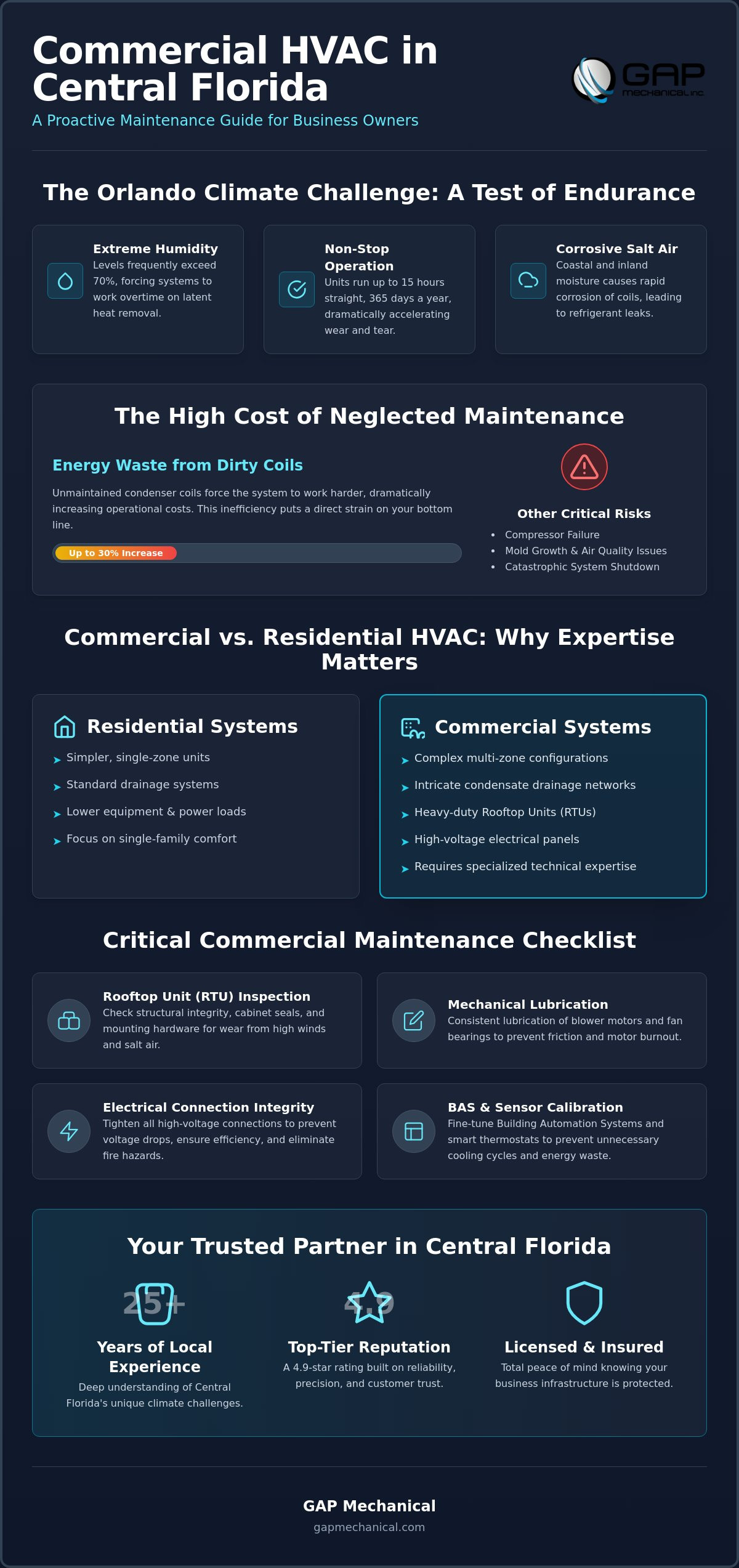
For property managers and business owners, understanding this climate challenge is key to avoiding costly downtime. The constant battle against high ambient humidity forces HVAC systems to work far harder, cycling compressors and dehumidifiers continuously. This accelerated wear and tear drastically reduces the lifespan of equipment and increases the risk of premature failure. Furthermore, older commercial buildings in neighborhoods like Winter Park or Kissimmee may have infrastructure that was not designed to handle modern loads or the sheer moisture content of the Florida air.
Ignoring routine upkeep in this aggressive climate is essentially running a marathon in a sauna. The systems are constantly under duress, and small, manageable issues—like clogged drain pans or minor refrigerant leaks—can rapidly escalate into major, business-halting failures.
Why Preventative Maintenance Trumps Reactive Repair
The most significant difference between a smart business owner and a reactive one is the adoption of a preventative maintenance philosophy. Reactive maintenance—waiting until the unit breaks down and the air conditioning fails during a heatwave—is always more disruptive and disruptive than scheduled maintenance.
A comprehensive commercial maintenance plan addresses the root causes of inefficiency and failure before they manifest. It shifts the focus from simply fixing problems to ensuring optimal operational longevity. This approach keeps your facility running smoothly, maintains a consistent environment for your staff and clientele, and protects your operational reputation.
When systems are maintained regularly, they operate at peak efficiency. This efficiency translates directly into reduced energy consumption and fewer unexpected service calls. For those facing ongoing issues, understanding the scope of professional service is vital. If you suspect your current unit is struggling, professional AC repair in Orlando is often the next step to diagnose and correct underlying issues.
The Core Pillars of Commercial HVAC System Health
A full commercial maintenance visit is a detailed, multi-point inspection that goes far beyond simply changing a filter. It is a systematic evaluation of every component of the HVAC lifecycle—from the outdoor condensing unit to the smallest internal ductwork vent.
Here are the primary areas that require meticulous attention during a professional maintenance service:
- Refrigerant Levels and System Integrity: Ensuring the refrigerant charge is correct and that there are no leaks in the lines or seals. A low charge forces the compressor to run longer and harder, leading to burnout.
- Airflow and Ductwork Inspection: Checking for leaks in the ductwork (which is common in older buildings) and ensuring that the blower motors are moving air at the specified velocity across all zones. Poor airflow leads to uneven cooling and potential mold growth.
- Electrical Components: Inspect all electrical connections, voltage levels, and capacitor health. Fluctuations in power are common in commercial settings and can destroy compressors and motors quickly.
- Coil and Condenser Cleaning: Dirt, dust, and debris accumulate on coils, severely restricting heat exchange. Professional cleaning restores the unit's ability to efficiently absorb heat from the environment and release it outside.
- Drainage Systems: Ensuring condensate drains are clear of algae, mold, and blockages. Proper drainage is crucial for both operational efficiency and preventing water damage within the building structure.
Regular checks on these pillars ensure that the system is performing exactly as designed, allowing your business to focus on its core mission rather than environmental discomfort or equipment failure.
Mitigating Risk in an Environment Prone to Weather Extremes
Central Florida’s unpredictable weather—from intense, sweltering heat waves to sudden, powerful thunderstorms and the constant threat of hurricanes—requires a higher standard of operational resilience. Commercial HVAC systems are often the first line of defense against extreme environmental factors.
Maintenance is a key component of risk mitigation. When a system is properly tuned and maintained, it is better equipped to handle sudden load increases or environmental stressors. A well-serviced unit is less likely to fail during a critical peak usage period or a severe weather event. Furthermore, as commercial regulations become stricter regarding energy efficiency and environmental impact, proactive maintenance helps ensure your business remains compliant and operates within the most efficient parameters.
For business owners looking to optimize their infrastructure, understanding when to consider an upgrade versus a repair is important. If your system is nearing the end of its expected lifespan or if you are experiencing persistent, non-fixable issues, researching commercial AC replacement in Orlando may be the most financially sound long-term decision for your facility.
Identifying the Signs Your System Needs Professional Attention
While regular maintenance is the goal, sometimes the system signals distress before a complete failure occurs. Recognizing these early warning signs allows for intervention before a minor issue becomes a major disruption. These signs are often subtle, but they are critical indicators of underlying problems.
Look out for these common operational red flags within your commercial space:
- Inconsistent Temperatures: If different zones in your building have vastly different temperatures, it indicates airflow issues, potential duct leaks, or uneven unit performance.
- Excessive Noise: Unusual grinding, rattling, or loud humming sounds often point to worn bearings, unbalanced components, or obstructions within the unit.
- Visible Condensation or Ice: Any formation of ice on the evaporator coils or excessive dripping suggests a refrigerant issue, low airflow, or operational malfunctions that need immediate professional attention.
- Sudden Spikes in Utility Bills: A noticeable jump in energy use without a change in business activity is a clear sign that your HVAC system is struggling against inefficiencies (e.g., clogged coils or refrigerant loss).
- Faint Odors: Strange or musty smells can indicate issues with the drainage system, mold growth within the ductwork, or problems with the filtration media.
The Importance of Vetting Your HVAC Contractor
Finding a reliable partner for your commercial HVAC needs is perhaps the most critical step. In a competitive market like Orlando, the quality of service and the expertise of the technician matter more than the initial quote. You need a partner who understands the specific demands of commercial operations and the unique challenges of the Central Florida climate.
When looking to hire a professional, ask pointed questions about their experience, certifications, and approach to preventative care. A reputable contractor should be able to provide detailed answers regarding their maintenance protocols and ensure they are fully licensed and insured to handle commercial properties. To help guide your selection process, review the Questions to ask an HVAC contractor in Orlando.
A professional approach means focusing on diagnosis and long-term solutions, not just quick fixes. The goal is to build a partnership that guarantees operational reliability for your business, allowing you to focus on your customers while we focus on the climate control.
The comprehensive approach to commercial HVAC maintenance ensures that your business environment remains comfortable, efficient, and compliant, regardless of Orlando's intense heat or unpredictable weather patterns. It is an commitment to operational continuity.
Frequently Asked Questions
How often should I schedule commercial HVAC maintenance in Orlando?
For the demanding climate of Central Florida, most commercial operations benefit from having comprehensive maintenance performed at least twice per year—typically once before the peak cooling season begins and once during the high-use summer months.
What is the main difference between residential and commercial HVAC maintenance?
The primary differences lie in the scale, complexity, and required regulatory compliance. Commercial systems handle much higher loads, operate continuously, and require specialized knowledge of commercial zoning, tenant management, and high-capacity systems. The focus is always on maximizing uptime for business operations.
Can poor humidity control damage my commercial inventory?
Yes. Excessive humidity, or failure to properly dehumidify, can lead to mold and mildew growth, which can degrade stored inventory, damage sensitive electronic equipment, and create an unhealthy environment for employees and customers.
What should I check myself before calling a technician?
Before calling a professional, you should visually inspect your unit for obvious signs of trouble, such as strange noises, leaking water, or significant dirt buildup on the visible coils. Note any specific temperature discrepancies between different zones in your building to help the technician diagnose the issue quickly.
Frequently Asked Questions
How often should a commercial HVAC system be serviced in Orlando?
Most commercial systems in Central Florida require professional service at least four times per year. The extreme humidity and year-round cooling demands mean rooftop units run significantly more hours than systems in other regions. Quarterly visits allow technicians to clear condensate lines and check refrigerant levels before small issues lead to a total facility shutdown.
What are the signs that my commercial AC unit needs immediate maintenance?
Unexplained spikes in your monthly utility bills or inconsistent temperatures between building zones are the most common indicators of mechanical trouble. You should also watch for increased indoor humidity levels or moisture pooling around your air handlers. These signs often point to failing sensors or clogged drainage systems that require professional attention to prevent property damage.
Can regular maintenance really lower my business energy bills?
Yes, proactive commercial HVAC maintenance Orlando keeps your operational considerations predictable by ensuring every component runs at peak efficiency. Dirty condenser coils and miscalibrated thermostats can force your system to work 30% harder to reach the same temperature. Regular cleaning and sensor calibration eliminate this wasted energy and reduce the strain on your bottom line.
Do commercial maintenance plans cover refrigeration equipment like walk-in coolers?
GAP Mechanical provides integrated maintenance plans that include both comfort cooling and commercial refrigeration systems for local businesses. We understand that restaurants and warehouses in Orlando rely on walk-in coolers to protect their inventory. Our technicians inspect compressor health and clean evaporator coils to ensure your refrigeration units work in harmony with your building’s HVAC system.
What is the difference between a commercial HVAC tune-up and a residential one?
Commercial maintenance is significantly more complex because it involves multi-zone configurations, high-capacity rooftop units, and sophisticated building automation systems. While residential service focuses on single-family comfort, commercial service addresses the technical demands of VAV boxes, economizers, and heavy-duty blower motors. The scale of refrigerant volumes and electrical loads also requires a higher level of specialized licensing.
How long does a typical commercial HVAC maintenance visit take?
A standard maintenance visit for a single commercial unit typically takes between two and four hours. This duration depends on the accessibility of the rooftop equipment and the complexity of your facility's zoning. Larger industrial sites with multiple RTUs or integrated refrigeration systems may require a full day to ensure every 25-point inspection is completed with professional precision.
Is a maintenance contract required for equipment warranty compliance?
Most major HVAC manufacturers require documented proof of regular professional service to honor their parts and compressor warranties. If a critical component fails and you cannot provide service records from a licensed contractor, the manufacturer may deny your claim. Maintaining a consistent service agreement protects your long-term equipment asset and ensures you stay compliant with warranty terms.
What local Orlando areas does GAP Mechanical serve for commercial maintenance?
Our team provides expert service to businesses throughout Orlando, Kissimmee, Winter Park, and Altamonte Springs. We also cover the broader Central Florida region, including Clermont, Lakeland, and coastal areas like Cocoa Beach. With over 25 years of local experience, we understand the specific building codes and environmental challenges unique to these individual communities.