

Air Conditioner Repair in Orlando: What to Know
Published July 9, 2026
Determining the complexity and necessary asset for an air conditioner repair in Orlando depends entirely on the specific issue, the age of your unit, and the unique environmental demands of Central Florida. A comprehensive assessment looks beyond simple repairs, factoring in the specific diagnostic process, the availability of specialized parts, and the overall health of your home’s HVAC system.
As homeowners in the Orlando area, you know that surviving the brutal Central Florida heat requires a reliable cooling system. Whether you live in the suburban streets of Winter Park or the bustling communities near Dr. Phillips, the combination of high humidity, intense sun, and sudden storm cycles puts a constant strain on your air conditioning unit. When the system starts acting up, understanding the variables that influence the necessary service is essential for making an informed decision.
Understanding the Variables: What Affect the Scope of an AC Repair?
When a seasoned technician from GAP Mechanical evaluates a cooling issue, they aren't just looking at a single broken part; they are performing a holistic health check on an intricate machine operating under extreme pressure. The factors that dictate the required time and resources vary dramatically between a simple clogged filter and a major compressor failure. To truly educate you on the service process, we must look at the core variables involved.
The Complexity of Diagnostics
The first step in any professional service call is the diagnostic phase. This is arguably the most critical part of the repair process. Our technicians use specialized tools to pinpoint exactly what is happening inside the unit. They are not simply replacing parts based on a hunch.
- Electrical Fault Identification: Is the issue a tripped capacitor, a faulty relay, or a deeper problem with the circuit board? These require specialized knowledge of complex electrical systems.
- Refrigerant Leak Detection: Refrigerant loss is common due to wear and tear, but locating a pinhole leak requires forensic precision. Finding and sealing that leak dictates the subsequent steps.
- Mechanical Stress Analysis: We look at the physical components—belts, motors, fans—to see if the failure was an isolated incident or a symptom of systemic wear.
For a homeowner, the difference between a quick fix and an intensive service call often comes down to the initial diagnostic findings. A thorough assessment ensures that the solution addresses the root cause, preventing a recurrence of the problem shortly after the repair is completed.
The Impact of System Age and History
The age of your air conditioner and its maintenance history are huge variables. A unit that was meticulously maintained since its installation will present different challenges than a system that has been neglected over a decade.
Older Systems: Units nearing the end of their expected lifespan often require parts that are no longer readily available. Sourcing legacy components can significantly impact the time required for the repair. Furthermore, older systems may have underlying inefficiencies that a simple repair cannot fix, leading to a conversation about whether repair or replacement offers the best long-term value.
Modern Systems: Newer, high-efficiency models often incorporate sophisticated digital controls and sensors. While these offer superior performance, diagnosing a software or control board issue requires advanced, specific diagnostic equipment and programming expertise.
Navigating the Central Florida Climate Challenges
No HVAC system operates the same way in Orlando as it would in a cooler climate. The relentless combination of heat, humidity, and the frequent presence of tropical weather creates unique stressors that influence repair needs.
The Humidity Factor
Central Florida’s humidity is a critical factor. Your AC unit isn’t just cooling the air; it is also dehumidifying it. If the system is struggling with high moisture levels—a common occurrence during the rainy season or high-humidity months—the components that manage moisture (like the evaporator coil and drain lines) are under immense strain.
- Condensation and Drainage: Blockages in the condensate drain line are frequent, and diagnosing whether the issue is a simple clog or a deeper drainage system failure is part of the service process.
- Moisture Degradation: High humidity can accelerate the degradation of electrical components and insulation within the unit, making repairs more complex and potentially requiring replacement of surrounding parts.
Intense Heat and Load Management
In areas like the surrounding neighborhoods of Oviedo or Celebration, the cooling load on the unit during peak summer months is extreme. When a unit is constantly running at maximum capacity, components like the compressor and condenser coil experience faster wear. When a failure occurs under these conditions, the repair often involves replacing heavily stressed components, which is a more intensive process than fixing a unit that operates under normal conditions.
The Technical Depth of AC Repair Processes
When speaking about AC repair, it is important to move past the "fix" mindset and look at the "service" mindset. A professional service call involves a structured process of verification, repair, and testing to ensure complete operational integrity.
The Step-by-Step Repair Journey
A comprehensive repair process usually follows these critical steps:
- Initial Intake and Site Assessment: Understanding the customer's symptoms and the general environment.
- System Power-Up and Initial Testing: Running the unit in safe modes to see what it is doing.
- Diagnostic Testing: Using specific tools to test pressure, voltage, airflow, and temperature differentials.
- Identifying the Root Cause: Pinpointing the exact failed component or systemic issue.
- Parts Sourcing and Acquisition: Securing the correct, high-quality component.
- Execution of Repair: Replacing or repairing the faulty part, often involving brazing lines or soldering electrical connections.
- System Recommissioning and Testing: Recharging the system (if necessary), adjusting refrigerant levels to the manufacturer's specifications, and running the unit through a full cycle to confirm performance.
This detailed process ensures that the repair is not just a temporary patch. For more detailed insight into the troubleshooting process, we recommend reviewing our guide on AC repair in Orlando.
The asset Decision: Repair vs. System Replacement
One of the most critical discussions a homeowner has when their AC fails is whether the repair is worth the asset. This decision is highly individualized and depends on several key factors that only a professional assessment can determine.
The Rule of Thumb: System Lifespan
A common rule of thumb in the industry suggests that if the repair involves replacing more than 50% of the system's original value, or if the unit is nearing the end of its expected life, replacement may offer superior long-term value. However, this is a generalized principle; a specific assessment of your unit’s components is always necessary.
Considering Advanced Options: If your current system is struggling with efficiency or age, you might explore newer technologies. For example, we offer detailed information on replacing your furnace with a heat pump in Orlando, which can offer efficiency and comfort advantages depending on your specific home needs.
Analyzing Component Health
A professional assessment looks at the "health" of the surrounding infrastructure. If the repairs necessitate replacing a major component, the technician will also check the condition of the electrical wiring, refrigerant lines, and insulation. Sometimes, a component replacement is merely the visible symptom of broader system stress. Addressing these underlying issues ensures that the repair itself lasts and that you are not facing a secondary failure shortly after the initial service.
Ensuring You Have the Right Partner for Your Orlando Home
Because the complexity of any AC repair can range from a simple fuse replacement to a complete system overhaul, choosing the right service provider is paramount. It is important to ensure that the company you choose possesses the local expertise, the necessary certifications, and the proven track record to handle the unique demands of Central Florida.
When you are considering service, remember that a licensed and EPA-certified professional is not just a repair technician; they are a specialist who understands the thermodynamics of your specific environment. Being licensed (such as CAC 1813597) and having decades of experience in the Orlando region provides a level of assurance regarding both the quality of the work and the safety of the procedures.
We strongly encourage homeowners to conduct their own due diligence before a service visit. Knowing exactly what to ask during the service call can help you better understand the scope and complexity of the required work. For a detailed guide on preparation and questioning, review our resource on hiring checklist for Orlando homeowners.
In conclusion, the factors influencing the required effort and resources for an AC repair in Orlando are vast, ranging from the specific technical failure identified during diagnostics to the unique environmental pressures of Central Florida. By understanding these variables, you can make a more informed decision about your home’s cooling needs and ensure that the service you receive is thorough, effective, and designed for longevity.
Frequently Asked Questions
Q: How long should a standard AC repair take in Orlando?
A: The duration of a repair varies widely. A minor issue, like a clogged drain or a simple electrical reset, might take an hour or less. However, complex repairs that involve refrigerant recovery, detailed component replacement, and thorough system testing can require several hours to complete effectively, ensuring the longevity of the fix.
Q: Can Central Florida's humidity make AC repairs more difficult?
A: Yes, humidity presents a unique challenge. High moisture levels place extra strain on the condensate drain lines and the system’s ability to dehumidify. Technicians must specifically address these moisture-related issues—such as ensuring proper drainage and verifying dehumidification settings—beyond just cooling capacity.
Q: What is the difference between a repair and a system replacement decision?
A: The decision hinges on the root cause and the age of the unit. A repair focuses on fixing a specific, isolated component failure.
Q: Why is a professional diagnostic test so important before starting a repair?
A: A professional diagnostic test moves the process from guesswork to certainty. It allows the technician to identify the exact cause—whether it’s a faulty capacitor, a refrigerant leak, or a control board issue—preventing unnecessary parts replacement and ensuring the repair addresses the actual problem.
Frequently Asked Questions
Environmental Impact of Central Florida Heat
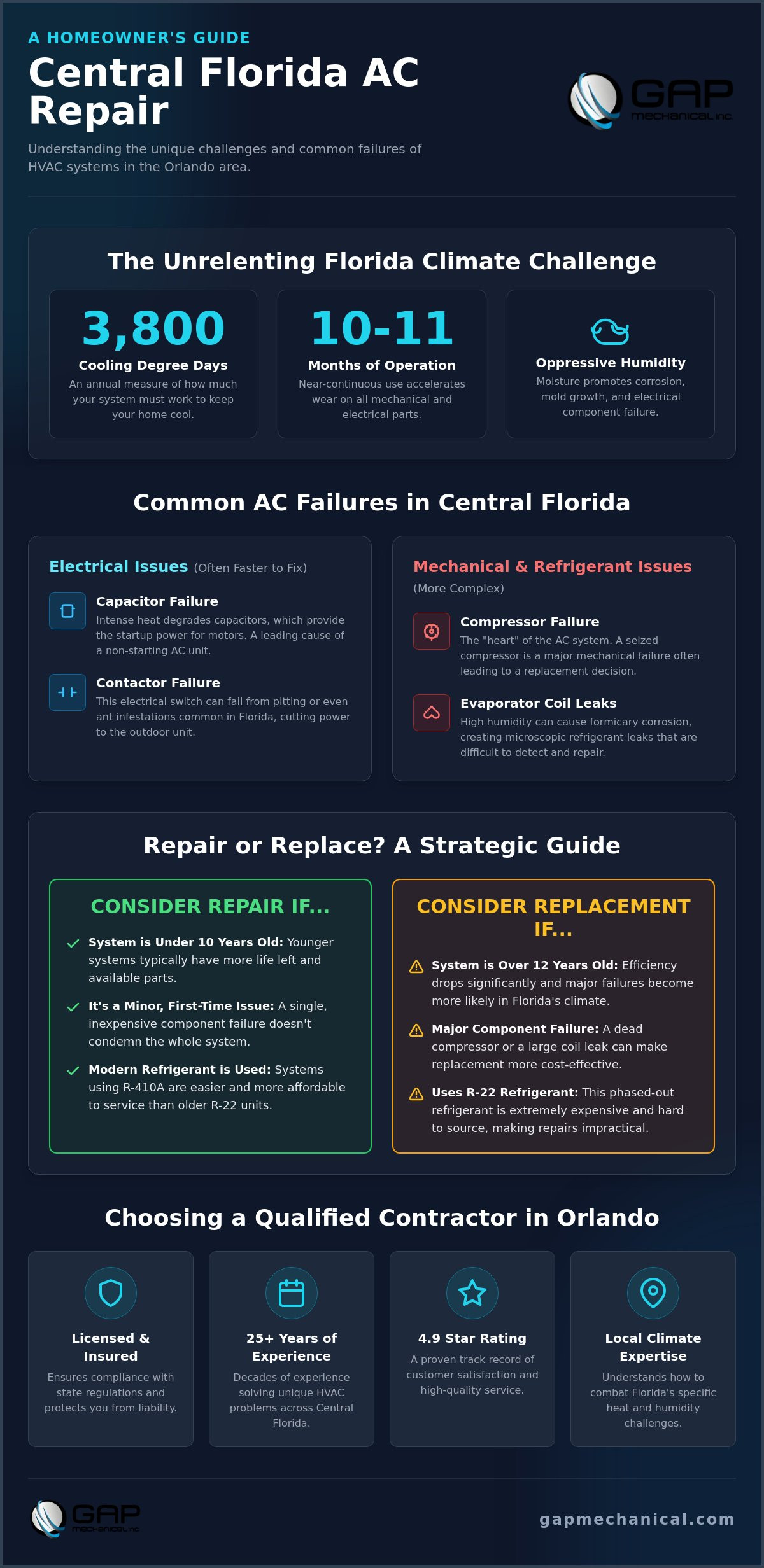
Orlando experiences approximately 3,800 cooling degree days annually. This means your system runs almost continuously for 10 to 11 months of the year. This relentless operation accelerates component wear. High local humidity is a constant threat that triggers oxidation in electrical connections. Even in inland hubs like Altamonte Springs, moisture in the air can compromise the integrity of aluminum fins and copper lines over time. This corrosion leads to pinhole leaks that are difficult to locate without specialized equipment.
System Type and Technology Complexity
Modern technology adds layers of diagnostic complexity. Standard single-stage units are simpler to troubleshoot than high-efficiency heat pumps with variable-speed motors. These advanced systems are superior for humidity control but require technicians with specific training in electronic controls. Smart thermostat integration also changes the diagnostic path. A communication error between the thermostat and the control board can mimic a mechanical failure. Identifying the root cause requires a disciplined, technical approach to avoid unnecessary part replacements. Central Florida's environment creates a unique set of challenges for cooling systems. The high operational volume we discussed previously leads to predictable wear patterns that directly influence an air conditioner repair consideration Orlando assessment. Orlando units face constant thermal stress that triggers specific failures in electrical circuitry, refrigerant loops, and drainage systems. Understanding these common failure points helps you prepare for the specific technical requirements of a local service call.
Electrical Component Wear in High Temperatures
The most frequent service calls in cities like Clermont and Lakeland involve electrical component failure. The capacitor acts as a start-up battery, providing the high-voltage burst needed to engage the compressor and motors. Extreme Orlando heat causes these parts to expand, bulge, or leak oil, which eventually prevents the system from starting. Contactors also suffer in this climate. These are the switches that control power flow; they often fail due to pitted surfaces or ant infestations, which are common in Florida. We prioritize using exact-match OEM parts during an AC repair to ensure the electrical system maintains its original safety and efficiency standards.
Refrigerant Systems and Coil Integrity
Refrigerant issues are more complex than simple electrical swaps. Many homeowners face formicary corrosion, a specific type of chemical reaction that creates microscopic, tea-colored pits in copper evaporator coils. These leaks are often so small they require electronic leak detection or ultraviolet dye to locate. If your system was installed before the industry-wide transition away from R-22 refrigerant, these leaks are particularly critical. Since R-22 is no longer produced, even a minor leak in an older Orlando unit can make a full coil restoration or system upgrade a more logical path than a simple recharge. Other common issues include: If you suspect your system is struggling with any of these issues, scheduling a professional diagnostic is the best way to identify the root cause before it leads to a total shutdown. Deciding whether to authorize a fix or invest in a new installation is a pivotal moment for any homeowner. While the immediate air conditioner repair consideration Orlando residents face might seem manageable, it's essential to look at the broader financial picture. A system that has required multiple service calls over the last 24 months is sending a clear signal of impending failure. We recommend evaluating your unit based on its performance trends and technical limitations rather than just the current breakdown.
The Age Factor in Orlando HVAC Systems
In most parts of the country, an AC unit might last 15 to 20 years. In Central Florida, the average functional lifespan drops to 10 or 12 years. Our systems run nearly year-round, which means a 10-year-old unit in Orlando has the "mileage" of a 20-year-old unit in a cooler state. Repairing a system at this stage often leads to diminishing returns. You might fix a fan motor today only to have the compressor fail three months later. For homeowners with aging systems, replacing your furnace with a heat pump in Orlando offers a modern, high-efficiency alternative that provides better year-round value and reliability.
Efficiency Loss and Monthly Utility Impact
A failing component rarely acts in isolation. When a motor loses efficiency or a coil is partially blocked, the rest of the system overworks to compensate. This strain increases your monthly energy consumption, often before a total breakdown occurs. Modern systems utilize SEER2 ratings to measure efficiency; older units simply can't compete with the energy savings of these newer standards. A professional diagnostic can reveal hidden efficiency drains that are quietly inflating your utility bills. Beyond basic cooling, newer models offer superior humidity control, which is a vital feature for maintaining comfort in our local environment. If your current unit can't keep the indoor air dry despite frequent repairs, it's a strong indicator that the technology is no longer meeting your home's needs. Professional maintenance is the single most effective tool for controlling the total air conditioner repair consideration Orlando residents experience over time. Shifting from a reactive "fix it when it breaks" mindset to a proactive strategy ensures your system operates at peak efficiency. In Central Florida, HVAC systems endure relentless operational stress due to our extended cooling season. This makes bi-annual tune-ups a necessity rather than an option. Consistent care allows for the early detection of refrigerant leaks and electrical wear before they escalate into catastrophic failures that require major component overhauls.
The Preventive Maintenance Framework
A standard maintenance checklist for an Orlando home must address the specific stressors of our environment. This includes tightening electrical connections to prevent heat-induced oxidation and flushing condensate drain lines to clear local algae growth. Regular service also preserves manufacturer warranties. Many homeowners don't realize that failing to document professional maintenance can void their coverage for major components like compressors or heat pump reversing valves. By scheduling service during the milder spring and fall months, you avoid the high-demand windows of the summer peak when technicians are most stretched across cities like Altamonte Springs and Kissimmee.
Humidity Control and System Longevity
A well-maintained AC system does more than just lower the temperature; it acts as the primary dehumidifier for your home. Dirty evaporator coils or a sluggish blower motor significantly reduce the system’s ability to strip moisture from the air. This forces the unit to run longer cycles, which increases wear on every internal part and accelerates the degradation of your ductwork health. While we specialize in AC repair in Orlando, we advocate for maintenance as your first line of defense. Proper calibration ensures your system can handle the intense humidity of a typical Florida afternoon without overworking. Local expertise is vital because Florida systems face challenges that aren't common in other states. Our technicians bring over 25 years of experience to every service call, ensuring your system is prepared for the specific demands of the Orlando climate. This disciplined approach to maintenance extends the functional lifespan of your unit and provides much-needed peace of mind during our hottest months. If you want to ensure your system is ready for the next heatwave, you should schedule a comprehensive maintenance visit with our team today to verify your system's performance. Selecting the right technician is the final and most critical step in managing your cooling system. While understanding the variables of an air conditioner repair consideration Orlando estimate is helpful, the quality of the labor determines the longevity of the fix. You need a partner who views your HVAC system as a long-term asset rather than a one-time service call. A qualified contractor should always provide a thorough diagnostic before turning a single wrench. This transparency ensures you aren't paying for unnecessary parts or temporary patches that fail during the next heatwave. Reputation serves as a reliable indicator of technical competence. We take quiet pride in our 4.9-star Google rating, which reflects our commitment to the Central Florida community over the last 25 years. Experience in this specific region matters because our climate demands a higher standard of mechanical discipline. Whether you're in Winter Park or Cocoa Beach, your contractor must be prepared for the unique challenges of high-humidity environments and salt air exposure.
Why Professional Certification Matters
Hiring an unlicensed "handyman" for complex HVAC work introduces significant risks to your home and your wallet. Modern systems require specialized tools for refrigerant management and electronic diagnostics that general contractors simply don't possess. Improper handling of these components can lead to safety hazards or the total loss of your manufacturer warranty. Before you sign a work order, we suggest reviewing our hiring checklist for Orlando homeowners to ensure you're asking the right questions about insurance and state licensing.
The GAP Mechanical Standard of Service
As a fully licensed and insured HVAC/R contractor, we provide a steady hand for both residential and commercial clients across Central Florida. We don't rely on hyperbolic marketing; we rely on a history of dependable results and technical expertise. Our team understands the urgency of a failing AC unit in the middle of July. We focus on fast, reliable solutions that prioritize efficiency and long-term stability. If your cooling system is struggling to keep up with the Florida heat, we encourage you to contact us for a professional evaluation. Let our experienced technicians provide the clarity and security you need to keep your home comfortable year-round. Managing an HVAC system in Central Florida requires a proactive strategy to handle the unique environmental stressors of our region. You now understand how system age, humidity levels, and component complexity all play a role in determining an air conditioner repair consideration Orlando assessment. By prioritizing bi-annual maintenance and choosing a qualified expert, you protect your home from the risks of sudden mechanical failure and inefficient operation. This disciplined approach ensures your cooling system remains an asset rather than a source of recurring stress. Our team brings over 25 years of local Orlando experience to every service call, maintaining a 4.9-star Google rating through transparency and technical excellence. As a licensed and insured HVAC/R contractor, we focus on providing the stability and reliability your family needs to stay comfortable. Schedule your professional AC repair diagnostic with GAP Mechanical today. Taking this small step now ensures your system remains a dependable defense against the Florida heat and gives you total peace of mind throughout the cooling season.
How do I know if my AC repair is urgent in Orlando?
Total loss of cooling during peak heat, burning smells, or water leaking into the home are the primary indicators of an urgent situation. These issues can lead to interior heat exhaustion or structural damage from mold and water intrusion. Identifying these signs early allows you to manage your air conditioner repair consideration Orlando planning by preventing secondary damage before it escalates. Monitor your system's performance closely during the summer months to catch these red flags early.
Is it worth repairing an AC unit that is over 10 years old in Florida?
It depends on the repair's complexity and the unit's history, but systems over a decade old in Orlando are often near the end of their functional life. If the failure involves a major component like the compressor, the long-term air conditioner repair consideration Orlando residents face often makes replacement a better choice. Newer systems offer superior efficiency and better humidity control for Central Florida homes, which can lead to lower monthly utility expenses over time.
What are the most common causes of AC failure in Central Florida?
High operational hours and intense humidity are the leading drivers of system failure in our region. These environmental factors cause electrical components to oxidize and condensate drain lines to clog with persistent algae growth. Additionally, the constant thermal stress leads to refrigerant leaks in copper evaporator coils and condenser fan motor burnout. Regular professional maintenance is the most effective way to address these localized threats and ensure your system remains reliable during the hottest months.
Can I perform any AC repairs myself to save on considerations?
Homeowners should limit DIY tasks to basic maintenance like changing air filters or clearing debris from the outdoor condenser unit. Attempting to repair electrical components or handle refrigerant without proper licensing is dangerous and often voids manufacturer warranties. Modern HVAC systems require specialized diagnostic tools and technical expertise to ensure a safe and effective repair that meets local Florida building codes and safety standards. Professional intervention is necessary to maintain the integrity of your cooling system.
How long does a typical air conditioner repair take to complete?
Most standard repairs, such as replacing a capacitor or cleaning a drain line, are completed within one to three hours. More complex issues involving refrigerant leak detection or motor replacements can take a full morning or afternoon to resolve. The total duration depends on the accessibility of your unit and the immediate availability of specific OEM parts required for your particular HVAC model. Our technicians work efficiently to restore your comfort as quickly as possible during a service call.
What should I check before calling a professional for AC repair in Orlando?
Verify that your thermostat has power, check your circuit breaker for a tripped switch, and ensure your air filter is clean. Sometimes a system stops cooling simply because of a restricted airflow issue or a dead thermostat battery. If these basic checks don't resolve the problem, contact a licensed contractor to perform a comprehensive diagnostic. This process identifies the underlying mechanical or electrical issue and prevents you from paying for a service call for a simple, non-technical problem.
Does a refrigerant leak always mean I need a new AC unit?
A leak does not always require a full replacement, but the location and severity of the leak dictate the best course of action. Small leaks in accessible copper lines can often be sealed or repaired by a technician. However, if the leak is located within the evaporator coil of an older system, the consideration of restoration may be high enough to justify an upgrade. A professional leak detection test is required to determine the most efficient solution for your home.
Why is my AC running but not cooling my home effectively?
This is often caused by restricted airflow, low refrigerant levels, or a failing compressor that can no longer circulate coolant properly. In the Orlando heat, even a slight drop in system efficiency prevents the unit from reaching your set temperature. A professional evaluation will determine if the issue is a simple technical adjustment, a dirty coil, or a more significant mechanical failure requiring repair. Addressing efficiency drops early prevents the system from overworking and suffering a total breakdown.