

Air Conditioner Fan Not Spinning in Orlando: What to Do
Published September 26, 2026
A stopped AC fan is a symptom to locate, not a diagnosis to guess. If the air conditioner fan is not spinning in Orlando, check whether the indoor blower or outdoor unit fan has stopped, and turn the system off if it’s running without airflow or the outdoor fan isn’t moving. Continuing to run it can risk further damage.
It’s understandable to wonder whether the problem is a simple setting or an electrical failure. Orlando’s heat and humidity make a working AC especially important, including in neighborhoods like Thornton Park, but not every check is safe to do yourself. Stick to basic observations and avoid opening equipment or reaching near a fan.
This guide explains how to tell which fan may be affected, what you can safely check, and when to shut the system down and call a technician. You’ll also learn what details to share, such as whether air is coming from the vents, whether the outdoor unit is humming, and when the issue began. Those clues can help an Orlando HVAC technician narrow down the problem without guesswork.
Key Takeaways
- The outdoor condenser fan releases heat, while the indoor blower moves air through your home. Which one has stopped helps describe the symptom, but it doesn’t confirm the cause.
- An air conditioner fan not spinning Orlando homeowners notice may relate to thermostat settings, a power interruption, a restricted filter, or another issue that needs professional diagnosis.
- Start with safe observations: check the thermostat, note whether air comes from the vents, and look for obvious debris around the outdoor unit. Don’t remove panels, touch wiring, or push the blades.
- Stop using the system and seek professional help if the fan remains stopped, cooling is poor, you hear unusual noise, or you notice a burning smell or visible damage.
- When contacting an HVAC technician, describe which fan appears affected, what the system is doing, and when the problem began. A technician can confirm the cause before recommending a repair.
What does it mean when your air conditioner fan is not spinning in Orlando?
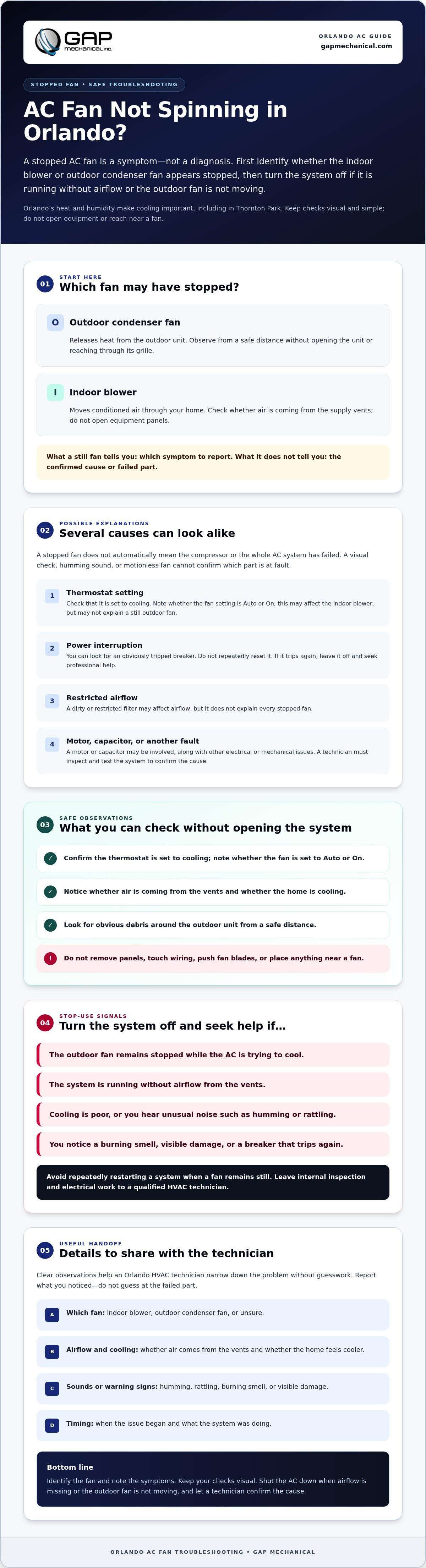
Which fan has stopped and what the system is doing determine what a non-spinning fan may mean; appearance alone can’t identify the cause. The outdoor condenser fan and indoor blower do different jobs, so note which one isn’t moving and whether your home still has airflow before deciding what to do.
In Winter Park, a cooling problem can become uncomfortable quickly during hot, humid weather. A fan that isn’t spinning may have several possible explanations, from a control or power issue to a component problem. Don’t treat a sound or visual clue as a confirmed diagnosis. An AC system has connected heating, cooling, and airflow components, as outlined in this overview of Heating, ventilation, and air conditioning (HVAC).
Is the outdoor condenser fan or indoor blower the one that stopped?
The outdoor fan is usually visible in the condenser unit outside your home. Observe it from a safe distance without opening the unit or reaching through its grille. The indoor blower moves conditioned air through the home, so check whether air is coming from the supply vents. Note which fan appears stopped and whether airflow continues indoors. These observations help describe the symptom, but they don’t reveal the failed part.
What other symptoms should you notice?
Pay attention to whether the AC is cooling, whether air is moving from the vents, and whether you hear humming, rattling, or another unusual sound. Observe without touching the equipment or placing anything near a fan. A humming sound alone doesn’t confirm a specific failed part. If the air conditioner fan not spinning Orlando homeowners notice comes with poor cooling or unusual noise, record those details for a technician.
Keep your notes simple: which unit or fan you observed, whether air is coming through the vents, whether the home feels cooler, and what sounds you heard. This gives a technician a useful starting point without requiring you to inspect electrical parts or guess at a repair.
Why might an AC fan stop spinning in an Orlando home?
A stopped fan can have several causes, and a visual check can’t confirm which one applies. Thermostat settings, a power interruption, restricted airflow, or a fault in a motor or electrical component are all possibilities. A still fan does not automatically mean the compressor or the entire AC system has failed, though if an aging unit is suffering repeated major breakdowns, you may eventually decide to explore Air Conditioning Installation to weigh replacement against continuous repairs.
In Winter Park’s warm, humid weather, it’s useful to distinguish simple observations from problems that need testing. Use the basic checks described earlier, then leave internal inspection and electrical work to a qualified technician.
Can a thermostat setting or power issue stop the fan?
Check that the thermostat is set to cooling and note whether its fan setting is Auto or On. The setting affects indoor blower operation, but it may not explain an outdoor fan that remains still. You can also look for an obviously tripped breaker. Don’t repeatedly reset it; if it trips again, leave it off and seek professional help. See this guide to AC breaker problems for related symptoms.
Could a failed motor or capacitor be involved?
Yes. The motor turns the fan, while a capacitor is an electrical component that helps some motors start or run. Either could be involved, but humming or a motionless fan can’t identify the failed part. Other electrical or mechanical faults may produce similar symptoms.
A dirty or restricted filter may also affect airflow, but it won’t explain every stopped fan. Don’t remove equipment panels, test electrical components, or attempt to replace a motor or capacitor. A qualified HVAC technician can inspect the system and confirm the cause before recommending a repair.
What can you safely check before calling for AC fan repair?
Keep your checks visual and simple: confirm the thermostat settings, observe airflow at the vents, and look for obvious debris around the outdoor unit. If the outdoor fan remains stopped while the AC is trying to cool, switch the system off at the thermostat and arrange professional diagnosis.
These steps can help you report what’s happening without exposing yourself to electrical parts or moving equipment. In Winter Park’s heat, it may be tempting to keep restarting the system for relief. Resist that urge if a fan stays still. Repeated operation may place added strain on system components, and it won’t identify or fix the underlying cause.
Which checks are safe to do yourself?
Follow this short sequence without opening the equipment:
- Check the thermostat. Confirm it’s set to cooling and review the selected temperature. Note whether the fan setting is Auto or On.
- Observe airflow. Check whether air is coming from the supply vents and whether it feels cooler than the room. Don’t put your hands inside the equipment to check airflow.
- Look at the filter. If it’s visibly dirty, follow the filter’s instructions for routine replacement. A restricted filter can affect airflow, but changing it won’t resolve every fan problem.
- Scan around the outdoor unit. Look for leaves or other obvious debris near the unit. Don’t reach through the grille, remove a panel, or try to push the fan blades.
For an air conditioner fan not spinning Orlando homeowners should stick to observation rather than electrical troubleshooting. Don’t touch wiring, remove covers, or test components. A fan can start unexpectedly, and internal electrical parts aren’t safe to handle as a DIY check.
When should you turn the AC off?
If cooling is requested and the outdoor fan remains stopped, switch the thermostat to Off rather than letting the system continue to run. Also shut it down if you notice a burning odor, visible damage, or unusual sounds. Don’t keep cycling the thermostat to see whether the fan starts.
Look for ice only from a safe distance. If you see icing on the indoor equipment or refrigerant lines, keep the system off and tell the technician what you observed. A stopped fan needs a qualified diagnosis; visible ice is an additional symptom, not a reason to open the unit or attempt a repair.
When does a stopped AC fan need professional attention in Orlando?
Arrange professional diagnosis if a fan stays stopped, the system cools poorly, or you hear unusual noise. Turn the AC off and seek help if you notice a burning odor or visible damage. In Orlando’s heat and humidity, delaying a decision can leave your home without reliable cooling, but continuing to run a system with a stopped fan may add strain to its components.
The phrase air conditioner fan not spinning Orlando describes a symptom, not a confirmed repair. Don’t keep restarting the equipment to see if it will work. A technician needs to inspect the system before identifying the cause or recommending what to do next.
What information should you share when requesting service?
- Whether the indoor blower, outdoor fan, or both appear to be stopped.
- When you first noticed the problem and whether the AC had been cooling normally.
- Whether air is coming from the vents and whether cooling has weakened.
- Any humming, rattling, or other unusual sound, and whether it continues.
- Whether you saw ice, had a recent power interruption, or noticed a breaker trip more than once.
Report only what you observed. You don’t need to open the unit or identify a failed component. If the system has a burning smell or visible damage, leave it off and mention that first.
How can a technician diagnose the problem?
A technician may check system controls, electrical components, and fan operation to determine why the fan stopped. The inspection helps distinguish between possible causes; a humming sound or motionless blade alone doesn’t confirm which part needs attention. The diagnosis should come before a repair recommendation.
GAP Mechanical provides residential AC repair in Orlando and Central Florida. The company is licensed and insured, with Florida contractor license CAC 1813597. If the fan remains stopped or cooling has become unreliable, contact GAP Mechanical about AC repair and share the symptoms you recorded.
How can Orlando homeowners get help with a fan that will not spin?
If a fan stays stopped, share what you observed with a residential AC technician and let them confirm the cause before recommending a repair. In Orlando’s heat, a clear description can help the service conversation start with the right symptoms, without you opening the unit or attempting electrical work.
What happens after you request residential AC service?
When you request service, describe whether the indoor blower, outdoor fan, or both appear affected. Explain when the problem began, whether air is coming through the vents, and whether the system is cooling or making an unusual sound. Mention any basic checks you already completed, such as confirming the thermostat setting or looking for visible debris near the outdoor unit.
Those details help a technician understand what you noticed. They don’t establish the cause. Diagnosis may involve checking system controls, electrical components, and fan operation. The technician should explain what they find before recommending a repair. GAP Mechanical provides residential AC repair in Orlando and Central Florida. You can review its residential AC repair services to learn more.
What is the next step if the fan is still stopped?
Leave the equipment closed. Don’t reach through a grille, push the fan blades, remove panels, or handle wiring. If the system is running while a fan remains stopped, or you notice a burning smell or visible damage, turn it off and describe the warning sign when requesting help.
GAP Mechanical is a licensed and insured HVAC contractor in Florida, with license number CAC 1813597. For an air conditioner fan not spinning Orlando homeowners can arrange a professional diagnosis through the company’s contact page.
Contact GAP Mechanical about AC repair.
Take the next step toward reliable cooling
A stopped fan is a symptom to report, not a part to guess at. Identify whether the indoor blower or outdoor fan appears affected, share any changes in airflow or sound, and leave electrical testing and repairs to a qualified technician. If the system keeps humming without cooling, don’t keep running it while you wait for a diagnosis.
For an air conditioner fan not spinning Orlando homeowners can get a clearer next step by describing what they observed and when it began. GAP Mechanical is licensed and insured under Florida license CAC 1813597, has served Central Florida since 2003, and reports a 4.9-star Google rating.
Contact GAP Mechanical about AC repair to discuss the symptoms and arrange professional guidance. With a careful description and a proper diagnosis, you can move forward without taking unnecessary risks. Your next step can be simple and safe.
Frequently Asked Questions
Is it safe to run my AC if the outdoor fan is not spinning?
No. If the outdoor fan stays stopped while the thermostat is calling for cooling, switch the system off. Continued operation may strain equipment, though damage isn’t certain. Don’t touch the fan, reach through its grille, or open the unit to investigate. If the fan remains stopped when you observe it, arrange a professional diagnosis rather than repeatedly restarting the AC.
Can a bad capacitor cause an air conditioner fan not to spin?
Yes, a capacitor problem is one possible cause, but a stopped fan alone can’t confirm it. A motor fault, power interruption, control issue, or wiring problem may also be involved. Don’t test or replace electrical parts yourself, even if the outdoor unit hums. A qualified HVAC technician can inspect the system and identify the actual fault before recommending a repair.
What should I check if my AC fan is not spinning in Orlando?
For an air conditioner fan not spinning Orlando homeowners can start by confirming the thermostat is set to cooling and observing whether air still comes through the indoor vents. Look for obvious leaves or debris near the outdoor unit, but don’t reach inside. Never remove panels, touch wires, or push the fan. If it stays stopped while the AC runs, switch the system off and arrange professional assessment.
Why is my AC running but the fan is not turning?
The answer depends on whether the outdoor condenser fan or indoor blower has stopped. Possible causes include a control or power issue, a motor fault, or another electrical component problem. A humming sound or the fan’s appearance can’t identify the cause by itself. Observe the equipment from a safe distance, avoid opening it, and have a qualified technician test the system and recommend any needed repair. Homeowners experiencing cooling equipment or major appliance issues in other regions can turn to reputable service professionals like HeyKey Appliance & HVAC Repair for expert troubleshooting and repairs.
Frequently Asked Questions
Is the outdoor condenser fan or indoor blower the one that stopped?
The outdoor fan is usually visible in the condenser unit outside your home. Observe it from a safe distance without opening the unit or reaching through its grille. The indoor blower moves conditioned air through the home, so check whether air is coming from the supply vents. Note which fan appears stopped and whether airflow continues indoors. These observations help describe the symptom, but they don’t reveal the failed part.
What other symptoms should you notice?
Pay attention to whether the AC is cooling, whether air is moving from the vents, and whether you hear humming, rattling, or another unusual sound. Observe without touching the equipment or placing anything near a fan. A humming sound alone doesn’t confirm a specific failed part. If the air conditioner fan not spinning Orlando homeowners notice comes with poor cooling or unusual noise, record those details for a technician. Keep your notes simple: which unit or fan you observed, whether air is coming through the vents, whether the home feels cooler, and what sounds you heard. This gives a technician a useful starting point without requiring you to inspect electrical parts or guess at a repair. A stopped fan can have several causes, and a visual check can’t confirm which one applies. Thermostat settings, a power interruption, restricted airflow, or a fault in a motor or electrical component are all possibilities. A still fan does not automatically mean the compressor or the entire AC system has failed. In Winter Park’s warm, humid weather, it’s useful to distinguish simple observations from problems that need testing. Use the basic checks described earlier, then leave internal inspection and electrical work to a qualified technician.
Can a thermostat setting or power issue stop the fan?
Check that the thermostat is set to cooling and note whether its fan setting is Auto or On. The setting affects indoor blower operation, but it may not explain an outdoor fan that remains still. You can also look for an obviously tripped breaker. Don’t repeatedly reset it; if it trips again, leave it off and seek professional help. See this guide to AC breaker problems for related symptoms.
Could a failed motor or capacitor be involved?
Yes. The motor turns the fan, while a capacitor is an electrical component that helps some motors start or run. Either could be involved, but humming or a motionless fan can’t identify the failed part. Other electrical or mechanical faults may produce similar symptoms. A dirty or restricted filter may also affect airflow, but it won’t explain every stopped fan. Don’t remove equipment panels, test electrical components, or attempt to replace a motor or capacitor. A qualified HVAC technician can inspect the system and confirm the cause before recommending a repair. Keep your checks visual and simple: confirm the thermostat settings, observe airflow at the vents, and look for obvious debris around the outdoor unit. If the outdoor fan remains stopped while the AC is trying to cool, switch the system off at the thermostat and arrange professional diagnosis. These steps can help you report what’s happening without exposing yourself to electrical parts or moving equipment. In Winter Park’s heat, it may be tempting to keep restarting the system for relief. Resist that urge if a fan stays still. Repeated operation may place added strain on system components, and it won’t identify or fix the underlying cause.
Which checks are safe to do yourself?
Follow this short sequence without opening the equipment: For an air conditioner fan not spinning Orlando homeowners should stick to observation rather than electrical troubleshooting. Don’t touch wiring, remove covers, or test components. A fan can start unexpectedly, and internal electrical parts aren’t safe to handle as a DIY check.
When should you turn the AC off?
If cooling is requested and the outdoor fan remains stopped, switch the thermostat to Off rather than letting the system continue to run. Also shut it down if you notice a burning odor, visible damage, or unusual sounds. Don’t keep cycling the thermostat to see whether the fan starts. Look for ice only from a safe distance. If you see icing on the indoor equipment or refrigerant lines, keep the system off and tell the technician what you observed. A stopped fan needs a qualified diagnosis; visible ice is an additional symptom, not a reason to open the unit or attempt a repair. Arrange professional diagnosis if a fan stays stopped, the system cools poorly, or you hear unusual noise. Turn the AC off and seek help if you notice a burning odor or visible damage. In Orlando’s heat and humidity, delaying a decision can leave your home without reliable cooling, but continuing to run a system with a stopped fan may add strain to its components. The phrase air conditioner fan not spinning Orlando describes a symptom, not a confirmed repair. Don’t keep restarting the equipment to see if it will work. A technician needs to inspect the system before identifying the cause or recommending what to do next.
What information should you share when requesting service?
Clear observations help the technician understand what changed. Before you call, make a brief note of: Report only what you observed. You don’t need to open the unit or identify a failed component. If the system has a burning smell or visible damage, leave it off and mention that first.
How can a technician diagnose the problem?
A technician may check system controls, electrical components, and fan operation to determine why the fan stopped. The inspection helps distinguish between possible causes; a humming sound or motionless blade alone doesn’t confirm which part needs attention. The diagnosis should come before a repair recommendation. GAP Mechanical provides residential AC repair in Orlando and Central Florida. The company is licensed and insured, with Florida contractor license CAC 1813597. If the fan remains stopped or cooling has become unreliable, contact GAP Mechanical about AC repair and share the symptoms you recorded. If a fan stays stopped, share what you observed with a residential AC technician and let them confirm the cause before recommending a repair. In Orlando’s heat, a clear description can help the service conversation start with the right symptoms, without you opening the unit or attempting electrical work.
What happens after you request residential AC service?
When you request service, describe whether the indoor blower, outdoor fan, or both appear affected. Explain when the problem began, whether air is coming through the vents, and whether the system is cooling or making an unusual sound. Mention any basic checks you already completed, such as confirming the thermostat setting or looking for visible debris near the outdoor unit. Those details help a technician understand what you noticed. They don’t establish the cause. Diagnosis may involve checking system controls, electrical components, and fan operation. The technician should explain what they find before recommending a repair. GAP Mechanical provides residential AC repair in Orlando and Central Florida. You can review its residential AC repair services to learn more.
What is the next step if the fan is still stopped?
Leave the equipment closed. Don’t reach through a grille, push the fan blades, remove panels, or handle wiring. If the system is running while a fan remains stopped, or you notice a burning smell or visible damage, turn it off and describe the warning sign when requesting help. GAP Mechanical is a licensed and insured HVAC contractor in Florida, with license number CAC 1813597. For an air conditioner fan not spinning Orlando homeowners can arrange a professional diagnosis through the company’s contact page. Contact GAP Mechanical about AC repair. A stopped fan is a symptom to report, not a part to guess at. Identify whether the indoor blower or outdoor fan appears affected, share any changes in airflow or sound, and leave electrical testing and repairs to a qualified technician. If the system keeps humming without cooling, don’t keep running it while you wait for a diagnosis. For an air conditioner fan not spinning Orlando homeowners can get a clearer next step by describing what they observed and when it began. GAP Mechanical is licensed and insured under Florida license CAC 1813597, has served Central Florida since 2003, and reports a 4.9-star Google rating. Contact GAP Mechanical about AC repair to discuss the symptoms and arrange professional guidance. With a careful description and a proper diagnosis, you can move forward without taking unnecessary risks. Your next step can be simple and safe.
Is it safe to run my AC if the outdoor fan is not spinning?
No. If the outdoor fan stays stopped while the thermostat is calling for cooling, switch the system off. Continued operation may strain equipment, though damage isn’t certain. Don’t touch the fan, reach through its grille, or open the unit to investigate. If the fan remains stopped when you observe it, arrange a professional diagnosis rather than repeatedly restarting the AC.
Can a bad capacitor cause an air conditioner fan not to spin?
Yes, a capacitor problem is one possible cause, but a stopped fan alone can’t confirm it. A motor fault, power interruption, control issue, or wiring problem may also be involved. Don’t test or replace electrical parts yourself, even if the outdoor unit hums. A qualified HVAC technician can inspect the system and identify the actual fault before recommending a repair.
What should I check if my AC fan is not spinning in Orlando?
For an air conditioner fan not spinning Orlando homeowners can start by confirming the thermostat is set to cooling and observing whether air still comes through the indoor vents. Look for obvious leaves or debris near the outdoor unit, but don’t reach inside. Never remove panels, touch wires, or push the fan. If it stays stopped while the AC runs, switch the system off and arrange professional assessment.
Why is my AC running but the fan is not turning?
The answer depends on whether the outdoor condenser fan or indoor blower has stopped. Possible causes include a control or power issue, a motor fault, or another electrical component problem. A humming sound or the fan’s appearance can’t identify the cause by itself. Observe the equipment from a safe distance, avoid opening it, and have a qualified technician test the system and recommend any needed repair.