

AC Leaking Water Inside Your Orlando Home? Causes
Published August 19, 2026
If your air conditioning unit is leaking water inside your Orlando home, the issue is typically related to the condensate drain system becoming blocked, improper unit leveling, or a problem with the refrigerant charge. Addressing these underlying causes is the first step toward stopping the moisture and preventing secondary water damage in your living space.
Why Does My AC Leaks Water Inside Orlando?
For homeowners in Central Florida, dealing with an AC leak is not just a minor inconvenience; it is a common challenge amplified by the unique climate we experience. When the temperature outside is consistently in the high 90s and the humidity is relentless, your air conditioner is working overtime to remove moisture from the air. This moisture removal process is a critical function, but it generates a byproduct: condensation.
Condensation is completely normal. As the warm, humid air passes over the cold evaporator coils inside your unit, the moisture in that air turns into liquid water. This water needs a proper path to exit the system. If that path is compromised, or if the unit itself is improperly functioning, the water has nowhere to go but onto your floors or walls. Whether you live in a newer construction in Kissimmee or an older, charming home in Winter Park, the principles of physics remain the same, but the specific causes of leaks can vary greatly.
In Orlando, where afternoon thunderstorms can bring sudden, intense bursts of moisture and where older homes may have unique plumbing or structural characteristics, understanding the mechanics of your system is vital. We must distinguish between a functional drainage issue and a more serious system failure that requires professional attention.
The Most Common Culprit: Condensate Drain Issues
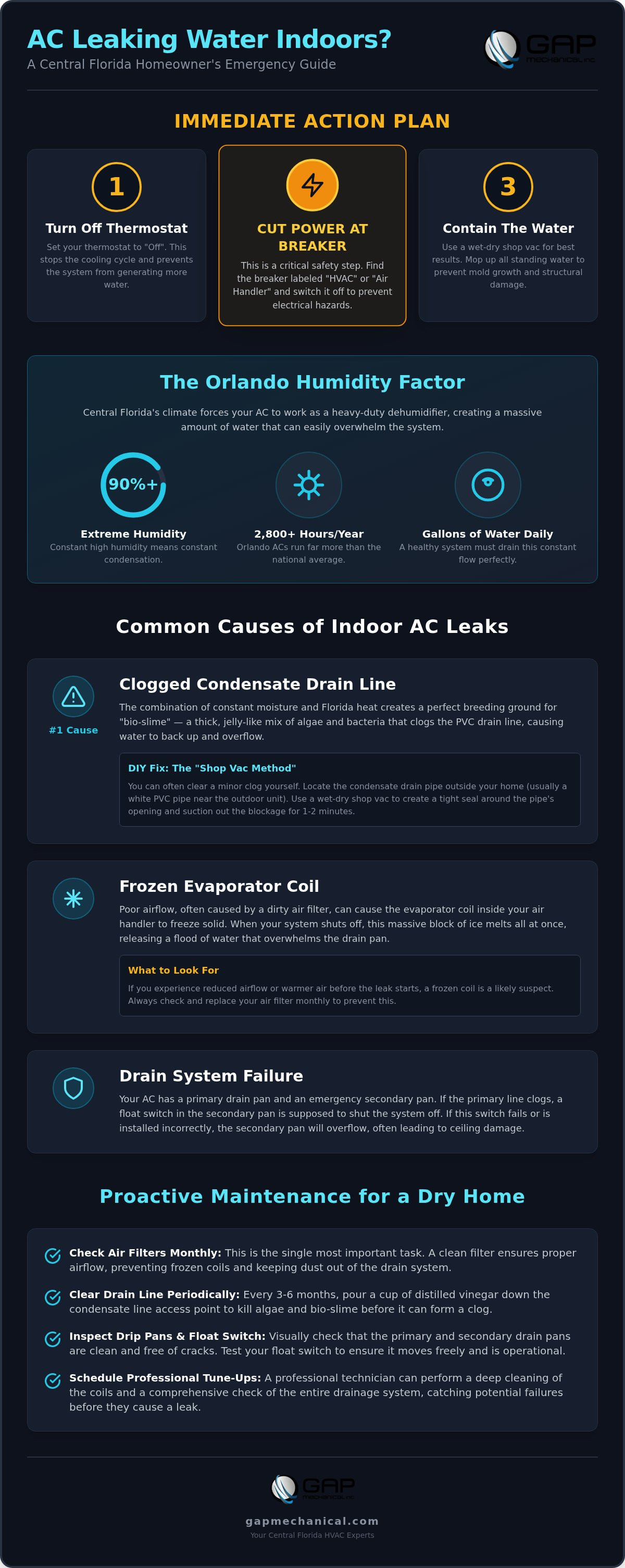
The vast majority of indoor AC leaks are not caused by a sudden catastrophic failure, but rather by a blockage or malfunction within the condensate drain line. This is the primary pathway designed to carry the collected water from the evaporator coil to a drain outside the house.
The condensate drain line is essentially a PVC pipe that collects the water. Over time, especially in the high-humidity environment of Central Florida, this line is susceptible to clogging. The materials that cause these clogs are often microscopic: mold, algae, dirt, and mineral deposits from the water itself. These organic materials thrive in the warm, damp conditions inside your home, forming a sludge that gradually restricts the flow of water.
When this drain line becomes partially or completely obstructed, the water has nowhere to go but to back up into the pan located beneath the evaporator coil. Once that pan is full, the excess water overflows, resulting in the puddles and dripping you see inside your home. This blockage is usually the easiest issue to identify and resolve, but it requires careful inspection to ensure the blockage is fully cleared.
Another component of the drain system is the float switch. This small, mechanical device is designed to detect when the condensate pan is filling up and automatically shut the unit down to prevent overflow. If your unit is still running and leaking, it suggests the float switch may be faulty, or the blockage is so severe that the system is overwhelming the safety mechanism.
If you are unsure about the condition of your current system, proactive care is the best defense against moisture problems. Schedule regular AC Maintenance Service Orlando to ensure all drainage components are functioning optimally before a leak occurs.
Examining the Unit: Installation and Structural Factors
While drain clogs are common, sometimes the leak is rooted in how the unit was installed or how the building structure interacts with the system. These issues are often more complex and require a technician with extensive experience.
First, consider the proper leveling of the unit. All HVAC components, especially condensate pans, must be perfectly level, or slightly sloped toward the drain. If the unit is tilted even slightly, the water may not flow into the drain pan correctly, leading to pooling and eventual overflow. This is particularly relevant in older homes that may have settled over decades, subtly affecting the placement of installed equipment.
Second, the refrigerant charge must be correct. Although it might seem counterintuitive, refrigerant issues can sometimes manifest as water problems. If the refrigerant levels are too low, the evaporator coil may not be cold enough, or the airflow may be insufficient, leading to improper condensation patterns or coil freeze-ups that can subsequently melt and overflow.
Third, consider the unit itself. Over time, the delicate components of the AC unit can degrade. Corrosion, physical damage, or wear and tear on the drain pan or the coil itself can create small cracks that allow water to leak into the surrounding insulation or structure, rather than into the designed drainage path. Identifying this structural failure requires a thorough, in-person inspection of the equipment.
Signs to Watch For: Identifying a Potential Leak
Being proactive about monitoring your system is key to preventing water damage. You should pay close attention to specific signs that indicate a problem is developing. These signs often provide clues as to whether the issue is minor (a simple clog) or major (a system failure).
Here are the most common indicators that your AC unit may be leaking:
- Visible Water Puddles: The most obvious sign—water pooling on the floor near the indoor air handler or furnace.
- Dripping Noise: A steady dripping sound coming directly from the unit itself, rather than from the drain line outside.
- Mustiness or Mold Smell: A persistent odor that suggests water has pooled inside the unit and is promoting the growth of mold or mildew.
- Wet Walls or Ceiling Stains: If the water is traveling down the wall or ceiling, the leak source may be higher up or hidden within the ductwork or surrounding structure.
- Unit Shut Down: The AC cycling on and off frequently, or refusing to run, which may indicate the unit is shutting down to protect itself from the excessive water volume.
If you notice any of these signs, especially if they appear shortly after a period of high humidity or intense use during a hot Orlando afternoon, it is time to investigate the system before the issue escalates.
Preventing Leaks and Protecting Your Home
The goal is not just to fix the leak, but to prevent it from happening again. Since the high humidity of Central Florida is the constant factor in AC operation, maintaining your system is the best insurance policy against moisture damage. Regular maintenance ensures that the condensate drain lines remain clear and that the unit operates at peak efficiency.
What should you look for during preventative maintenance? A professional inspection should include:
- Drain Line Clearing: Thorough cleaning and inspection of the entire condensate drain line to remove any accumulated mold, algae, or debris.
- Coil Inspection: Checking the evaporator coils for signs of blockage or deterioration that could affect condensation patterns.
- System Level Check: Verifying that the indoor unit is properly leveled to ensure gravity assists the water flow toward the drain.
- Electrical Component Check: Testing the float switch and other safety mechanisms to guarantee they are functioning correctly.
By committing to routine, professional care for your HVAC system, you are not just extending the life of your unit; you are protecting the integrity of your home from potential water damage caused by condensation. Ignoring these signs in the pursuit of saving money can lead to much more disruptive repairs down the line.
When dealing with AC leaks inside your Orlando home, remember that every leak is a symptom of a larger issue within the system. Whether it's a simple clog in the drain line or a complex structural problem, accurate diagnosis is the critical first step toward a permanent solution.
Frequently Asked Questions
Can I fix an AC leak myself?
While minor issues like a completely visible, easy-to-access clog can sometimes be addressed with specialized tools, attempting to fix an AC leak yourself can quickly turn into a major water damage problem. The internal components, refrigerant levels, and proper drainage slopes require specialized knowledge and equipment. For the safety of your home and your family, it is best to call a certified professional.
Is an AC leak always caused by a clog?
No. While clogs are the most common cause, AC leaks can also be related to improper installation where the unit is not level, a faulty float switch, or issues with the refrigerant charge. Only a detailed inspection of the unit and its surroundings can determine the exact root cause of the leak.
How often should I have my AC unit inspected in Orlando?
Given the extreme humidity and heat in Orlando, having your AC unit inspected at least once a year is highly recommended. This routine check-up ensures that the condensate drain lines are clear of mold and debris, and that the entire system is operating efficiently before the peak summer heat sets in.
What should I do immediately when I see water leaking from my AC unit?
First, prioritize safety by turning off the power to the unit at the circuit breaker to prevent electrical hazards. Second, place buckets or towels underneath the leak to manage the current water flow and protect your flooring. Third, contact a qualified HVAC professional immediately for a diagnosis of the underlying cause.
Frequently Asked Questions
Is it normal for my AC to leak a little water inside?
No, it is never normal for your AC leaking water inside Orlando property. While your system produces significant condensation due to our local humidity, that water should always stay contained within the primary drain pan and exit through the PVC lines. Any moisture on your floor or ceiling indicates a failure in the drainage system or an icing issue that needs immediate attention to prevent structural damage.
How much does it consideration to fix an AC water leak in Orlando?
repair needs vary based on the root cause of the failure. A simple drain line clearing is generally the most practical fix, while replacing a rusted evaporator coil or a failed condensate pump is more intensive. Since every situation is unique to the home's age and system type, we recommend a professional diagnostic to identify the exact failure point before committing to a specific repair path.
Can a dirty air filter really cause my AC to leak water?
Yes, a dirty filter is a leading cause of an AC leaking water inside Orlando homes. When airflow is restricted, the evaporator coil becomes too cold and begins to freeze. This creates a block of ice that eventually melts into a volume of water far larger than your drain pan can handle. Replacing your filter every 30 days is the simplest way to prevent this common flooding scenario.
Why did my AC shut off automatically when it started leaking?
Most modern systems are equipped with a safety float switch designed to cut power when water levels rise. This sensor is typically located in the secondary drain pan or the primary drain line. If a clog occurs, the rising water triggers the switch, which shuts down the cooling cycle to prevent a major flood. If your system won't turn on, a full drain pan is often the culprit.
What is the white "slime" in my AC drain line?
The white slime is a biological buildup of algae, fungi, and bacteria that thrives in dark, damp environments. In the intense Central Florida heat, these organisms grow rapidly and form a thick, jelly like substance. This bio slime eventually creates a waterproof plug in your PVC lines, forcing condensate water to overflow into your utility closet or attic space rather than exiting the house safely.
Can I use a shop vac to clear my AC drain line myself?
You can use a wet-dry shop vac to clear most standard clogs from the exterior of your home. By attaching the vacuum to the outside condensate outlet, you can often pull out the biological sludge that is blocking the flow. This is a safer alternative to using pressurized air, which can burst PVC joints. If the vacuum doesn't resolve the issue, a professional deep flush is likely required.
How often should I clear my AC drain line in Florida?
We recommend clearing your drain line at least twice a year in Central Florida. Because our cooling season lasts nearly year-round, your system produces a constant stream of moisture that encourages rapid algae growth. Regular maintenance, including the use of specialized pan tablets, prevents the accumulation of bio slime and ensures your drainage system remains clear during our most humid months when the AC runs the most.
Does an AC water leak mean I need a new unit?
A leak does not always mean you need a new system, but it is a sign that a component has failed. If the issue is a simple clog or a cracked plastic pan, a repair is usually sufficient. However, if an older unit has a corroded evaporator coil or a leaking refrigerant line, we evaluate the system's efficiency against 2026 15 SEER2 standards to determine if replacement is better.