

AC Leaking Water Inside Orlando: Causes, Risks, and Solutions
Published July 10, 2026
In the Orlando heat, a small puddle under your indoor unit isn't just a minor mess. It's a ticking clock for your drywall and flooring. Finding your AC leaking water inside Orlando can be stressful, especially when you're worried about the hidden mold growth that thrives in our local humidity. You're likely wondering if this is a simple fix you can handle yourself or a sign of a major system failure that requires professional intervention.
We know that a leak feels like an emergency when your home's integrity is at stake. You need to stop the water now and ensure it doesn't return. This guide identifies the root causes of indoor AC leaks and provides the professional steps needed to halt the damage immediately. We'll look at common culprits like clogged condensate lines and frozen coils, giving you the clarity to make the right decision for your home's safety and your peace of mind. By the end, you'll know exactly how to handle the situation and when to call a licensed expert to secure a permanent solution.
Key Takeaways
- Understand how Central Florida's extreme humidity impacts your evaporator coil and why most leaks are actually drainage failures.
- Identify the most common causes for an AC leaking water inside Orlando, ranging from clogged condensate lines to frozen evaporator coils.
- Learn the immediate steps to take, such as shutting down the system at the thermostat, to minimize water damage and prevent mold growth.
- Differentiate between drainage issues in traditional air conditioners and the unique defrost cycles found in Florida heat pump systems.
- Discover why professional verification and specialized tools are necessary to clear lines permanently and protect your manufacturer’s warranty.
Understanding Why Your AC Leaks Water Inside Your Orlando Home
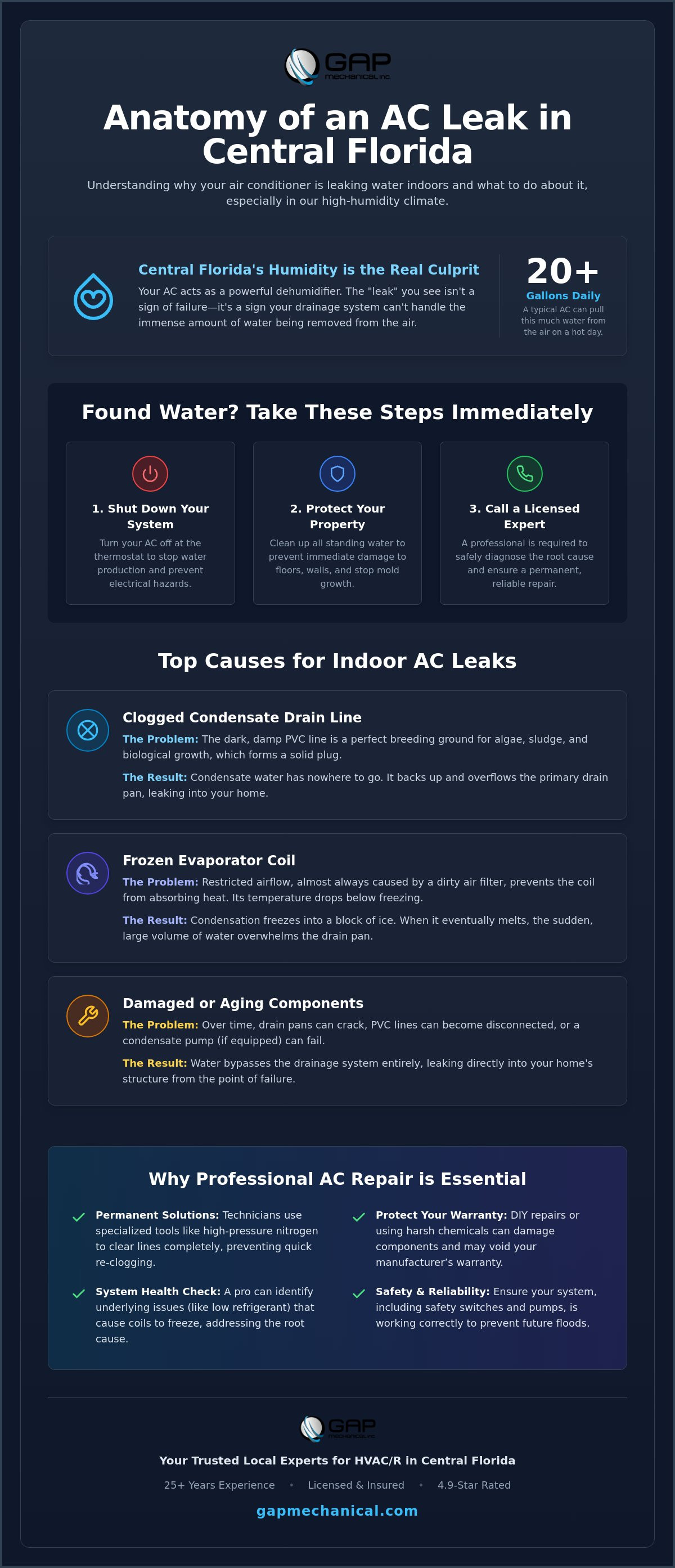
Orlando's climate is notoriously humid. Your air conditioner doesn't just cool the air; it acts as a massive dehumidifier. As warm, moist air from your home passes over the cold evaporator coil, the moisture reaches its dew point and turns into liquid water. This is exactly how air conditioners remove humidity from your living space. Under normal conditions, this water drips into a drain pan and flows safely outside through a PVC pipe. When you see an AC leaking water inside Orlando, you aren't seeing a unit that is creating "extra" water. You're seeing a drainage system that has failed to manage the standard volume of condensate.
It's a common mistake to think the unit is broken simply because it's producing water. In reality, the production of water is a sign the cooling process is working. The "leak" is almost always a plumbing or containment issue within the HVAC system. Because our local dew points are so high, a typical residential system in Central Florida can pull over 20 gallons of water from the air in a single day. If the path to the outdoors is blocked, that water has nowhere to go but your floor or ceiling.
The Role of Central Florida Humidity
Our region's extreme humidity creates a workload that systems in drier states never face. In cities like Kissimmee and Winter Park, high outdoor moisture levels directly tax every drainage component, from the primary pan to the condensate pump. This constant flow of water creates a breeding ground for biological growth, often called "algae" or "sludge," in the drain lines. Without regular maintenance, this buildup eventually creates a solid plug. This leads to the inevitable backup that homeowners fear during the hottest months of the year.
Condensation vs. Mechanical Failure
You might notice your unit "sweating" on a particularly sweltering July afternoon. While some light moisture on the exterior of the plenum can occur due to temperature differentials, it should never result in pooling. Visible moisture on the unit becomes a professional concern when it begins to drip or run. Any water found outside the dedicated drain pan is an immediate red flag. It indicates that the primary drainage system is overwhelmed, cracked, or bypassed entirely. Knowing the difference between normal operation and a failure is the first step toward protecting your property.
Ignoring a leak leads to three primary problems. First, structural damage happens fast. Water seeps into baseboards and subflooring, often before you even notice the puddle. Second, mold proliferation is a massive risk in Florida's warmth. Damp drywall can become a colony for spores in as little as 24 to 48 hours. Finally, your system loses efficiency. If the leak is caused by a frozen coil, your AC will run constantly without cooling your home, driving up your energy bills while providing zero comfort.
Common Culprits: From Clogged Drain Lines to Frozen Coils
Identifying the source of an AC leaking water inside Orlando requires a methodical approach. While many factors can contribute to a wet floor, most issues stem from a handful of common mechanical failures. These problems are often exacerbated by the relentless runtime required during a Florida summer. When your system operates for 12 to 18 hours a day, even a minor restriction in drainage can quickly escalate into a household emergency.
Algae and Biological Growth in Drain Lines
Orlando's heat isn't just a comfort issue; it's a biological one. The dark, damp environment inside a PVC condensate line is a perfect breeding ground for "sludge," a thick mixture of algae, mold, and dust. Over time, this growth creates a solid plug that prevents water from exiting the home. If your system is equipped with a safety float switch, a backup will trigger the switch and shut down your cooling to prevent a flood. If you don't have this safety feature, the water will overflow the primary pan and seep into your flooring. While some try DIY fixes with chemicals, professional clearing is safer. Licensed technicians use high-pressure nitrogen or specialized vacuums to ensure the line is completely clear without damaging the pipe fittings.
The Frozen Coil Cycle
Airflow is the lifeblood of your HVAC system. When an air filter becomes clogged with dust and pet dander, the cold refrigerant in the evaporator coil can't absorb enough heat from your home's air. This causes the coil temperature to drop below freezing, turning the normal condensation into a layer of ice. Eventually, the system will struggle to cool and the ice will begin to melt. This "thaw out" process releases a massive volume of water all at once, often overwhelming the drain pan's capacity. This cycle is a classic indicator that you need AC repair Orlando to investigate airflow restrictions or potential mechanical failures.
Beyond clogs and ice, older units in Central Florida often suffer from physical degradation. Many homes in areas like Altamonte Springs or Winter Park still utilize metal drain pans that can rust through after years of constant moisture exposure. A single pinhole in a rusted pan is enough to cause a persistent drip that ruins drywall. Additionally, low refrigerant levels can cause the same freezing effect as a dirty filter. Understanding the variables behind professional AC leak repair needs can help you prepare for the necessary fixes, but the priority is always stopping the water before it causes structural damage. If you've noticed moisture around your indoor unit, having a seasoned expert from GAP Mechanical inspect your system can prevent a minor drip from becoming a major restoration project.
Heat Pumps vs. Traditional AC: Identifying Leak Sources
Most homes in Central Florida rely on heat pumps for year-round climate control. While many people refer to their system simply as an air conditioner, understanding that you likely own a heat pump is vital when diagnosing moisture issues. These systems are highly efficient in our climate, but they include specific components like a reversing valve that traditional cooling-only units do not have. If this valve malfunctions, it can disrupt the balance of refrigerant flow. This imbalance occasionally causes temperature fluctuations that lead to an AC leaking water inside Orlando homes. GAP Mechanical specializes in these specific Central Florida systems, bringing over 25 years of experience to every diagnostic call.
During a typical summer day, a heat pump manages an incredible amount of moisture. If the unit isn't perfectly calibrated, the condensation process can become erratic. While the defrost cycle is primarily a winter concern, any glitch in the system's ability to switch or maintain modes can result in unexpected "sweating" or pooling around the indoor air handler. Because these systems are more complex than standard AC units, they require a technician who understands the nuances of heat pump operation in a high-humidity environment.
Heat Pump Drainage During Cooling Mode
In the height of an Orlando summer, your heat pump acts exactly like a traditional air conditioner. It pulls moisture from the air and sends it down the drain line. The most critical factor for successful drainage in these units is a level indoor air handler. If the unit shifts even slightly due to a settling foundation or poor initial installation, the water will miss the drain port and overflow the pan. This is a common issue we see when homeowners are replacing your furnace with a heat pump in Orlando. Proper positioning and professional calibration are the only ways to ensure the massive volume of Florida condensate goes exactly where it belongs.
Cracked Drain Pans and Component Wear
The intense heat of Central Florida doesn't just affect the outdoor unit; it impacts the indoor components as well. Over time, the plastic drain pans inside your air handler can become brittle. Constant cycles of dampness followed by dry periods cause the material to crack, allowing water to bypass the drain line entirely. If you notice water in your secondary emergency pan, it's a clear indicator that your primary pan has failed or is severely clogged. Licensed and insured contractors should always handle these replacements. We ensure the new pan is properly sloped and sealed, preventing the structural damage that occurs when water sits in your attic or closet for extended periods.
Immediate Steps to Minimize Water Damage and Prevent Mold
When you find your AC leaking water inside Orlando, the first few minutes are critical for preventing long-term damage. While it is tempting to leave the system running to combat the heat, doing so only generates more moisture and worsens the flooding. You must prioritize the integrity of your flooring and drywall over temporary cooling. Taking the following steps immediately can save you from costly restoration projects later.
- Shut down the system: Turn the thermostat to the "Off" position immediately. This stops the cooling cycle and halts the production of new condensate water.
- Remove standing water: Use a wet/dry vacuum to clear puddles from around the air handler. This prevents water from seeping into baseboards, subflooring, or carpet padding.
- Check the filter: A heavily soiled filter can cause the icing issues discussed in previous sections. Replacing it is a simple step that may resolve the immediate cause of the backup.
- Locate the exit point: Find where your drain line terminates outside. If you see a clear blockage or a dry pipe while the unit is leaking inside, the line is definitely clogged and needs a professional purge.
Preventing Secondary Damage
In Florida's relentless humidity, mold can begin to colonize damp surfaces in as little as 24 to 48 hours. If water enters your ductwork or saturates your drywall, the cleanup becomes significantly more complex. There is also a severe risk of electrical shorts if water drips onto the control board or internal wiring. Never run the system "just for a few more hours" while waiting for a technician. The potential for structural rot and the health risks associated with mold far outweigh the temporary discomfort of a warm house.
The Importance of a Float Switch
A condensate float switch is a vital safety device for any Central Florida home. This component sits in your drain line or emergency pan and automatically cuts power to the unit if it detects a water backup. If your system flooded your home, you likely lack this protection or have a faulty switch that failed to trigger. During your service call, ask your technician about installing or testing this device to prevent future indoor flooding. You can find more details on maintaining system safety in our Orlando homeowner steps checklist.
Once you have stabilized the area and cleared the standing water, the final step is to contact a licensed professional to identify the root cause. A temporary DIY fix may stop the drip today, but it won't prevent a recurrence next week. For reliable service and expert diagnostics from a team with over 25 years of local experience, schedule your AC repair with GAP Mechanical to restore your home's comfort and safety permanently.
Professional AC Repair: Restoring Reliability in Central Florida
Resolving an AC leaking water inside Orlando requires more than a temporary fix. It demands a technical solution that addresses the underlying cause of the drainage failure. Licensed and insured contractors are vital for this process. Professional documentation is often required to maintain your manufacturer’s equipment warranty. A certified repair ensures your system adheres to the 8th Edition of the Florida Building Code, which governs how condensate drains must be managed. Attempting a DIY repair can lead to accidental damage to sensitive internal components, turning a simple clog into a costly mechanical failure.
Professional technicians utilize specialized tools that aren't found in a standard home toolkit. We use high-pressure nitrogen purges to clear stubborn biological growth from deep within the PVC lines. Vacuum pumps are also employed to ensure the entire drainage assembly is free of moisture and debris. This methodical approach is why GAP Mechanical is the dependable expert for residents in Orlando, Kissimmee, and Winter Park. We don't just stop the leak; we verify the entire system's integrity to prevent the water from returning next week.
The Value of a Licensed HVAC Contractor
There is a significant difference between a "handyman fix" and a professional repair. A handyman might clear a visible puddle, but a licensed technician investigates why the water escaped in the first place. We inspect the evaporator coil for icing, check the refrigerant levels, and test the safety float switches. GAP Mechanical brings over 25 years of local experience and a 4.9-star reputation to every service call. We understand the unique environmental stresses that Central Florida's humidity places on your heat pump. Before you invite anyone into your home, consult a hiring checklist for Orlando HVAC contractors to ensure they have the credentials to protect your property.
Long-term Maintenance Strategies
Routine maintenance prevents 90% of indoor water leaks. During a scheduled checkup, technicians identify brittle plastic pans, rusted metal components, and early signs of "sludge" buildup. Catching these issues during a maintenance visit is far better than discovering them when your flooring is already saturated. Beyond leak prevention, a clean and well-draining system operates much more efficiently. This lowers your energy consumption and improves your home's ability to manage indoor humidity levels. A proactive approach is the only way to guarantee year-round comfort in our climate. Regular inspections catch the small problems that lead to major structural damage. Don't wait for a flood to alert you to a problem. Protect your home and your HVAC asset by scheduling a professional inspection today.
Protect Your Home and Restore Your Comfort
Addressing an AC leaking water inside Orlando requires immediate action followed by professional verification. You've learned that a leak is rarely just a nuisance; it's a symptom of a system failure that can lead to structural damage and mold growth. By turning off your thermostat and clearing standing water, you take the first steps toward safeguarding your home. However, permanent reliability only comes from identifying the root cause, whether it's a clogged condensate line or a frozen evaporator coil.
GAP Mechanical brings over 25 years of Central Florida expertise to every service call. As a licensed and insured HVAC/R contractor with a 4.9-star Google rating, we provide the technical precision needed to clear lines and verify component health. Don't let a minor drip turn into a major restoration project. We are here to ensure your system operates efficiently and your home stays dry. Stop the leak and protect your home. Contact GAP Mechanical for expert AC repair in Orlando today. Your peace of mind is our priority, and we look forward to helping you maintain a safe, comfortable indoor environment.
Frequently Asked Questions
Is it normal for my AC to leak a little water inside?
It is never normal for water to escape the unit's internal drainage system. While your evaporator coil produces a significant amount of condensation, that moisture should remain contained within the primary drain pan and flow directly to the outdoors. Seeing an AC leaking water inside Orlando homes indicates a blockage, a cracked pan, or a mechanical failure that requires immediate attention to prevent property damage.
Can a dirty air filter really cause a water leak?
Yes, a clogged filter is a frequent cause of indoor flooding. When airflow is restricted, the evaporator coil becomes too cold and the condensation on its surface freezes into a block of ice. Once the system cycles off or the ice becomes too heavy, it melts rapidly. This sudden surge of water often exceeds the capacity of the drain pan and spills onto your floor.
How do I know if my AC drain line is clogged?
You can check for a clog by inspecting the secondary emergency pan under your air handler. If you see standing water there, the primary line is restricted. You can also check the exterior termination point of the PVC drain line while the system is running. If the pipe is dry despite the high humidity in Central Florida, the water is backing up inside your home.
What happens if I ignore an AC water leak?
Ignoring a leak leads to structural rot, ruined drywall, and rapid mold proliferation. In the warm Orlando climate, mold spores can begin to colonize damp surfaces in less than 48 hours. Persistent moisture also attracts pests and can lead to electrical shorts if the water reaches the system's control board or internal wiring.
Can I use a shop vac to clear my AC drain line?
A wet/dry vacuum can sometimes pull out a shallow blockage, but it rarely clears the heavy biological sludge that builds up in Florida systems. Professional technicians use specialized nitrogen purges to ensure the line is completely clear from end to end. Relying on a vacuum often leaves debris behind, leading to another backup within a few weeks.
Why is my AC leaking water even when it is turned off?
This usually happens because the evaporator coil has frozen into a solid block of ice while the system was running. When you turn the power off, the ice begins to thaw. Because the unit is no longer blowing air to help evaporate the moisture, the melting ice creates a high volume of water that can overwhelm the drain system even while the mechanical components are silent.
How much water does an AC unit typically produce in Orlando?
A standard residential system in Central Florida can produce up to 20 gallons of condensate water in a single day. This volume is directly tied to the high local dew points and humidity levels. Because the system pulls so much moisture from the air, even a partial restriction in the drain line can result in a significant amount of water spilling into your home very quickly.
Does homeowner’s insurance cover AC water damage in Florida?
Most Florida policies cover water damage that is sudden and accidental, such as a burst pipe. However, many insurance companies deny claims if the damage is deemed a result of maintenance neglect, such as a clogged drain line that has been leaking slowly for weeks. It's vital to check your specific policy details and maintain your system to avoid these preventable coverage gaps.
Frequently Asked Questions
The Role of Central Florida Humidity
Our region's extreme humidity creates a workload that systems in drier states never face. In cities like Kissimmee and Winter Park, high outdoor moisture levels directly tax every drainage component, from the primary pan to the condensate pump. This constant flow of water creates a breeding ground for biological growth, often called "algae" or "sludge," in the drain lines. Without regular maintenance, this buildup eventually creates a solid plug. This leads to the inevitable backup that homeowners fear during the hottest months of the year.
Condensation vs. Mechanical Failure
You might notice your unit "sweating" on a particularly sweltering July afternoon. While some light moisture on the exterior of the plenum can occur due to temperature differentials, it should never result in pooling. Visible moisture on the unit becomes a professional concern when it begins to drip or run. Any water found outside the dedicated drain pan is an immediate red flag. It indicates that the primary drainage system is overwhelmed, cracked, or bypassed entirely. Knowing the difference between normal operation and a failure is the first step toward protecting your property. Ignoring a leak leads to three primary problems. First, structural damage happens fast. Water seeps into baseboards and subflooring, often before you even notice the puddle. Second, mold proliferation is a massive risk in Florida's warmth. Damp drywall can become a colony for spores in as little as 24 to 48 hours. Finally, your system loses efficiency. If the leak is caused by a frozen coil, your AC will run constantly without cooling your home, driving up your energy bills while providing zero comfort. Identifying the source of an AC leaking water inside Orlando requires a methodical approach. While many factors can contribute to a wet floor, most issues stem from a handful of common mechanical failures. These problems are often exacerbated by the relentless runtime required during a Florida summer. When your system operates for 12 to 18 hours a day, even a minor restriction in drainage can quickly escalate into a household emergency.
Algae and Biological Growth in Drain Lines
Orlando's heat isn't just a comfort issue; it's a biological one. The dark, damp environment inside a PVC condensate line is a perfect breeding ground for "sludge," a thick mixture of algae, mold, and dust. Over time, this growth creates a solid plug that prevents water from exiting the home. If your system is equipped with a safety float switch, a backup will trigger the switch and shut down your cooling to prevent a flood. If you don't have this safety feature, the water will overflow the primary pan and seep into your flooring. While some try DIY fixes with chemicals, professional clearing is safer. Licensed technicians use high-pressure nitrogen or specialized vacuums to ensure the line is completely clear without damaging the pipe fittings.
The Frozen Coil Cycle
Airflow is the lifeblood of your HVAC system. When an air filter becomes clogged with dust and pet dander, the cold refrigerant in the evaporator coil can't absorb enough heat from your home's air. This causes the coil temperature to drop below freezing, turning the normal condensation into a layer of ice. Eventually, the system will struggle to cool and the ice will begin to melt. This "thaw out" process releases a massive volume of water all at once, often overwhelming the drain pan's capacity. This cycle is a classic indicator that you need AC repair Orlando to investigate airflow restrictions or potential mechanical failures. Beyond clogs and ice, older units in Central Florida often suffer from physical degradation. Many homes in areas like Altamonte Springs or Winter Park still utilize metal drain pans that can rust through after years of constant moisture exposure. A single pinhole in a rusted pan is enough to cause a persistent drip that ruins drywall. Additionally, low refrigerant levels can cause the same freezing effect as a dirty filter. Understanding the variables behind professional AC leak repair needs can help you prepare for the necessary fixes, but the priority is always stopping the water before it causes structural damage. If you've noticed moisture around your indoor unit, having a seasoned expert from GAP Mechanical inspect your system can prevent a minor drip from becoming a major restoration project. Most homes in Central Florida rely on heat pumps for year-round climate control. While many people refer to their system simply as an air conditioner, understanding that you likely own a heat pump is vital when diagnosing moisture issues. These systems are highly efficient in our climate, but they include specific components like a reversing valve that traditional cooling-only units do not have. If this valve malfunctions, it can disrupt the balance of refrigerant flow. This imbalance occasionally causes temperature fluctuations that lead to an AC leaking water inside Orlando homes. GAP Mechanical specializes in these specific Central Florida systems, bringing over 25 years of experience to every diagnostic call. During a typical summer day, a heat pump manages an incredible amount of moisture. If the unit isn't perfectly calibrated, the condensation process can become erratic. While the defrost cycle is primarily a winter concern, any glitch in the system's ability to switch or maintain modes can result in unexpected "sweating" or pooling around the indoor air handler. Because these systems are more complex than standard AC units, they require a technician who understands the nuances of heat pump operation in a high-humidity environment.
Heat Pump Drainage During Cooling Mode
In the height of an Orlando summer, your heat pump acts exactly like a traditional air conditioner. It pulls moisture from the air and sends it down the drain line. The most critical factor for successful drainage in these units is a level indoor air handler. If the unit shifts even slightly due to a settling foundation or poor initial installation, the water will miss the drain port and overflow the pan. This is a common issue we see when homeowners are replacing your furnace with a heat pump in Orlando. Proper positioning and professional calibration are the only ways to ensure the massive volume of Florida condensate goes exactly where it belongs.
Cracked Drain Pans and Component Wear
The intense heat of Central Florida doesn't just affect the outdoor unit; it impacts the indoor components as well. Over time, the plastic drain pans inside your air handler can become brittle. Constant cycles of dampness followed by dry periods cause the material to crack, allowing water to bypass the drain line entirely. If you notice water in your secondary emergency pan, it's a clear indicator that your primary pan has failed or is severely clogged. Licensed and insured contractors should always handle these replacements. We ensure the new pan is properly sloped and sealed, preventing the structural damage that occurs when water sits in your attic or closet for extended periods. When you find your AC leaking water inside Orlando, the first few minutes are critical for preventing long-term damage. While it is tempting to leave the system running to combat the heat, doing so only generates more moisture and worsens the flooding. You must prioritize the integrity of your flooring and drywall over temporary cooling. Taking the following steps immediately can save you from costly restoration projects later.
Preventing Secondary Damage
In Florida's relentless humidity, mold can begin to colonize damp surfaces in as little as 24 to 48 hours. If water enters your ductwork or saturates your drywall, the cleanup becomes significantly more complex. There is also a severe risk of electrical shorts if water drips onto the control board or internal wiring. Never run the system "just for a few more hours" while waiting for a technician. The potential for structural rot and the health risks associated with mold far outweigh the temporary discomfort of a warm house.
The Importance of a Float Switch
A condensate float switch is a vital safety device for any Central Florida home. This component sits in your drain line or emergency pan and automatically cuts power to the unit if it detects a water backup. If your system flooded your home, you likely lack this protection or have a faulty switch that failed to trigger. During your service call, ask your technician about installing or testing this device to prevent future indoor flooding. You can find more details on maintaining system safety in our Orlando homeowner steps checklist. Once you have stabilized the area and cleared the standing water, the final step is to contact a licensed professional to identify the root cause. A temporary DIY fix may stop the drip today, but it won't prevent a recurrence next week. For reliable service and expert diagnostics from a team with over 25 years of local experience, schedule your AC repair with GAP Mechanical to restore your home's comfort and safety permanently. Resolving an AC leaking water inside Orlando requires more than a temporary fix. It demands a technical solution that addresses the underlying cause of the drainage failure. Licensed and insured contractors are vital for this process. Professional documentation is often required to maintain your manufacturer’s equipment warranty. A certified repair ensures your system adheres to the 8th Edition of the Florida Building Code, which governs how condensate drains must be managed. Attempting a DIY repair can lead to accidental damage to sensitive internal components, turning a simple clog into a costly mechanical failure. Professional technicians utilize specialized tools that aren't found in a standard home toolkit. We use high-pressure nitrogen purges to clear stubborn biological growth from deep within the PVC lines. Vacuum pumps are also employed to ensure the entire drainage assembly is free of moisture and debris. This methodical approach is why GAP Mechanical is the dependable expert for residents in Orlando, Kissimmee, and Winter Park. We don't just stop the leak; we verify the entire system's integrity to prevent the water from returning next week.
The Value of a Licensed HVAC Contractor
There is a significant difference between a "handyman fix" and a professional repair. A handyman might clear a visible puddle, but a licensed technician investigates why the water escaped in the first place. We inspect the evaporator coil for icing, check the refrigerant levels, and test the safety float switches. GAP Mechanical brings over 25 years of local experience and a 4.9-star reputation to every service call. We understand the unique environmental stresses that Central Florida's humidity places on your heat pump. Before you invite anyone into your home, consult a hiring checklist for Orlando HVAC contractors to ensure they have the credentials to protect your property.
Long-term Maintenance Strategies
Routine maintenance prevents 90% of indoor water leaks. During a scheduled checkup, technicians identify brittle plastic pans, rusted metal components, and early signs of "sludge" buildup. Catching these issues during a maintenance visit is far better than discovering them when your flooring is already saturated. Beyond leak prevention, a clean and well-draining system operates much more efficiently. This lowers your energy consumption and improves your home's ability to manage indoor humidity levels. A proactive approach is the only way to guarantee year-round comfort in our climate. Regular inspections catch the small problems that lead to major structural damage. Don't wait for a flood to alert you to a problem. Protect your home and your HVAC asset by scheduling a professional inspection today. Addressing an AC leaking water inside Orlando requires immediate action followed by professional verification. You've learned that a leak is rarely just a nuisance; it's a symptom of a system failure that can lead to structural damage and mold growth. By turning off your thermostat and clearing standing water, you take the first steps toward safeguarding your home. However, permanent reliability only comes from identifying the root cause, whether it's a clogged condensate line or a frozen evaporator coil. GAP Mechanical brings over 25 years of Central Florida expertise to every service call. As a licensed and insured HVAC/R contractor with a 4.9-star Google rating, we provide the technical precision needed to clear lines and verify component health. Don't let a minor drip turn into a major restoration project. We are here to ensure your system operates efficiently and your home stays dry. Stop the leak and protect your home. Contact GAP Mechanical for expert AC repair in Orlando today. Your peace of mind is our priority, and we look forward to helping you maintain a safe, comfortable indoor environment.
Is it normal for my AC to leak a little water inside?
It is never normal for water to escape the unit's internal drainage system. While your evaporator coil produces a significant amount of condensation, that moisture should remain contained within the primary drain pan and flow directly to the outdoors. Seeing an AC leaking water inside Orlando homes indicates a blockage, a cracked pan, or a mechanical failure that requires immediate attention to prevent property damage.
Can a dirty air filter really cause a water leak?
Yes, a clogged filter is a frequent cause of indoor flooding. When airflow is restricted, the evaporator coil becomes too cold and the condensation on its surface freezes into a block of ice. Once the system cycles off or the ice becomes too heavy, it melts rapidly. This sudden surge of water often exceeds the capacity of the drain pan and spills onto your floor.
How do I know if my AC drain line is clogged?
You can check for a clog by inspecting the secondary emergency pan under your air handler. If you see standing water there, the primary line is restricted. You can also check the exterior termination point of the PVC drain line while the system is running. If the pipe is dry despite the high humidity in Central Florida, the water is backing up inside your home.
What happens if I ignore an AC water leak?
Ignoring a leak leads to structural rot, ruined drywall, and rapid mold proliferation. In the warm Orlando climate, mold spores can begin to colonize damp surfaces in less than 48 hours. Persistent moisture also attracts pests and can lead to electrical shorts if the water reaches the system's control board or internal wiring.
Can I use a shop vac to clear my AC drain line?
A wet/dry vacuum can sometimes pull out a shallow blockage, but it rarely clears the heavy biological sludge that builds up in Florida systems. Professional technicians use specialized nitrogen purges to ensure the line is completely clear from end to end. Relying on a vacuum often leaves debris behind, leading to another backup within a few weeks.
Why is my AC leaking water even when it is turned off?
This usually happens because the evaporator coil has frozen into a solid block of ice while the system was running. When you turn the power off, the ice begins to thaw. Because the unit is no longer blowing air to help evaporate the moisture, the melting ice creates a high volume of water that can overwhelm the drain system even while the mechanical components are silent.
How much water does an AC unit typically produce in Orlando?
A standard residential system in Central Florida can produce up to 20 gallons of condensate water in a single day. This volume is directly tied to the high local dew points and humidity levels. Because the system pulls so much moisture from the air, even a partial restriction in the drain line can result in a significant amount of water spilling into your home very quickly.
Does homeowner’s insurance cover AC water damage in Florida?
Most Florida policies cover water damage that is sudden and accidental, such as a burst pipe. However, many insurance companies deny claims if the damage is deemed a result of maintenance neglect, such as a clogged drain line that has been leaking slowly for weeks. It's vital to check your specific policy details and maintain your system to avoid these preventable coverage gaps.