

AC Leaking Water in Orlando? Causes, Fixes, and Prevention
Published August 31, 2026
When your air conditioner leaks water in Orlando, it is usually due to the condensation that naturally forms during the cooling process, which is then failing to drain correctly. This issue is frequently caused by clogged drain lines, frozen evaporator coils, or improper installation, requiring a systematic diagnosis to determine the appropriate corrective action.
The Unique HVAC Challenges of Central Florida Summers
Central Florida’s climate is notoriously challenging for residential HVAC systems. While many homeowners associate the cooling process with dry, crisp air, the reality here involves extreme humidity and relentless heat, often pushing temperatures well above 90 degrees even during the late afternoon.
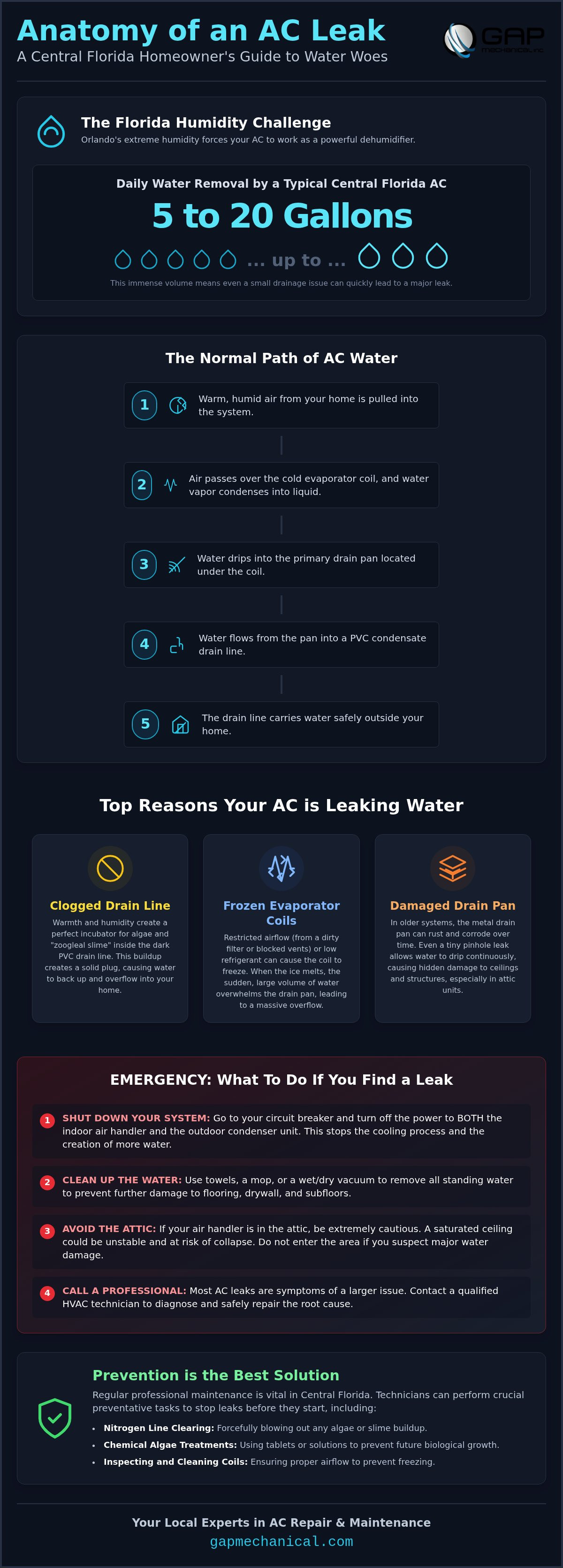
This high-moisture environment creates specific conditions that impact air conditioning units. The primary mechanism of AC cooling relies on removing heat and moisture from your home. When the refrigerant absorbs heat, it causes the surrounding moisture in the air to condense into liquid water—this is actually a normal, healthy process. The problem arises when that resulting water has no clear path to exit the system.
In older homes throughout Orlando, or even in newer construction that may have settling issues, the plumbing and drainage systems are under constant stress. The relentless cycle of intense heat followed by sudden, heavy afternoon storms puts extra strain on these systems, making early identification of moisture issues critical for structural integrity and preventing mold growth.
Understanding how high humidity affects your unit is the first step toward managing potential leaks. It is not always a sign of mechanical failure; sometimes, it is simply a sign of a system working exactly as designed, but lacking proper maintenance.
Primary Causes of AC Leaks in Orlando
Identifying the source of the leak requires distinguishing between normal condensation and a genuine system failure. Several common culprits contribute to water appearing inside or around your AC unit.
Condensation and Drainage Issues
The most common cause of AC leaks is a blockage in the condensate drain line. As the AC unit removes moisture from the air, this water collects in a pan and flows out through a PVC drain line. If this line becomes clogged, the water has nowhere to go but out of the nearest opening, often leading to leaks inside the home or dripping from the outdoor unit.
- Algae and mold buildup within the drain line, which thrives in the humid Central Florida air.
- Debris, dust, and sediment washing into the drain during heavy rain or storm events.
- A clogged primary drain pump, if your system utilizes one.
Frozen Evaporator Coils
If the evaporator coil inside your air handler freezes, it can lead to excessive water accumulation and subsequent dripping. Freezing usually happens when the system is running on too low of a refrigerant charge, or if the air filter is severely restricted, preventing adequate airflow across the coils.
- Restricted airflow due to dirty or improperly sized filters.
- Low refrigerant levels (a sign of a leak in the system).
- A malfunctioning fan motor, causing insufficient heat exchange and subsequent freezing.
Improper Installation or System Components
In some instances, the leak is related to the physical setup of the unit. This is particularly relevant with older homes where the original installation may not meet modern standards, or where recent renovations may have altered the drainage slope.
- A cracked condensate drain pan.
- A poorly sealed connection between the indoor and outdoor unit.
- A faulty primary drain pump or overflow switch.
Recognizing the Signs: When to Inspect Your AC
Not all leaks look like a sudden flood. Often, the signs are subtle and progressive, which is why proactive observation is so important for homeowners in areas like Winter Park or Kissimmee. Learning to recognize these early warning signs can prevent a small drip from becoming a major water damage event.
Take note of the following indicators:
- Visible Drips: Water dripping directly from the indoor air handler or the exterior unit casing.
- Wet Stains: Persistent moisture or damp spots on ceilings, walls, or flooring near the HVAC unit.
- Mustiness: A noticeable smell of mildew or dampness, which is a strong indicator of stagnant, trapped condensation and potential mold growth.
- Ice Formation: Visible frost or ice buildup on the copper lines or the evaporator coils themselves.
- Water in the Drain Pan: If you can safely access the condensate pan, and it is overflowing despite the unit appearing to be running normally.
It is crucial to understand that while condensation is normal, persistent, heavy dripping is not. These signs signal that the system is either struggling with airflow, refrigerant levels, or, most likely, drainage.
The Path to Prevention: Maintaining Peak Performance
The best way to deal with AC leaks is to prevent them entirely. Regular maintenance is not merely a chore; it is an commitment to the longevity of your system and the health of your home. Given the extreme operational demands placed on HVAC units in Orlando, a consistent preventative schedule is highly recommended.
Here are actionable steps homeowners can take to minimize the risk of moisture-related issues:
- Regular Filter Replacement: Change or clean your air filters monthly, especially during peak cooling seasons. Clogged filters restrict airflow, which is the leading cause of coil freezing and subsequent drainage issues.
- Annual System Tune-Up: Schedule a professional inspection each year. A technician can check the refrigerant levels, inspect the drainage system for blockages, and ensure the electrical components are functioning optimally.
- Inspect the Drain Line Access: Ensure the outdoor condensate line is clear of blockages and that the drain pan is positioned correctly to allow gravity to move the water.
- Monitor System Noise: Unusual noises, such as gurgling or excessive rattling, can sometimes indicate trapped water or struggling components within the unit.
These preventative steps help ensure that the system operates efficiently, allowing the condensation to be collected and discharged properly without strain on the internal components.
When DIY Troubleshooting Ends and Professional Help Begins
While simple fixes like changing a clogged filter can resolve minor moisture concerns, many AC leaks involve complex components—such as refrigerant leaks, failing pumps, or internal electrical faults—that require specialized knowledge and tools. Attempting major repairs without the proper certification can lead to further damage, void warranties, and create safety hazards.
If you have observed persistent dripping despite clean filters, or if you suspect a deeper issue involving the drainage mechanism, it is time to call in an expert. A professional diagnosis involves testing the system's pressure, checking the electrical components, and verifying the integrity of the drain lines using specialized equipment.
For detailed guidance on the full scope of necessary diagnostic procedures, we recommend reviewing our comprehensive resource on AC Repair Orlando.
At GAP Mechanical, we bring over two decades of experience serving the Orlando community. As a licensed and EPA-certified company (CAC 1813597), our focus is on providing reliable, thorough service that addresses the root cause of your AC issues, ensuring your comfort remains uninterrupted through the heat.
Our commitment to customer satisfaction is reflected in our 4.9 Google rating, and we are ready to help you restore proper function to your HVAC system.
Frequently Asked Questions
Can AC leaks be dangerous?
Yes, AC leaks can be dangerous if they lead to significant water damage, which can compromise the structural integrity of your home. Furthermore, standing water, particularly in humid Central Florida, creates an ideal breeding ground for mold, which poses serious health risks. Early detection and professional removal of the cause are essential.
Is it normal for my AC to produce condensation?
Yes, it is perfectly normal for an air conditioner to produce condensation. This moisture is a byproduct of the cooling process as the unit removes humidity from the indoor air. The water should be collected in a drain pan and safely discharged outside through a dedicated condensate line. Visible leaks are usually the indication of a problem with that drainage path.
How often should I have my AC system inspected in Orlando?
Given the high usage and challenging climate in Central Florida, an annual professional tune-up is highly recommended. This ensures that the drainage system is clear, the refrigerant levels are correct, and the unit is operating at peak efficiency, which significantly reduces the likelihood of unexpected leaks or failures during the hottest months.
What is the first thing I should check if my AC is leaking?
The first step is a visual inspection. Check the air filters to ensure they are not clogged, as restricted airflow is a common trigger for freezing. Next, look at the visible condensate drain line for any signs of blockages or cracks. If the issue persists after these initial checks, professional intervention is required to diagnose internal component failures.
Frequently Asked Questions
Is it normal for my AC to drip water outside?
Yes, it's normal for your system to discharge water through the primary PVC drain line. In Orlando's 90% humidity, a standard unit can pull up to 20 gallons of moisture from the air daily. You should see a steady drip near your outdoor condenser. However, if you see water dripping from a secondary line over a window or if the outdoor pipe is dry while the unit runs, you have a clog.
Why did my AC shut off on its own when I saw water in the pan?
Your system likely shut down because the float switch detected a backup. This safety device breaks the electrical circuit to the compressor when water levels in the drain pan rise too high. It's designed to prevent an AC leaking water Orlando homeowners often find from causing catastrophic ceiling or floor damage. Don't bypass this switch; it indicates a complete blockage in your primary drainage path that requires immediate attention.
Can a dirty air filter cause my AC to leak water?
Yes, a clogged filter is a primary cause of frozen evaporator coils. When airflow is restricted, the coil's temperature drops below freezing, causing ice to form. Once the system cycles off, that ice melts rapidly and often overflows the drain pan. Replacing your filter every 30 to 90 days is the simplest way to prevent this specific type of moisture failure in the Central Florida heat. Regular maintenance keeps the air moving freely.
How much does it consideration to fix an AC water leak in Orlando?
The consideration depends entirely on the root cause and the extent of the repair required. Simple drain line clearings are less intensive than replacing a rusted primary pan or repairing a refrigerant leak that caused a frozen coil. We provide transparent billing based on the scope of work and the specific equipment involved. We also offer military discounts for veterans to help manage maintenance needs for families in our local community.
Will my home insurance cover water damage from an AC leak?
Coverage usually depends on whether the leak was sudden or the result of long-term neglect. Most standard Florida homeowner policies cover sudden and accidental water discharge, such as a pipe bursting or a float switch failure. However, they often deny claims for damage caused by months of slow dripping from a poorly maintained unit. You should review your specific policy's maintenance requirements for HVAC systems to ensure you're protected from structural losses.
How do I know if my AC drain line is clogged?
The most obvious sign is standing water in your secondary drain pan or a completely dry outdoor exit pipe. You might also notice a musty smell near your indoor unit or see the system cycling off frequently if you have a float switch installed. In the high humidity of Winter Park and Orlando, algae can block a line in just a few weeks if the system isn't treated with professional algaecides.
Can I use bleach to clear my AC drain line?
We generally advise against using straight bleach because it can damage plastic PVC pipes and degrade the glue at the joints. Bleach can also be corrosive to the metal components in your evaporator coil if fumes back up into the air handler. Professional technicians use specialized algaecide tablets or pressurized nitrogen to clear lines safely. This ensures the biological blockages are removed without risking the structural integrity of your plumbing or HVAC equipment.
What is a float switch and how do I know if mine is working?
A float switch is a mechanical water sensor installed in your drain pan or line. It works like a buoy; when water rises, the float lifts and cuts power to the unit. You can test it by manually lifting the float while the AC is running. If the system shuts off immediately, the switch is functional. Many older Orlando homes lack this critical safety feature and should be upgraded to prevent significant drywall damage.