

Spring AC Maintenance Checklist for Orlando Homes
Published August 18, 2026
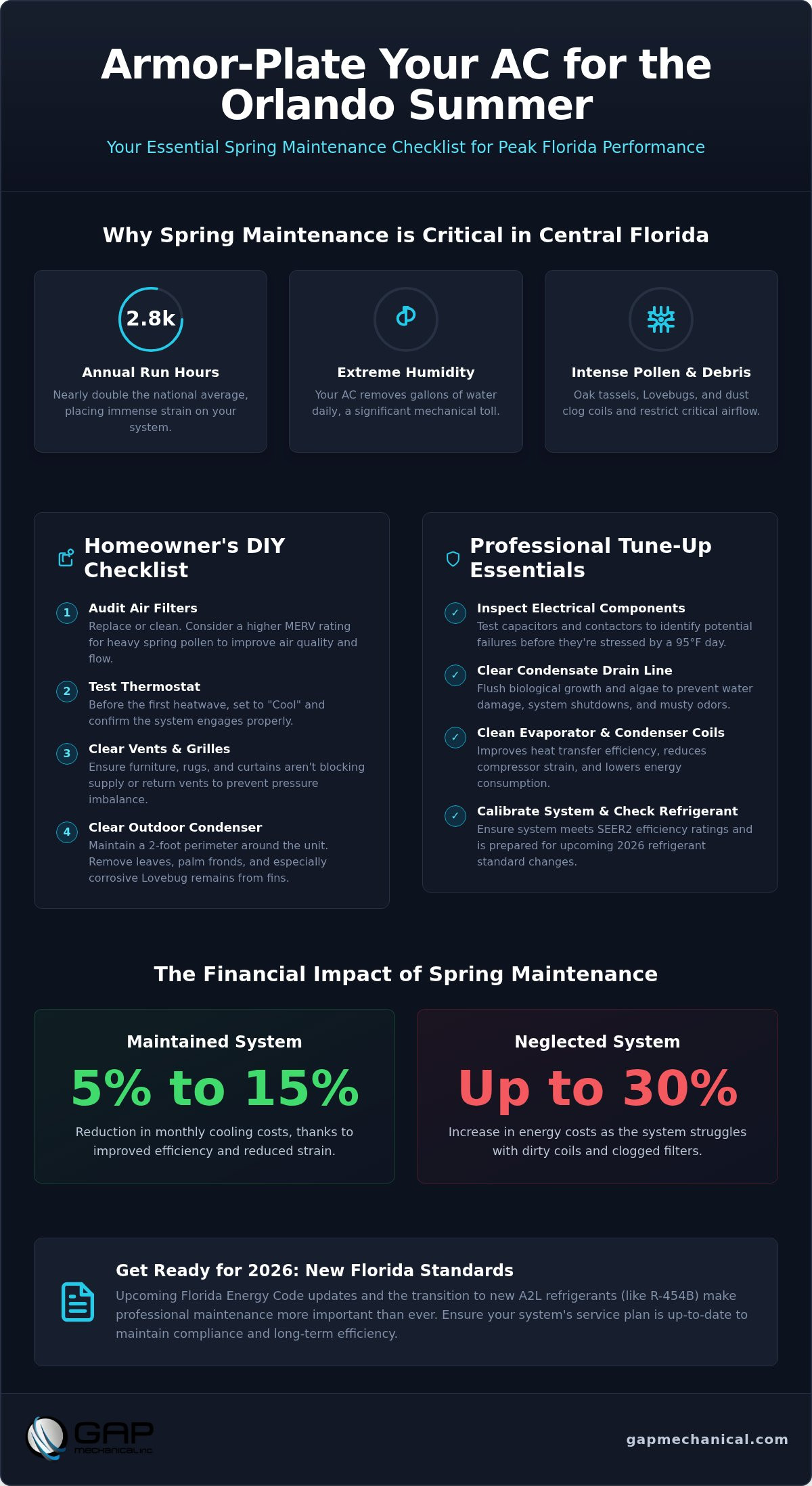
The spring AC maintenance checklist for Orlando focuses on ensuring your system is fully optimized and prepared for the immediate jump in Central Florida temperatures and humidity. A thorough pre-season inspection helps identify small issues before they escalate into major breakdowns during those intense 90-degree summer months. By addressing potential inefficiencies now, you can maintain a comfortable and stable environment throughout the entire season.
Understanding the Orlando HVAC Transition Shock
For residents in Orlando, the transition into summer isn't a gradual climb; it’s often a sudden, intense shift. One minute the weather feels manageable, and the next, the humidity spikes, the air becomes thick, and the temperature climbs rapidly toward 90 degrees or higher. This sudden environmental stress puts enormous pressure on older homes and HVAC systems that haven't been properly maintained.
In neighborhoods like Winter Park, Lake Nona, or even established areas of Downtown Orlando, the sheer load placed on cooling units during a heat wave is significant. A system that was fine in mild spring weather may struggle immensely when the Florida heat combines with high ambient moisture. Proactive maintenance is not just about preventing a breakdown; it is about optimizing your home's ability to handle the unique meteorological challenges of Central Florida.
We must also consider the seasonal threat of afternoon thunderstorms and the increased risk associated with hurricane season preparation. While AC maintenance is primarily about cooling efficiency, a well-maintained system is part of a comprehensive home readiness plan. A system running optimally reduces strain on other home systems and ensures your climate control remains robust when conditions become volatile.
Your Comprehensive Spring AC Maintenance Checklist
The core of the spring maintenance process involves a detailed, systematic examination of every component of your HVAC system. This goes far beyond simply changing a filter. It requires an expert look at the operational mechanics to catch early warning signs of inefficiency or failure.
Here are the critical areas that need attention as you prepare for the heat:
- Air Filters: This is the simplest step, but perhaps the most overlooked. A clogged filter restricts airflow, forcing your unit to work harder and consume significantly more energy. In Florida's dusty environment, filters need to be checked and replaced frequently.
- Evaporator and Condenser Coils: These coils are responsible for the heat exchange. Over time, they accumulate dirt, dust, and mold spores—especially in humid Central Florida. These accumulated debris act as insulation, severely hindering the unit's ability to cool efficiently.
- Refrigerant Levels: Refrigerant levels are vital. If the system is low, it will not be able to move heat effectively, leading to poor cooling and premature system wear. This requires a professional diagnosis.
- Drain Lines: With constant humidity, condensate drains are prone to clogging with sludge or algae. A clogged drain can cause water damage to your property and, more importantly, can shut down the system completely as a safety measure.
- Electrical Connections: Overheating and high humidity can affect electrical components. Technicians must check electrical connections for tightness and look for any signs of arcing or wear on the wiring to prevent potential hazards.
Tailoring Maintenance to the Local Environment
Central Florida presents a specific set of challenges that standard AC maintenance checklists often miss. We need to consider the high dew points, the aggressive mold growth potential, and the specific construction types found throughout the region.
Humidity Management and Mold Prevention:
The pervasive humidity in Orlando requires meticulous attention to the moisture removal process. The AC system's ability to dehumidify is as important as its ability to cool. If the drain lines are compromised, or if the evaporator coil is not cleaned thoroughly, mold and mildew can thrive, impacting air quality and system performance. Regular professional cleaning ensures the unit is functioning as a dehumidifier, not just a cooler.
Older Home Systems:
Many beautiful homes throughout Orlando, particularly those built decades ago in areas like College Park or Kissimmee, have unique construction methods and older HVAC units. These systems often have less robust insulation or older components that may not be designed for the modern extreme heat. A standard maintenance check on a newer home might miss critical vulnerabilities in an older structure. A specialized inspection is necessary to ensure the entire home envelope, not just the unit, is prepared.
Pre-Storm Readiness:
While the AC doesn't directly mitigate storm damage, a system that is operating at peak efficiency means it is less likely to strain itself during sudden power fluctuations or high-demand periods immediately following a storm. A professional service ensures that your unit is running smoothly and is ready to handle the sudden environmental shifts that occur during and after intense weather events.
What a Professional Inspection Entails
When you engage a qualified professional, the process is not merely a quick tune-up; it is a diagnostic deep dive. The goal is to move beyond superficial fixes and address the root causes of potential performance issues.
A complete inspection typically involves these phases:
- Visual Inspection: Looking for any visible signs of leaks, corrosion, or physical damage to the exterior condenser unit and indoor components.
- Operational Testing: Running the system under load to measure crucial metrics like voltage, amperage, and temperature differential. These measurements tell the technician if the system is working within optimal parameters.
- Airflow Testing: Verifying that the correct volume of air is moving through the ducts and across the coils. Restricted airflow is the fastest way to reduce cooling capacity.
- System Cleaning: Depending on the condition, coils may require a specialized cleaning to remove accumulated debris and grime that impede heat transfer.
This comprehensive approach ensures that the system is not just running, but running at its highest potential efficiency, which is paramount when battling the intense humidity of Central Florida.
Knowing When to Call a Local Expert
While minor tasks like filter changes can be handled yourself, certain maintenance items require specialized tools, knowledge of local building codes, and specific certifications. If you notice any of the following signs, it is time to call a licensed professional.
Signs Your AC Needs Immediate Expert Attention:
- Decreased Cooling Power: If the air coming out of your vents feels significantly warmer than usual, your system may be struggling with low refrigerant or restricted airflow.
- Unusual Noises: Rattling, grinding, or loud buzzing sounds often indicate issues with fans, bearings, or loose components that need immediate professional assessment.
- Visible Ice Formation: If you see ice forming on the copper lines or the evaporator coil, this is a serious indicator of a major airflow problem or a refrigerant issue that needs immediate resolution to prevent system damage.
- Wet or Musty Odors: While some humidity is normal, a strong musty smell suggests moisture accumulation and potential mold growth within the ductwork or coils, requiring specialized cleaning.
- Frequent Shutoffs: If the system cycles on and off repeatedly, it is likely encountering a safety issue or struggling to manage the load, requiring a full system diagnostic.
At GAP Mechanical, we serve the Orlando community with deep expertise, holding the necessary licenses and certifications to handle the complexity of Central Florida HVAC systems. We prioritize your comfort and the longevity of your asset through detailed, thorough service.
If you are concerned about the performance of your unit, or if you simply want a comprehensive, professional spring tune-up tailored to the specific demands of the Orlando climate, we are here to help. Contact us today at 407-381-9415 to discuss your needs.
Frequently Asked Questions
How often should I have my HVAC system professionally serviced?
For optimal performance in Central Florida's high-demand climate, it is highly recommended that you have a professional tune-up performed at least once every spring, before the peak heat arrives. Depending on the age and complexity of your system, some experts may suggest bi-annual servicing to manage the high humidity consistently.
Will changing my air filter actually save me money?
Absolutely. A clean filter ensures unobstructed airflow, allowing your unit to operate at its designed efficiency. When air is restricted by a clogged filter, the system overworks, leading to increased energy consumption and premature wear on mechanical components. Regular filter replacement is one of the most effective ways to reduce operational strain.
What is the difference between a simple cleaning and a comprehensive tune-up?
A simple cleaning focuses on removing visible debris from coils and vents. A comprehensive tune-up is a diagnostic process. It includes the cleaning, but also involves measuring critical operational metrics like refrigerant levels, electrical connections, airflow volume, and system pressures to ensure every mechanical aspect is functioning within the manufacturer's optimal specifications.
Can I handle the maintenance myself?
You can handle basic, preventative maintenance like inspecting and changing the air filters. However, tasks involving the coils, electrical connections, refrigerant levels, and drain line integrity require specialized tools and professional knowledge. Because of the risk involved and the specialized nature of HVAC components, professional service is always the safest and most effective choice.
Frequently Asked Questions
Ready for a Worry-Free Summer?
Beat the May rush by scheduling your service in March or April. Once the humidity spikes, our schedule fills up quickly with emergency repairs. Taking action now ensures your home is ready for that first 95-degree afternoon. There is no substitute for the confidence that comes with a system certified by a local professional. Schedule your Spring AC Maintenance with GAP Mechanical today to protect your comfort and your wallet. Orlando summers don't offer second chances once the humidity peaks. Following a detailed spring AC maintenance checklist Orlando is the most effective way to protect your home from skyrocketing utility bills and the threat of a mid-season breakdown. From clearing biological growth in your drain lines to verifying electrical components, these proactive steps ensure your cooling system operates at peak efficiency when you need it most. At GAP Mechanical, we bring over 25 years of Orlando HVAC expertise to every service call. As a licensed and insured contractor with a 4.9-star Google rating, we prioritize the reliability and transparency that Central Florida homeowners deserve. We've seen exactly what the local climate does to air conditioners; we know how to armor-plate your system against it. Don't wait for the first 95-degree day to test your luck. Book Your Orlando Spring AC Tune-Up Now to secure your peace of mind. We look forward to helping you stay cool and comfortable all year long.
Is spring AC maintenance really necessary in Orlando every year?
Yes, annual maintenance is essential because Orlando cooling systems operate nearly double the national average. This constant use leads to rapid wear on electrical components and drainage systems. Following a professional spring AC maintenance checklist Orlando ensures that small issues like a weak capacitor don't turn into a total compressor failure during a heatwave. Regular service also maintains your manufacturer warranty and keeps your utility bills from spiking as the outdoor temperature rises.
How much does a professional AC tune-up consideration in Orlando?
Industry data for 2026 shows that a standard professional tune-up in Central Florida typically ranges from $79 to $189. This consideration covers a comprehensive inspection of electrical parts, coil cleaning, and drainage verification. While some may view this as an extra expense, it's significantly simpler than major repairs. For example, replacing a compressor without a warranty can consideration between $1,900 and $3,200, making preventive care a smart financial decision for Orlando homeowners.
Can I do my own AC maintenance to save money?
Homeowners can handle basic tasks like replacing air filters and clearing yard debris from the outdoor unit. However, professional maintenance is required for technical tasks like measuring capacitor microfarads or checking refrigerant pressures. With the 2026 shift to new A2L refrigerants, specialized tools and training are necessary to ensure the system meets the latest Florida Energy Code. Attempting to service internal electrical or refrigerant components yourself can be dangerous and may void your system's warranty.
How long does a professional spring AC maintenance visit take?
A thorough professional maintenance visit usually takes between 60 and 90 minutes. This timeframe allows the technician to perform a 20+ point inspection, including cleaning the coils and clearing the condensate drain line. If your system is located in a difficult attic space or hasn't been serviced in several years, the process might take a bit longer. Our goal is to be efficient while ensuring every critical component is verified for the upcoming summer stress.
What is the most common AC problem found during spring inspections in Florida?
Clogged condensate drain lines are the most frequent issue we encounter during Orlando spring inspections. High humidity levels create a perfect environment for algae and slime to grow inside the PVC pipes. This growth leads to backups that can trigger your float switch and shut down the entire system. Weak start capacitors are also common. These parts often fail during the first few weeks of consistent 90-degree weather if they aren't tested and replaced beforehand.
Should I turn my AC off when I am not at home in Orlando?
You shouldn't turn your system completely off when leaving your Orlando home. Instead, raise the thermostat by 5 to 7 degrees. Turning the unit off allows indoor humidity to skyrocket, which can lead to mold growth and musty odors. When you return and turn the AC back on, the system has to work twice as hard to remove that moisture. Maintaining a consistent, slightly higher temperature is more energy-efficient and protects your home's air quality.
What is the difference between a tune-up and a repair?
Maintenance is a preventive service designed to keep a functioning system running efficiently. It includes cleaning, lubricating, and testing parts to avoid future failures. A repair is a reactive service performed when a specific component has already failed or the system is no longer cooling. While maintenance is a predictable annual expense, repairs are often sudden and more costly. Investing in a spring AC maintenance checklist Orlando helps minimize the need for these significant emergency repairs.
Why does my AC smell musty when I first turn it on in the spring?
That musty smell is usually caused by "Dirty Sock Syndrome," which is bacterial growth on the evaporator coils. It can also stem from stagnant water sitting in a partially clogged drain line. When the system sits idle during the cooler months, moisture and dust provide a food source for microbes. A professional cleaning of the coils and a thorough flush of the drainage system will typically eliminate these odors and improve your home's overall air quality.