

Orlando Walk-in Cooler Repair: Troubleshooting Checklist
Published August 14, 2026
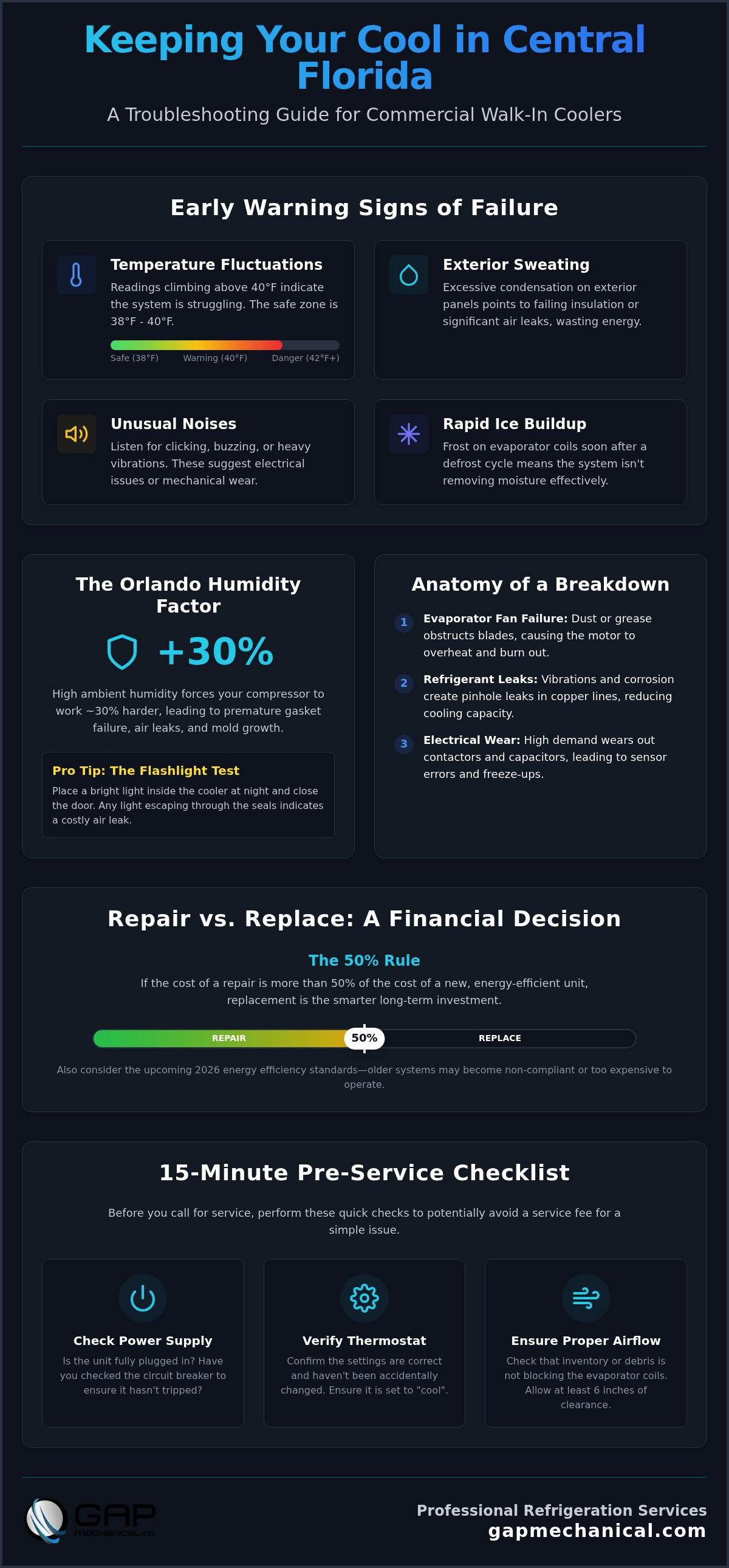
When a walk-in cooler in Orlando stops cooling effectively, the issue usually stems from a combination of thermal overload and mechanical failure, often exacerbated by Central Florida’s high humidity and intense heat. A systematic approach to troubleshooting can help you diagnose whether the problem is a simple sensor issue or a major component failure requiring professional walk-in cooler repair Orlando.
For commercial operations, maintaining optimal temperatures is not just about food safety—it is about operational continuity. Ignoring early signs of cooling inefficiency can lead to inventory loss, increased energy consumption, and long-term system damage. This guide is designed to help you understand the potential culprits and know when to reach out for specialized help.
Understanding the Challenges of Walk-in Coolers in Central Florida
Operating a walk-in cooler in Orlando presents unique environmental challenges that standard residential cooling systems simply don't face. The consistent high ambient temperatures, coupled with extreme humidity, place significant strain on refrigeration units. Unlike cooler climates where the primary cooling load is the heat from the sun, Orlando’s systems must constantly battle the moisture and heat radiating off the ground and surrounding structures, even during the cooler parts of the day.
Many commercial properties in Orlando, particularly those in established areas like Winter Park or Lake Nona, house older infrastructure. If your walk-in cooler was installed before modern energy efficiency standards, it may be struggling against modern cooling demands. The constant battle against heat infiltration through poorly sealed doors or inadequate insulation is a common issue that often precedes mechanical failure.
The Impact of Humidity on Cooling Cycles
High humidity doesn't just make it feel warmer; it increases the thermal load on your cooling system. The air inside the cooler becomes more difficult to cool because the moisture content itself requires energy to remove. This can lead to several problems:
- Overworked Compressors: The unit runs longer and harder than intended, leading to premature wear.
- Condensation Issues: Excess moisture can accumulate inside the unit, potentially shorting out electrical components.
- Inefficient Heat Exchange: Humidity can reduce the efficiency of the evaporator coils, meaning the unit struggles to pull the temperature down quickly.
Initial Troubleshooting: A Quick Self-Check Checklist
Before assuming a major mechanical failure, it is crucial to check the most common, user-accessible factors. These steps can often resolve minor issues without needing a licensed technician.
1. The Door and Seal Inspection
The most frequent cause of cooling inefficiency is heat infiltration. Check the gasket around your walk-in cooler doors. Are there any visible gaps? Is the seal compressed or torn? Even a tiny gap can allow hot, humid Orlando air to seep in, forcing the unit to run continuously.
- Test the seal: Place a piece of paper in the door frame and close it; if the paper slides out easily, the seal is compromised.
- Check the door alignment: Ensure the door is closing flush and is not warped or sagging.
2. Fan and Airflow Verification
Your cooler relies on proper air circulation. If the internal circulation fans are clogged or failing, the cooled air will not reach all parts of the cooler, leading to "cold spots" and the appearance of generalized cooling failure.
- Listen for humming: Do you hear the internal fans running consistently?
- Check for debris: Ensure the vents and fan blades are free of dust, packaging materials, or grease buildup.
3. Thermostat and Sensor Check
A malfunctioning thermostat or a displaced temperature probe can cause the unit to either run constantly (leading to frozen coils) or shut off prematurely. If the unit is running but the temperature is still too high, the sensor might be sending faulty data to the control board.
- Confirm the setting: Is the thermostat set to the correct temperature?
- Check for obstruction: Ensure the sensor is not blocked by food or equipment.
When the Problem is Deeper: Electrical and Refrigeration Issues
If the simple checks above don't solve your problem, the issue likely lies within the core mechanical or electrical systems. These are the signs that require professional intervention and technical expertise.
Signs of Compressor Trouble
The compressor is the heart of your refrigeration system. When it fails, the unit cannot move the heat out of the space. Signs include:
- The unit seems to run, but the temperature never drops significantly.
- You hear loud, unusual noises (clanking, grinding, or constant buzzing) coming from the compressor area.
- The compressor is completely silent, even though the fans are running.
Coil and Condenser Issues
The condenser coils (usually located on the exterior or in a dedicated machine) are responsible for releasing heat into the surrounding air. In Orlando’s high-heat environment, these coils get dirty quickly, losing their ability to shed heat efficiently. This is the most common cause of system "overheating" or "short-cycling."
- Check the exterior coils: Look for heavy dust, grime, or built-up debris. In commercial kitchens, grease is a major culprit.
- Verify airflow around the condenser: Ensure nothing is blocking the air intake or exhaust.
Refrigerant Leaks and Electrical Components
A loss of refrigerant, often due to a slow leak, will cause the cooling power to drop over time until the unit fails to achieve its set temperature. Furthermore, electrical components like relays, capacitors, and contactors can fail due to the constant start-stop cycles of heavy commercial equipment.
- Notice a gradual cooling decline: If the unit worked perfectly for months and then started struggling, a slow leak or electrical failure is likely.
- Check for voltage fluctuations: Fluctuations in the electrical supply can damage sensitive control boards.
Proactive Maintenance: Preventing Emergency Repairs
The best approach to walk-in cooler repair Orlando is prevention. Implementing a consistent maintenance schedule tailored to the Central Florida climate can dramatically extend the life of your unit and prevent costly emergency repairs during peak summer heatwaves.
Seasonal Deep Cleans
Every six months, schedule a professional deep clean. This goes beyond just dusting. It involves:
- Cleaning or replacing the evaporator coils to ensure maximum heat absorption.
- Inspecting the door seals and lubricating hinges.
- Checking the refrigerant levels to ensure the unit is topped off.
Monitoring Power and Voltage
HVAC systems are power-hungry. Ensure that the electrical supply to your cooler is stable and that the wiring is up to code. If the unit is running on an undersized circuit, it will constantly struggle, leading to component failure and inefficient cooling. For businesses looking to upgrade outdated systems and maximize operational uptime, reviewing the Commercial AC replacement and ROI guide can provide valuable insight into long-term performance improvements.
Training Your Staff
Your team is your first line of defense. Educate staff on proper cool-down procedures, ensuring that doors are only left open for brief periods. Proper usage habits significantly reduce the stress on the mechanical components.
When to Call a Professional Expert
While self-checks are a great first step, certain signs indicate that the problem is beyond simple user adjustment and requires a licensed, experienced HVAC professional. These are not issues you should attempt to fix yourself, as they involve high-voltage electricity and specialized refrigeration knowledge.
You should immediately contact experts when you observe:
- The unit is completely silent or shows error codes on the digital display.
- There is visible leaking of refrigerant or oil.
- The unit has been running continuously for over 24 hours but the temperature remains above the safe threshold.
- You smell burning plastic or electrical components near the unit.
When seeking walk-in cooler repair Orlando, look for companies with a proven track record of serving the local commercial community. A licensed, EPA-certified provider ensures that all repairs are conducted safely, efficiently, and in compliance with all Florida codes. Our team has been serving Central Florida since 2003, maintaining a 4.9 Google rating for reliable service.
Frequently Asked Questions
Q: How often should my walk-in cooler be professionally inspected?
A: For optimal performance in Orlando’s climate, it is highly recommended that commercial units receive a professional inspection and deep cleaning at least twice a year—once in the spring and once before the heavy summer heat begins.
Q: Is high humidity a normal cause of walk-in cooler failure?
A: Yes, Central Florida's high humidity significantly increases the thermal load on any refrigeration unit. The unit has to expend extra energy managing moisture, which stresses the compressor and reduces the efficiency of the cooling cycle.
Q: Can I fix a walk-in cooler leak myself?
A: While minor condensation may be addressable, refrigerant leaks are serious. They require specialized equipment to locate and repair the leak, and the system must be properly charged to maintain safe and effective temperatures. A professional is necessary for this work.
Q: What is the difference between a cooling issue and a temperature setting issue?
A: A temperature setting issue means the unit is not reaching the temperature you want. A cooling issue means the unit is running but is failing to remove heat effectively due to mechanical failure, dirty coils, or electrical problems.
Frequently Asked Questions
How much does walk-in cooler repair consideration in Orlando?
repair needs for walk-in cooler repair Orlando vary based on the specific component failure and the overall age of your system. Major repairs like compressor replacements or fixing significant refrigerant leaks are typically the most significant assets for business owners. Minor issues such as thermostat calibration or fan motor replacements consideration much less. You should always request a detailed estimate from a licensed contractor to understand the total scope of work before proceeding.
What is the most common cause of walk-in cooler failure?
Poor maintenance is the leading cause of system failure for commercial kitchens in Central Florida. Specifically, dirty condenser coils and clogged drain lines force the unit to work harder against the high ambient heat. This constant strain leads to overheated compressors and burnt-out fan motors. Regular cleaning and professional inspections prevent these common mechanical breakdowns and extend the life of your equipment while protecting your inventory from spoilage.
How often should a commercial walk-in cooler be serviced in Florida?
You should schedule professional maintenance at least twice a year to combat Orlando’s extreme humidity and heat. Systems in high-volume kitchens may require quarterly inspections to ensure coils remain clean and gaskets stay sealed. These regular checkups allow technicians to catch small refrigerant leaks or electrical wear before they turn into significant emergency repairs that disrupt your business operations and lead to massive inventory loss.
Can a walk-in cooler be repaired if it has a refrigerant leak?
Yes, a refrigerant leak can be repaired by locating the breach, sealing the line, and recharging the system. However, the age of your unit matters due to the 2026 refrigerant regulations. If your older system uses R-410A, the consideration of recharging will likely increase as production is reduced. A professional walk-in cooler repair Orlando expert can help you decide if a repair is financially sound or if a replacement is better.
Why is my walk-in cooler leaking water on the floor?
Water on the floor usually indicates a clogged or frozen drain line. In our humid climate, moisture condenses rapidly on the evaporator coils and must flow out through the drain. If the line is blocked by debris or slime, the water backs up and spills onto the floor. You should check the drain pan and line immediately to prevent slip hazards and potential structural damage to your flooring or the cooler’s insulation.
Is it better to repair or replace a 15-year-old walk-in cooler?
Replacement is generally the better long-term asset for a 15-year-old unit. Most commercial coolers in Florida reach the end of their reliable lifespan between 10 and 15 years. At this age, the consideration of frequent repairs and high energy bills often exceeds the consideration of a new, high-efficiency model. Additionally, new units comply with modern energy standards and use current refrigerants, ensuring better parts availability and lower maintenance needs.
How long can a walk-in cooler stay cold after a power outage?
A well-insulated walk-in cooler can typically maintain safe temperatures for four to six hours if the doors remain closed. The specific time depends on the volume of inventory inside and the quality of your door gaskets. Once the internal temperature exceeds 40°F, you risk significant bacterial growth and spoilage. It's vital to monitor the temperature closely and have a backup plan for your perishable goods during extended Central Florida outages.
Does high humidity affect my walk-in cooler’s performance?
High humidity significantly impacts performance by forcing the system to remove more moisture from the air. This process puts extra load on the compressor and can lead to rapid ice buildup on the evaporator coils. Excessive moisture also causes door gaskets to deteriorate faster and can lead to mold growth. Ensuring your unit is properly sealed and the defrost cycles are functioning correctly is essential for surviving a humid Florida summer.