

HVAC Installation Altamonte Springs: 2026 Homeowner Guide
Published August 21, 2026
HVAC installation in Altamonte Springs requires a strategic approach that prioritizes resilience against Central Florida’s unique environmental pressures, such as intense humidity, sustained high temperatures exceeding 90 degrees, and sudden afternoon thunderstorms. A successful installation must be tailored specifically to your home's construction, local microclimate, and long-term comfort goals to ensure efficient operation and maximum reliability throughout the year.
Why Altamonte Springs Demands Specialized HVAC Solutions
Central Florida weather is not monolithic; it is a complex blend of relentless heat, oppressive humidity, and unpredictable weather events. For residents in Altamonte Springs—whether you live in established neighborhoods like Altamonte Estates or newer developments in North Altamonte—your HVAC system is far more than just a way to cool the air; it is the primary defense against discomfort and moisture intrusion.
Many homeowners treat HVAC as a standard replacement, but in the Orlando area, this approach often leads to premature system failure or inefficient performance. The challenges we face here are distinct from those in drier climates. We are dealing with:
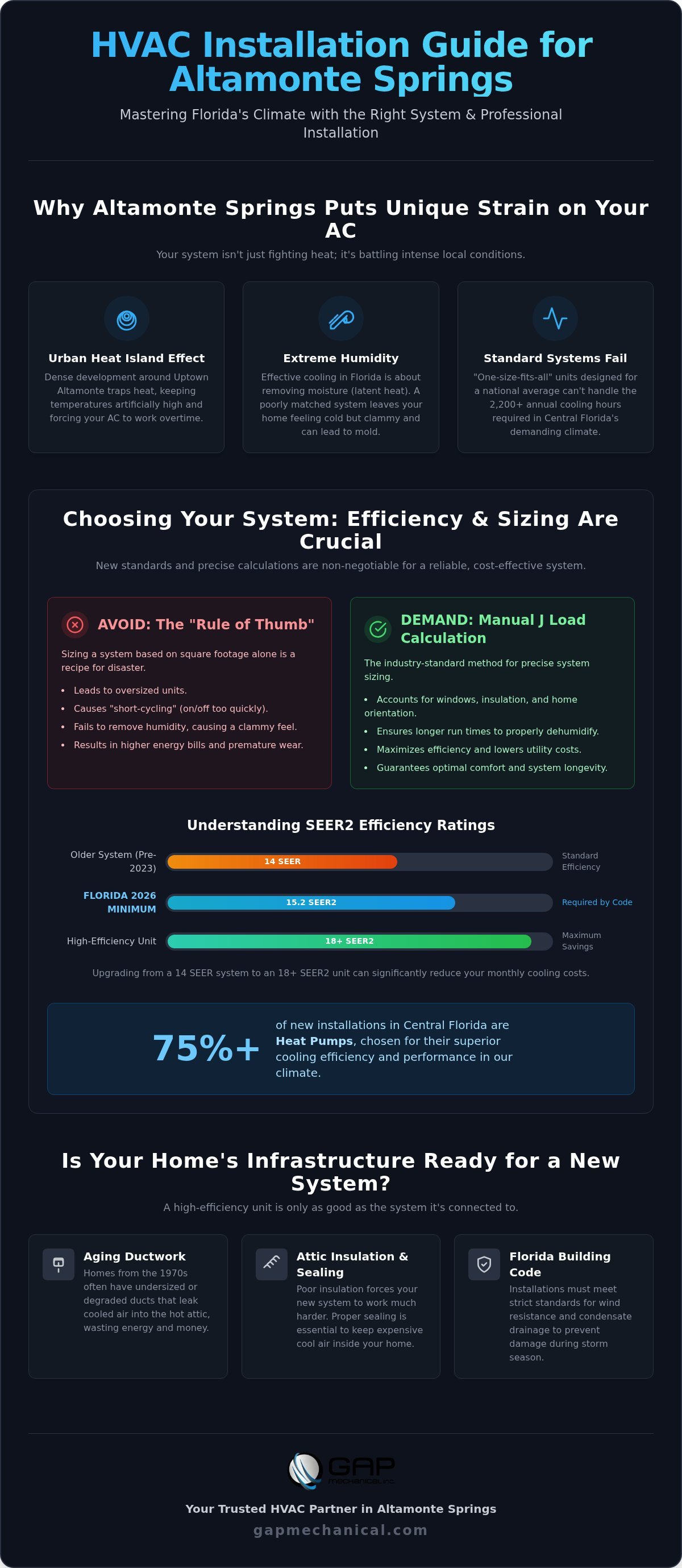
- Intense Humidity: High humidity requires systems that not only cool but also dehumidify effectively. If a system is undersized or poorly installed, it may cool the temperature but leave the air feeling heavy and clammy, which is far from comfortable in the Florida heat.
- High Thermal Load: The sustained heat of 90°+ degree summers places massive stress on any cooling unit. The system must be appropriately sized to handle the peak thermal load of your specific home design.
- Weather Volatility: From hurricane preparedness to sudden, intense afternoon downpours, the system must be robust enough to handle rapid environmental shifts without compromising performance or structural integrity.
- Older Home Complexity: Many homes in Altamonte Springs were built before modern energy efficiency standards were commonplace. Installing a modern, high-efficiency system in an older structure often requires more complex considerations regarding ductwork and insulation to achieve optimal results.
Because of these factors, a successful HVAC installation in Altamonte Springs must be a customized engineering project, not a standard plug-and-play replacement.
The Installation Lifecycle: A Step-by-Step Process
A high-quality HVAC installation begins long before a single unit is lifted off the ground. It starts with a detailed assessment of your specific needs. When considering a major system upgrade in Altamonte Springs, the process is highly methodical and centered around ensuring proper fit and function for your unique home.
The journey from initial consultation to operational comfort involves several critical phases:
- Comprehensive Site Assessment: This is not just looking at the unit; it involves examining the home’s layout, insulation levels, window quality, sun exposure, and existing ductwork. We assess how much heat the house is generating and losing.
- Load Calculation (Manual J): This is the foundational step. A professional performs a detailed calculation to accurately determine the cooling and heating requirements (the "load") of your specific home. This ensures the system is sized correctly—not too small, which will constantly run and fail, or too large, which will cycle rapidly and waste energy.
- System Selection and Design: Based on the load calculation, the appropriate technology (heat pump, central AC, etc.) is selected. The design phase determines the placement of the outdoor unit, the indoor components, and the necessary duct routing.
- Precision Installation: This phase requires expert execution. This includes safely mounting the condenser, correctly charging the refrigerant lines, and meticulously connecting the ductwork. Leaks or improper connections in the ductwork are the most common points of failure in Central Florida’s humid climate.
- Ductwork Optimization: Often overlooked, the ductwork is the circulatory system of your home. Any leaks or poor sizing in the ducts allow conditioned air to escape before it reaches the rooms, wasting energy and failing to maintain the target temperature.
- Testing, Tuning, and Handover: After installation, the system is run through a comprehensive testing and balancing process. This ensures that the system operates at peak efficiency and that air flows correctly to every zone of the home.
The complexity of these steps is why thorough preparation is essential. If you are in the planning stages of a replacement, it is highly recommended that you review all your options thoroughly. We offer resources to help homeowners make informed decisions regarding the scope of work, including guides on Questions to Ask an HVAC Contractor.
Matching the System to Your Specific Altamonte Springs Home
Not every home in Altamonte Springs is built the same. You might be dealing with a mid-century ranch in the northern parts of the city, a sprawling single-story home in Altamonte Estates, or a high-density townhouse. Each structure presents unique thermal challenges that require a tailored HVAC solution.
Addressing Older Homes:
Older homes often have less insulation, single-pane windows, and less consistent air sealing. When installing a modern, energy-efficient system in these structures, the focus must shift toward minimizing air leakage. We often recommend sealing penetrations, upgrading filtration, and ensuring the ductwork is sealed to prevent the humid, hot outside air from infiltrating the conditioned space. Simply putting in a new, powerful unit will not fix the underlying envelope issues of an older build.
Zoning and Multi-Zone Comfort:
In larger homes, especially those with varying sun exposures or different usage patterns (e.g., a home where the master bedroom faces west and the guest rooms are north-facing), a single thermostat often fails to provide equitable comfort. Strategic installation of a multi-zone system allows you to control temperature and humidity independently in different sections of your home. This is particularly beneficial in the Altamonte Springs environment, where one area of the house might be absorbing intense afternoon sun while another remains in the shade.
Efficiency vs. Capacity:
The goal of any installation is maximizing efficiency without sacrificing capacity. A system that runs constantly to fight high humidity will consume far more energy than a properly sized, efficient system that handles the load comfortably. We analyze the home's thermal profile—considering factors like roof type, window orientation, and insulation—to select a system that meets your comfort needs without over-engineering the solution.
The Hidden Risks of DIY or Quick Fixes
The allure of a quick, inexpensive fix is understandable, especially when facing the intense heat of Central Florida. However, when it comes to HVAC installation, shortcuts almost always lead to significant long-term issues. HVAC systems are intricate mechanical devices that rely on precise measurements, specific refrigerant handling, and perfect integration into the home's structure.
What happens when corners are cut?
- Improper Sizing: If a technician guesses the size instead of calculating the load, the system will struggle during peak demand (e.g., during a sweltering August afternoon), leading to uneven temperatures, moisture buildup, and premature wear on the compressor.
- Duct Leaks: If duct joints are not properly sealed, conditioned air escapes into the attic or crawl space. In humid Altamonte Springs, this escaping air mixes with the high ambient moisture, leading to mold growth and a higher energy bill because the system is constantly trying to compensate for lost cooling.
- Incorrect Refrigerant Charge: Refrigerant is the lifeblood of the cooling cycle. If it is over- or under-charged, the unit will not cool effectively, run inefficiently, and fail to dehumidify properly, leaving you with a hot, muggy house.
- Warranty Voidance: Many manufacturers require licensed, certified professionals to perform the installation to keep warranties valid. Using uncertified labor can nullify these valuable protections.
A professional HVAC installation is an commitment to comfort and structural integrity. It is the difference between a system that works optimally for 15 years and one that requires replacement in five years due to operational strain.
Ensuring Long-Term Comfort in Central Florida
A flawless installation is only the first step toward long-term comfort. Once your HVAC system is operating in your Altamonte Springs home, the commitment to maintenance and understanding system performance is equally critical, especially considering the aggressive nature of the Florida climate.
The Importance of Preventative Care:
Central Florida’s environment—high humidity, constant temperature swings, and salt exposure from nearby weather patterns—accelerates the wear and tear on HVAC components. Regular tune-ups allow technicians to inspect the system, clean coils, and check refrigerant levels before minor issues escalate into major breakdowns during a heatwave. A routine check-up can prevent costly emergency repairs.
Optimizing Efficiency:
As your HVAC system ages, its efficiency naturally degrades. By establishing a baseline of performance during the initial installation, we can help you recognize when the system is operating outside of its peak parameters. This proactive approach ensures you are always getting the maximum comfort and efficiency out of your asset.
Ultimately, achieving optimal HVAC performance in Altamonte Springs requires a partnership between the homeowner and an expert team. We bring decades of experience and specialized knowledge of this specific climate to every project.
Frequently Asked Questions
How long should I expect a professional HVAC installation to take?
The timeline varies significantly based on the scope of the project. A simple unit replacement might be completed in a single day, but a complex installation involving extensive ductwork modifications, zoning, or upgrades to an older home in Altamonte Springs will require more time for careful assessment and execution.
Is duct sizing the same regardless of the HVAC unit size?
No. Duct sizing is directly proportional to the heating and cooling load of your specific home. A system that is correctly sized for your home must be paired with appropriately sized ductwork. Mismatches in either area lead to poor air distribution, inefficiency, and discomfort.
Should I consider zoning when installing a new system in Altamonte Springs?
If your home is large or has distinct areas that experience different thermal loads (such as a heavily sun-exposed living room versus a shaded bedroom), a multi-zone system offers superior comfort. Zoning allows you to manage the humidity and temperature precisely where you need it most.
What is the difference between a thermal load calculation and a simple estimate?
A thermal load calculation (often called a Manual J calculation) is a scientific, detailed assessment of your home’s specific needs. It goes beyond a simple estimate by factoring in factors like insulation levels, window quality, and roof type, ensuring the system is sized exactly right for the climate of Altamonte Springs.
Frequently Asked Questions
Ready to Upgrade Your Comfort?
The first step toward a more efficient home is a professional site evaluation. When you schedule a consultation, a GAP specialist visits your property to conduct a thorough assessment. We don't just look at your old unit; we inspect your ductwork, insulation, and electrical capacity. You'll receive a detailed, honest report on your options without any high-pressure sales tactics. If you're ready for a system that truly handles the Florida heat, visit our Contact Page to start the process today. We look forward to showing you why your neighbors trust us with their home comfort. Securing a professional HVAC installation Altamonte Springs homeowners can rely on is about more than just beating the heat. It’s a strategic commitment to humidity control and long-term energy savings. By understanding the 2026 SEER2 standards and the necessity of a professional Manual J load calculation, you've already taken the most important steps toward a reliable home environment. You now know how to look past the bottom line of a quote to find true value in modern, high-efficiency technology. GAP Mechanical is here to turn that knowledge into a reality for your household. With over 25 years of local experience and a 4.9-star Google rating, we provide the technical precision your home deserves. As a licensed and insured Florida contractor, we specialize in installations that meet the rigorous demands of our unique environment. Don't let another August heatwave drive up your utility bills or compromise your comfort. Schedule your professional HVAC installation estimate today to ensure your system is ready for the years ahead. We look forward to helping you achieve a cooler, more efficient home.
How long does a typical HVAC installation take in Altamonte Springs?
A standard HVAC installation Altamonte Springs project typically takes between 8 and 12 hours to complete. Most residential replacements are finished in a single day. Our crews arrive early to begin the teardown of your old equipment and aim to have the new system cycling by late afternoon. Factors like difficult attic access or the need for ductwork repairs can extend this timeline. We prioritize efficiency to minimize your time without climate control.
Do I need a permit for a new AC installation in Seminole County?
Yes, a building permit is legally required for all major HVAC installations in Seminole County. This requirement protects the homeowner by ensuring a third-party inspector verifies the safety and code compliance of the electrical work and drainage. As a licensed Florida contractor, we manage the entire permitting process with the local building department. This documentation is essential for maintaining your homeowner's insurance coverage and simplifies the process when you eventually sell your property.
What is the best SEER2 rating for a home in Central Florida?
For Central Florida homes, a rating between 16 and 18 SEER2 provides the best balance of performance and long-term value. While the 2026 legal minimum is 15.0 or 15.2 SEER2, higher ratings offer superior humidity removal. Since our local systems run for more than 2,200 hours every year, the monthly utility savings from a high-efficiency unit accumulate quickly. This helps offset the initial purchase consideration while significantly improving your indoor comfort levels.
Can I install a new outdoor unit and keep my old indoor air handler?
We strongly advise against mixing and matching new outdoor units with old indoor air handlers. Modern 2026 systems use newer refrigerants like R-32 that are physically incompatible with older coils designed for R-410A. Mismatched components lead to massive efficiency losses and will likely cause a total system failure within months. Additionally, manufacturers won't honor warranties on mismatched systems. A complete HVAC installation Altamonte Springs homeowners invest in should always involve a fully compatible, matched set.
How often should I replace my HVAC system in the Florida climate?
In our intense climate, the average lifespan of an air conditioning system is 10 to 12 years. The extreme heat and high humidity of Central Florida force units to work much harder than in other regions. While consistent maintenance can help, the mechanical components eventually succumb to wear and corrosion. Replacing your system before it reaches total failure allows you to plan the asset rather than dealing with an significant emergency during a heatwave.
What are the signs that my current AC is about to fail?
Visible signs of failure often start with inconsistent cooling or a sudden spike in your monthly electric bill. You might also notice loud grinding sounds from the outdoor unit or a persistent musty smell caused by poor dehumidification. Excessive dust buildup and short-cycling are other common indicators that your system is struggling. If your unit requires more than two significant repairs in a single season, it's a clear sign that a professional replacement is necessary.
Are there specific rebates available for Altamonte Springs residents?
Altamonte Springs residents can often access rebates through local utility providers like Duke Energy. These programs encourage the installation of high-efficiency heat pumps and air conditioners that exceed the standard SEER2 requirements. While federal tax credits for these systems expired at the end of 2025, utility incentives remain active for 2026. We stay current on all local programs and help our clients identify every available saving opportunity to make their new installation more practical.