

Commercial Freezer Repair Orlando: Diagnostic Guide
Published June 16, 2026
When commercial freezers in Orlando stop performing, the issue is rarely simple; it is often a complex interplay between mechanical wear and the unique environmental stresses of Central Florida's climate. Expert commercial freezer repair Orlando involves a systematic diagnostic process that addresses everything from refrigerant leaks exacerbated by humidity to electrical surges caused by intense afternoon storms, ensuring your operation maintains safe and consistent temperatures.
For businesses operating in the dynamic Central Florida market—from bustling commercial districts in Downtown Orlando to large-scale operations in the Dr. Phillips area—the reliability of refrigeration is not just a convenience; it is the backbone of inventory integrity and public safety. Our team understands that the high humidity, intense 90-degree summer heat, and unpredictable storm cycles common to the region place exceptional strain on commercial equipment. A standard mechanical failure in a cooler here is often a symptom of environmental stress, requiring a highly specialized approach to diagnosis and repair.
The Climate Crucible: Why Orlando Freezers Fail
To understand commercial freezer repair Orlando, you must first understand the operational environment. Central Florida is a climate that tests machinery to its absolute limits. Unlike temperate zones, Orlando's environment introduces specific challenges that accelerate wear and tear on industrial cooling systems. These factors go far beyond simply running hot.
The combination of extreme heat, high ambient humidity, and the proximity to saltwater and storm activity creates a perfect storm for equipment failure. These elements don't just make the cooling load higher; they introduce corrosive elements and electrical instability that can compromise even the most robust units.
Here are the primary environmental stressors affecting commercial refrigeration in Central Florida:
- High Humidity and Condensation: Constant moisture can lead to internal corrosion of electrical components, wiring, and refrigerant lines, eventually causing leaks or electrical short circuits.
- Intense Heat Load: Maintaining sub-zero temperatures when the outside air is consistently in the high 80s or 90s forces compressors and condensers to work far beyond their intended capacity, leading to premature mechanical burnout.
- Storm Activity and Power Surges: Orlando is prone to severe weather, including frequent afternoon thunderstorms and tropical storm cycles. These events can introduce power fluctuations or surges that instantly damage sensitive control boards and compressors.
- Salt Air and Corrosion: While not directly on the coast, the pervasive humidity and proximity to brackish air accelerate the oxidation of metal components, especially in condenser coils and heat exchangers.
When these environmental factors combine with standard usage, what might appear to be a simple mechanical breakdown is often a cumulative failure rooted in climate stress. Proper diagnosis requires looking at the entire operational history and the ambient conditions surrounding the unit.
Beyond the Compressor: Diagnosing the Root Cause
When a commercial freezer starts performing erratically, the natural instinct is often to replace the most obvious component—the compressor. However, an experienced technician knows that replacing a component without addressing the underlying cause is simply kicking the can down the road, guaranteeing a repeat failure. True commercial freezer repair Orlando demands a comprehensive diagnostic approach.
The diagnosis must move beyond surface symptoms and delve into the systemic health of the unit. This involves a meticulous inspection of all major subsystems, not just the cooling elements.
We focus on these key diagnostic areas:
- Electrical Integrity: We check voltage stability, amperage draw, and look for signs of overheating or intermittent power supply issues that might be causing the compressor to cycle on and off prematurely.
- Refrigerant Circuit Health: We perform pressure tests to pinpoint exactly where and why a leak might be occurring. In high-humidity environments, minor leaks can be masked until the unit reaches a critical state.
- Condenser and Evaporator Performance: We assess the cleanliness and efficiency of the coils. Over time, dust, debris, and environmental contaminants clog these vital heat exchange surfaces, forcing the unit to run harder and less efficiently.
- Control Board and Sensor Calibration: Modern commercial freezers rely on sophisticated electronic controls. We verify that all temperature sensors are accurate and that the control board is receiving clean, stable signals.
Our licensed team approaches every repair as a detailed investigation. We don't just fix the symptom; we trace the failure back to its origin. This level of thoroughness is critical for businesses in areas like Winter Park or Lake Nona where uptime is non-negotiable.
The Lifecycle of Commercial Refrigeration: Prevention Over Reaction
The most effective commercial freezer repair Orlando is the kind that never needs to happen. Prevention is the cornerstone of operational longevity in Central Florida. By implementing proactive maintenance schedules tailored to the demanding Orlando climate, you can dramatically reduce the frequency and severity of unexpected breakdowns.
Routine maintenance is not merely a suggestion; it is an essential operational strategy. It allows technicians to catch minor issues—like a slight pressure drop or a slightly dirty coil—before they escalate into a full system failure requiring emergency, high-stakes repairs.
Key preventative maintenance steps we recommend include:
- Quarterly Coil Cleaning: Periodically cleaning the condenser and evaporator coils removes the buildup of dust, grime, and environmental residue that acts as insulation, drastically improving heat transfer efficiency.
- Refrigerant Level Checks: Regular monitoring ensures the system maintains the correct charge, preventing inefficient operation and excessive strain on the compressor.
- Electrical System Audits: Checking wiring, connections, and circuit breakers prevents overheating and protects sensitive electronics from power fluctuations common during severe weather.
- Door Seal Inspection: Ensuring all door gaskets are perfectly sealed prevents conditioned air from escaping and humid air from entering, which maintains the required temperature with less energy expenditure.
Understanding the maintenance schedule specific to your business operations is the first step toward ensuring reliable service. If you are looking for detailed information on how to maintain optimal performance, you can explore our Commercial Refrigeration Maintenance Guide.
When to Call the Experts: Recognizing Advanced Issues
While preventative care significantly extends the lifespan of your commercial units, there are times when the issue is too complex, too severe, or too specialized for routine maintenance. These are the moments when you need the deep experience and certified expertise of a dedicated commercial HVAC partner.
Recognizing the signs that a problem requires professional intervention is key to minimizing downtime and preventing further damage. Do not ignore subtle changes in the unit's behavior.
Here are clear indicators that professional commercial freezer repair Orlando is necessary:
- Temperature Fluctuations: If the freezer cycles rapidly between being too cold and too warm, the cooling system is likely struggling with inconsistent performance or a control issue.
- Unusual Noises: Grinding, squealing, or excessive rattling from the compressor or fan indicates significant mechanical stress or internal component failure.
- Visible Ice Buildup (Frost): Excessive frosting in the evaporator often points to airflow issues, low refrigerant, or a failing defrost system.
- Sudden Power Loss or Trip: Repeated trips on breakers or sudden complete system shutdown requires immediate electrical diagnostics.
Our team is equipped to handle the most challenging failures, whether they involve complex electronic failures, deep-seated refrigerant system issues, or large-scale component replacements. We utilize advanced diagnostic tools to ensure that every repair is performed to the highest industry standards. We are proud to operate with the rigorous standards of a licensed contractor (CAC 1813597) and maintain EPA certification, ensuring all refrigerant handling is done safely and legally.
For businesses located throughout Orlando, from the dense commercial corridors to the more sprawling industrial parks, we are ready to deploy our expertise. If the signs suggest a deeper problem, contacting a professional service is the most prudent course of action.
The GAP Mechanical Difference: Local Expertise and Reliable Service
When choosing a partner for your commercial refrigeration needs, you need more than just a service provider; you need a local expert who understands the unique demands of the Central Florida market. GAP Mechanical has been serving the Orlando community since 2003, building a reputation based on reliability, technical proficiency, and commitment to client success.
Our dedication to quality is reflected in our consistent customer satisfaction, backed by our strong Google rating of 4.9 stars. This rating is built on years of successfully navigating the specific challenges—from high-heat failures to storm-related electrical complications—that commercial owners face here.
We believe that every repair should be an commitment to the long-term health and efficiency of your business. We do not offer temporary fixes; we deliver comprehensive, lasting solutions. If you need expert assistance with a malfunctioning unit, please do not hesitate to call our dedicated line at 407-381-9415.
We also offer specialized services for various commercial applications, such as industrial HVAC services, ensuring that all aspects of your climate control needs are met by a single, highly knowledgeable provider. Furthermore, for those concerned about the long-term efficiency of their systems, learning more about commercial refrigeration repair and maintenance is always beneficial.
Navigating the complexities of commercial refrigeration in a challenging climate like Orlando's requires specialized knowledge and a commitment to quality. Trust the local experts who have been operating under the Florida sun and storm cycles for years.
Frequently Asked Questions
How long should a commercial freezer typically run without issue in Orlando?
The expected lifespan of a commercial freezer is heavily influenced by its maintenance and the environmental stressors it faces. With consistent, professional maintenance tailored to Central Florida's high-heat and humidity demands, many units can operate reliably for many years. However, consistent preventative care is the single greatest factor in maximizing operational life.
What is the difference between a compressor failure and a refrigerant leak?
A compressor failure is when the motor or mechanical components of the unit break down, often due to overheating or electrical overload. A refrigerant leak is a breach in the sealed system that allows the cooling agent (the refrigerant) to escape. Leaks reduce the cooling capacity of the system, forcing the compressor to work harder, which can eventually lead to compressor failure.
Do commercial freezers require different maintenance than residential units?
Absolutely. Commercial units operate under significantly higher demands, longer run times, and often handle far heavier loads. Their maintenance requirements must account for constant high-capacity cooling, industrial-grade components, and the specific stresses of a commercial setting, which is different from the intermittent use of a residential unit.
Can environmental factors like high humidity cause electrical problems in a freezer?
Yes. High humidity introduces moisture into the system. This moisture can lead to condensation, which then accelerates corrosion on electrical contacts, wiring, and control boards. This often results in intermittent power issues, short circuits, or the failure of control sensors, making diagnosis more complex.
Frequently Asked Questions
Temperature and Airflow Monitoring
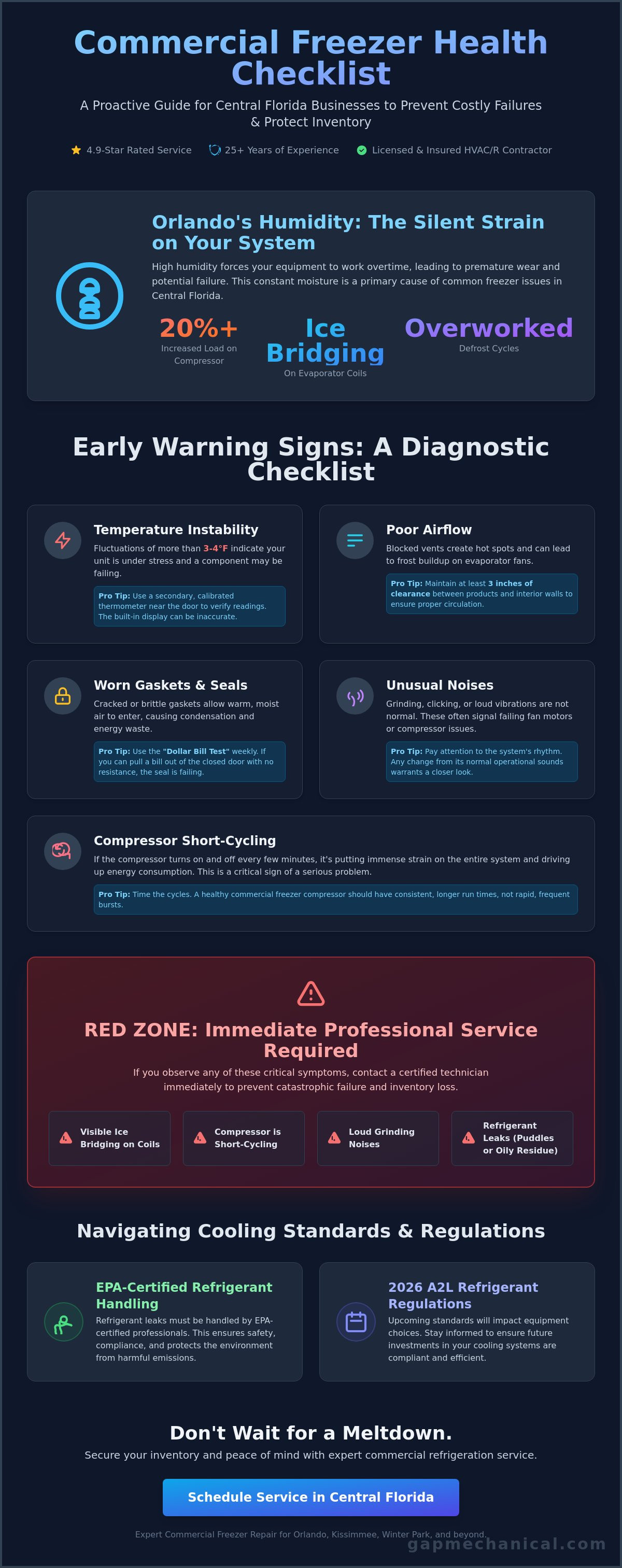
Don't rely solely on the built-in digital display. These sensors can drift over time or become blocked by ice. Use a secondary, calibrated thermometer to verify the accuracy of your readings. Place it in the warmest section of the freezer, typically near the door, to get a true sense of your "worst-case" temperature. Proper airflow is just as vital as the mechanical cooling process. Ensure you maintain at least three inches of clearance between your products and the interior walls. When boxes are pushed against the back or side panels, they block the path of cold air. This leads to hot spots and forces the evaporator fans to work harder. Check the fan housing frequently; any visible frost accumulation here suggests that moisture is entering the system and freezing before it can be exhausted.
Visual Inspection of Seals and Hardware
Humidity is a constant threat to the integrity of your freezer seals. Inspect your door gaskets every week for signs of cracks, stiffness, or mold. A brittle gasket can't create the airtight vacuum needed to keep heat out. You can perform a simple " bill test" by closing the door on a bill. If you can pull the bill out with no resistance, your seal is failing. Look for moisture or "sweating" on the exterior of the freezer cabinet. This condensation usually indicates that cold air is escaping or that the internal insulation has been compromised. Don't overlook the hardware. Check hinges and self-closing mechanisms for proper alignment. In a fast-paced Winter Park or Altamonte Springs kitchen, doors are slammed hundreds of times a day. Even a slight misalignment prevents a full seal, leading to massive energy waste and eventual compressor failure.
Mechanical and Cycle Audits
Listen to the rhythm of your kitchen. Unusual mechanical noises like grinding, clicking, or heavy vibrating are never normal. These sounds often point to failing bearings in the fan motor or electrical issues within the start relay. Your compressor should run in steady, predictable cycles. If you notice it turning on and off every few minutes, it's short-cycling. This puts immense strain on the entire system and rapidly increases your energy bills. Understanding how commercial freezers work reveals that the compressor is the heart of the refrigeration cycle. When it struggles, every other component is at risk. Addressing these mechanical red flags early is the best way to avoid the high consideration of a full system replacement. Consistent monitoring ensures your business stays operational even during the peak of the Florida summer. Central Florida's climate presents a unique set of challenges for commercial refrigeration. In cities like Orlando and Kissimmee, the ambient humidity levels are often high enough to turn a small mechanical inefficiency into a major system failure. When moist air enters your freezer, it doesn't just stay as vapor. It immediately condenses and freezes on the evaporator coils. This forces your defrost system to run more frequently and for longer durations. If your system can't keep up, you'll see "ice bridging" in the evaporator coil fins. This is when ice fills the gaps between the fins, blocking airflow entirely and causing the internal temperature to rise rapidly. High humidity also places a massive burden on your compressor. As the moisture levels increase, the system must work harder to remove latent heat from the air. This environmental stress can increase the load on your compressor by 20% or more compared to units in drier climates. Over time, this constant strain leads to overheating and premature component failure. Monitoring these moisture levels is a critical part of avoiding the need for commercial freezer repair Orlando during the peak of the summer season.
Condensation and Drainage Audit
In humid environments, your freezer generates a significant amount of condensate. If your drain lines are clogged with dust or biological growth, this water backs up and freezes into a sheet of ice on the floor. Check your drain pan heater to ensure it's functioning correctly during every defrost cycle. If the heater fails, the water will freeze before it can exit the unit. Additionally, inspect the P-trap for clogs or stagnant water. In Florida, these areas can attract pests or become breeding grounds for bacteria if not cleaned regularly. A clear drainage path is your first line of defense against ice buildup and slip hazards.
Humidity Control Strategies
Managing the "thermal barrier" of your freezer is essential for energy efficiency. Every time a door is opened in a busy Winter Park kitchen, a rush of humid air enters the unit. Minimize door opening times during high-traffic hours to keep the internal environment stable. You should also verify the condition of your strip curtains. These plastic barriers are often overlooked, but they are vital for maintaining the cold air envelope. Using Energy-efficient commercial freezers with high-quality anti-sweat heaters can also help manage exterior condensation. If you notice moisture pooling around the door frame, it's a sign that your seals are failing or your humidity controls are incorrectly set. Consistent moisture management protects your compressor and keeps your energy bills under control. Mechanical components are the workhorses of your refrigeration system. In Orlando, where ambient temperatures often exceed 90 degrees, these parts endure significant thermal stress. Regular audits prevent minor electrical glitches from escalating into a need for commercial freezer repair Orlando. Start your check by looking for scorched wires or frayed insulation near the control board. Electrical heat can melt plastic connectors long before a fuse blows. These small signs of wear are often the first indicators that your system is struggling against the Florida climate.
The Heart of the System: The Compressor
A healthy compressor should emit a steady, low-frequency hum. If you hear a loud clicking sound followed by silence, your start capacitor is likely failing. This component provides the initial jolt of energy required to move the refrigerant. Inspect the base of the compressor housing for oil leaks. Since oil circulates with the refrigerant, a leak here suggests a breach in the sealed system. For many business owners, a commercial AC replacement in Orlando often coincides with refrigeration upgrades. Coordinating these services ensures your entire facility operates at peak efficiency during the hottest months. It's a strategic way to manage your long-term mechanical stability.
Coil Maintenance and Cleaning
Dust and kitchen grease act as insulation on your condenser coils. This prevents the system from releasing heat, which forces the compressor to run indefinitely. You must clean these coils at least once a month using a soft brush or vacuum. If the fins are bent, use a fin comb to straighten them. This restores the airflow necessary for the heat exchange process. Avoid using harsh acidic cleaners that can corrode aluminum or copper components. Proper care is a fundamental part of Food safety and freezer maintenance. When coils are clean, the system maintains the stable 0°F environment required to protect your stock. This simple task is the most effective way to extend the lifespan of your unit.
Fan Motor and RPM Consistency
Monitor your evaporator fan motors for consistent performance. These fans must maintain steady RPMs to circulate cold air throughout the cabinet. If a fan slows down or begins to wobble, it will cause uneven cooling and potential ice buildup. A quick visual check for consistent rotation can save you from a morning of spoiled inventory. Listen for grinding noises that suggest bearing wear. Catching these mechanical issues during a routine audit is far more efficient than reacting to a total system failure. Your proactive approach keeps your daily operations running smoothly without the disruption of unexpected downtime. A consistent maintenance schedule is the most effective barrier against a total inventory loss. In the intense heat of Central Florida, your equipment doesn't have a margin for error. Small oversights in a busy Orlando kitchen can quickly escalate into a mechanical crisis. By implementing a structured protocol, you reduce the frequency of needing commercial freezer repair Orlando and extend the functional life of your hardware. This proactive approach ensures your cooling systems remain dependable regardless of the external humidity. Daily tasks should be integrated into your opening and closing shifts. Log internal temperatures at least twice every day. These records provide a baseline that helps you spot a slow upward drift before it triggers an alarm. During these checks, inspect the door seals for any debris or food particles that might prevent a tight vacuum. Weekly, your staff should clean all interior surfaces to prevent biological growth and check for any localized ice buildup on the walls or floor. Monthly, use a vacuum to remove dust from the condenser coils and inspect the drain lines for signs of stagnant water or blockages. If you need assistance setting up a professional schedule, contact our team for a maintenance audit.
Staff Training and Daily Logs
Your employees are your first line of defense. Assign specific staff members to manage the daily temperature log to ensure accountability. Train your team to recognize the specific sounds of a struggling motor or a vibrating fan blade. Early detection by a kitchen worker can save thousands of in spoiled product. We also recommend implementing a strict "no-slam" policy for all freezer doors. Repeatedly slamming heavy walk-in doors eventually misaligns the hinges and warps the frame, which compromises the thermal seal. These simple behavioral changes create a culture of equipment care that protects your bottom line.
Quarterly Professional Calibration
While daily and monthly tasks can be handled in-house, quarterly audits require a licensed technician. A professional can check refrigerant levels and test electrical safety controls that are not accessible to the layperson. They will also calibrate defrost timers to ensure they aren't running more than necessary, which saves energy. Our AC repair Orlando guide utilizes similar preventive logic to protect the comfort systems in your facility. During these quarterly visits, we verify that all components meet current safety standards and operational benchmarks. This regular calibration keeps your system in peak condition and provides the documentation often required for insurance and health inspections. Identifying the exact moment to transition from troubleshooting to calling an expert is critical for inventory protection. We define the "Red Zone" as any period where internal temperatures remain above 0°F for more than two hours. Once you cross this threshold, the risk of bacterial growth and spoilage increases significantly. If your daily logs show a consistent upward trend despite your maintenance efforts, you need professional commercial freezer repair Orlando. Waiting too long often turns a simple component swap into a catastrophic system failure that disrupts your entire operation. Handling modern refrigeration systems involves high-voltage electrical circuits and pressurized chemical refrigerants. Attempting a DIY fix on a commercial compressor or control board is dangerous and often leads to more disruptive damage. Beyond the physical risks, the EPA requires certified handling for any refrigerant-related tasks. Current 2026 regulations mandate strict leak repair timelines for larger systems. If a leak exceeds the annual threshold, it must be repaired within 30 days of detection. Our technicians at GAP Mechanical bring 25 years of experience to every service call, ensuring your business stays compliant with all federal and state regulations.
The Importance of Licensing and Insurance
Florida law is very clear about the requirements for commercial HVAC/R work. A valid state license isn't just a piece of paper; it's a verification of technical competence and safety standards. Using an uninsured handyman for your refrigeration needs creates a massive liability for your business. If a fire or refrigerant spill occurs, your insurance provider may deny the claim if the work wasn't performed by a licensed contractor. GAP Mechanical maintains a 4.9-star reputation across Central Florida because we prioritize transparency and technical discipline. We understand the unique environmental pressures in Winter Park and Altamonte Springs, providing a level of reliability that local businesses depend on for long-term stability.
Emergency Response and Next Steps
When you realize a repair is necessary, taking a few preparatory steps can speed up the restoration of your cooling. Clear the area around the condenser and evaporator units so the technician has immediate access. Locate your model and serial numbers to help the expert identify the correct replacement parts before they arrive. Having a dedicated service partner ensures that your specific system history is documented, which leads to faster diagnostics and more efficient repairs. If you are facing a cooling crisis or need a professional system audit, Contact GAP Mechanical for expert commercial refrigeration support. We provide the seasoned expertise needed to stabilize your equipment and protect your bottom line. Maintaining a commercial freezer in Central Florida is a constant battle against heat and moisture. By utilizing the diagnostic and maintenance checklists provided, you can identify mechanical strain before it leads to a total system failure. Logging temperatures and managing moisture are your best defenses against the relentless Orlando humidity. These tools empower you to make informed decisions about your equipment's health and longevity. When your equipment enters the "Red Zone," you need a partner with the technical discipline to handle high-voltage repairs and EPA-certified refrigerant management. GAP Mechanical has been serving Orlando for over 25 years as a licensed and insured HVAC/R contractor. Our 4.9-star Google rating reflects our commitment to transparency and long-term stability for local business owners. We understand the specific environmental challenges of our community and provide the seasoned expertise required for commercial freezer repair Orlando. Protect your inventory with professional commercial freezer repair from GAP Mechanical. We are here to help you maintain peak cooling efficiency and secure your daily operations against the Florida heat. Stay proactive to ensure your business remains a dependable pillar of the local community.
How often should a commercial freezer be serviced in Orlando?
Quarterly professional audits are recommended for businesses in Central Florida due to the intense environmental heat. These inspections ensure your mechanical components remain stable throughout the year and prevent small glitches from turning into significant failures. A technician will check electrical safety controls and verify that your defrost timers are correctly calibrated. This proactive approach is the best way to handle the constant thermal load of the Florida summer.
Why is there ice buildup in my walk-in freezer?
Ice buildup usually signals that moist air is entering the cabinet through a compromised door seal or a blocked drainage path. When humid Orlando air hits the cold evaporator coils, it freezes instantly into a solid mass. This "ice bridging" blocks the essential airflow required to maintain safe internal temperatures. You should inspect your gaskets and clear the drain lines to restore proper moisture management within your unit.
Is it normal for a commercial freezer to run all the time?
It's not normal for a refrigeration system to run indefinitely without cycling off. Continuous operation suggests that the unit is struggling to reach its target temperature, often because of dirty condenser coils or a failing compressor. This constant load significantly increases your energy consumption and puts every mechanical part at risk. Cleaning the coils is the first step in troubleshooting a unit that won't reach its set point.
What temperature should a commercial freezer be set to?
Your commercial freezer should be set to maintain a consistent internal temperature of 0°F or lower for food safety. This standard prevents the growth of harmful bacteria and protects the quality of your stock. If your thermometer consistently reads above 10°F for more than two hours, it's time to seek professional commercial freezer repair Orlando. Maintaining this precise environment is vital for health code compliance and inventory protection.
How do I clean my commercial freezer condenser coils?
You can clean your condenser coils by using a vacuum or a soft-bristle brush to remove dust and grease every 30 days. It's important to move the brush in the direction of the fins to avoid bending the delicate aluminum. If you notice bent fins, use a specialized fin comb to straighten them and restore airflow. Never use high-pressure air or water, as these can permanently damage the delicate coil structure.
Can I use a residential freezer for my business in Florida?
Residential freezers lack the powerful compressors and heavy-duty insulation required for the high-traffic demands of a business. They can't recover their internal temperature quickly enough after the door is opened repeatedly in a busy kitchen. Using a residential unit often leads to frequent spoilage and may result in health department citations. Investing in commercial-grade equipment ensures your cooling system can handle the specific thermal loads of a professional facility.
What are the signs of a failing commercial compressor?
Signs of a failing compressor include loud clicking during startup, excessive vibration, or a burning electrical smell near the housing. You may also notice the system "short-cycling," which is when it turns on and off rapidly without cooling the cabinet effectively. If you experience these symptoms, professional commercial freezer repair Orlando is necessary to prevent a total mechanical breakdown. Catching these electrical and mechanical red flags early saves your inventory from sudden loss.
Does high humidity affect my freezer cooling performance?
High humidity increases the latent heat load on your system, forcing the compressor and evaporator fans to work up to 20% harder. This moisture leads to rapid frost buildup on the coils, which acts as an insulator and prevents efficient heat exchange. In humid areas like Kissimmee, you must ensure your strip curtains and door seals are in perfect condition to maintain a stable thermal barrier. Proper humidity control keeps your energy bills manageable.