

AC Making Loud Noise? Orlando Homeowner’s Guide
Published August 4, 2026
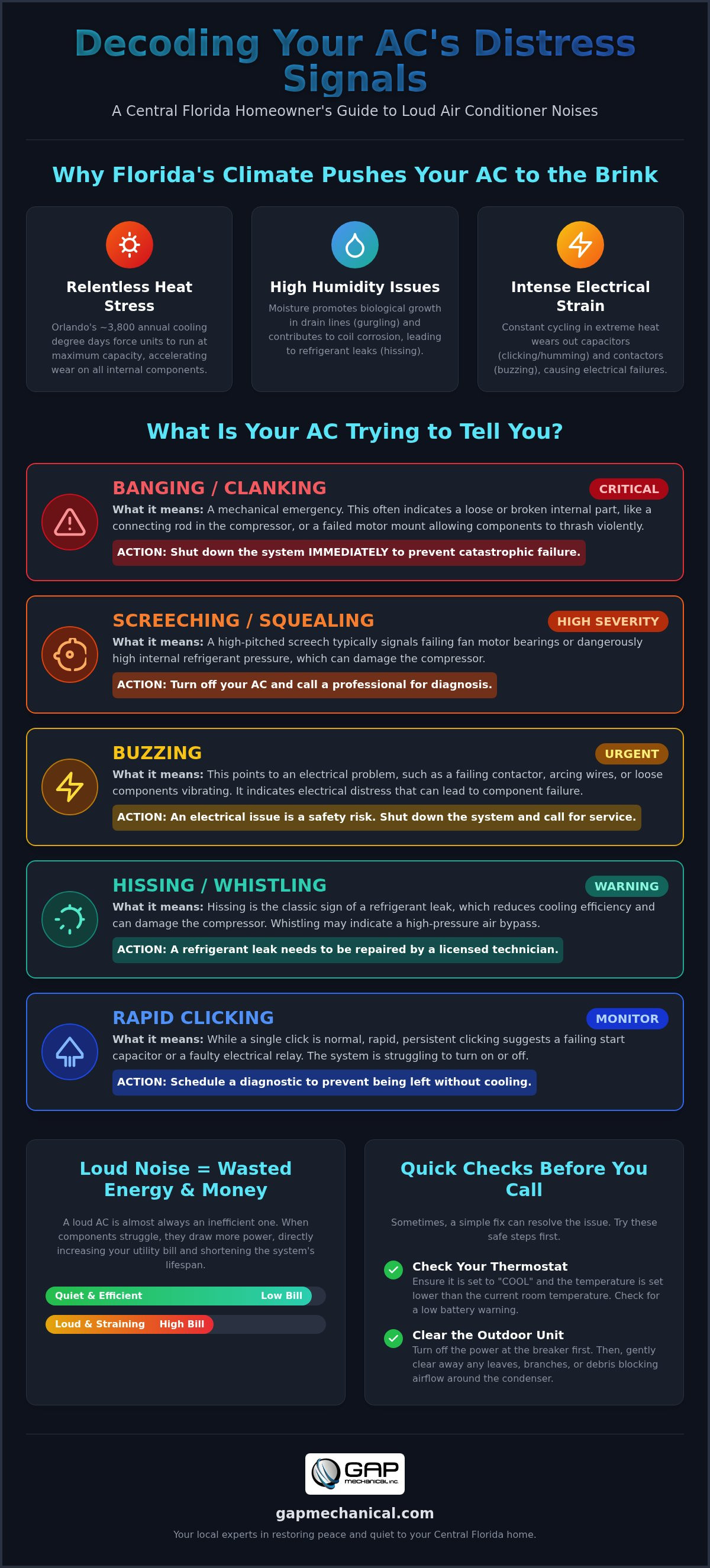
If your air conditioner is making a loud noise in Orlando, it is usually an indication that a component is vibrating improperly, suffering from a mechanical failure, or that the system is struggling to cope with high Central Florida humidity. Identifying the specific type of sound—be it a grinding, rattling, or loud humming—is the critical first step to determining whether a simple maintenance task is required or if a professional diagnostic service is needed.
Living in Central Florida means our HVAC systems are constantly working overtime, battling extreme heat, high humidity, and the unpredictable afternoon storms that sweep through neighborhoods like Winter Park, Lake Nona, and across the suburbs. Over time, these demanding conditions can cause components to loosen, wear out, or fail entirely. A loud noise is your system’s way of communicating that it is no longer operating within its intended parameters, and ignoring that warning sign can lead to more severe issues, like premature compressor failure.
Understanding the source of the sound requires moving beyond simple assumptions. Often, homeowners might assume a loud noise simply means the filter is dirty, but the noise itself provides far more specific information about *where* the problem originates—whether it's electrical, structural, or mechanical.
The Critical Connection Between Florida Climate and HVAC Noise
The climate in Orlando is unique, and it profoundly affects how our HVAC systems age and operate. We don't just deal with heat; we deal with persistent, heavy humidity. This constant moisture exposure can accelerate corrosion on metal components, weaken plastic housings, and cause electrical connections to loosen or degrade over the years. Furthermore, many older homes in established Orlando neighborhoods were built before modern insulation standards were common, meaning your system works much harder than it should to maintain comfort.
When a system works under constant duress—fighting 90-degree heat and saturation—the strain increases. A slight imbalance in a fan motor or a tiny piece of debris caught in the airflow that might be harmless in a drier climate can become a significant, audible problem here. This makes diagnosing the cause of a loud noise especially important, as delaying service means the system is operating inefficiently and under dangerous stress.
When we look at the history of HVAC maintenance in Central Florida, we see that consistent, proactive care is the best defense against system failure. At GAP Mechanical, serving the Orlando community since 2003, we have seen countless instances where a persistent noise was the early warning sign of a major issue. Our commitment to quality and reliability, backed by our status as an EPA-certified, licensed provider (CAC 1813597), ensures that we approach every concern with the most accurate technical expertise.
Diagnosing the Sound: What Does the Noise Tell You?
Not all loud noises are the same. The pitch, rhythm, and location of the sound are the most valuable clues you have. We categorize these noises to help you pinpoint the likely source of the problem, allowing you to understand the severity of the issue before you even call for service.
Rattling or Vibrating Noise
A rattling sound is often the easiest to pinpoint. It usually suggests something is physically hitting another part of the unit or that the entire unit is vibrating excessively due to poor installation or structural settling.
- Loose Panels or Housing: High winds or the constant vibration of the compressor can cause the outer casing or internal access panels to vibrate against the metal frame. This is often a simple fix, but it requires access to the unit’s exterior.
- Loose Ductwork: In older homes, ductwork may sag or have connections that have become brittle. If the airflow is strong, it can cause the ducts themselves to vibrate loudly, especially near registers or vents.
- Fan Blade Imbalance: If the fan blades are slightly warped, chipped, or if they have accumulated debris, they will create a rhythmic rattling or clattering sound as they spin. This is a common wear issue.
Grinding or Scraping Noise
If the noise sounds like metal on metal, or like something is being heavily scraped inside the unit, the issue is almost certainly mechanical and requires immediate attention. This usually involves moving parts.
- Blower Motor Bearings: The bearings in the indoor blower motor are designed to allow smooth, friction-free rotation. When these fail due to age, dust, or humidity, they create a distinct, awful grinding sound.
- Compressor Issues: The compressor is the heart of your AC system. A grinding noise coming from the outdoor condenser unit often indicates that internal components, such as the compressor bearings or the internal compressor mechanism, are failing. This is a serious indicator of wear.
- Foreign Debris: Occasionally, a small object—a piece of plastic, metal, or even a pebble brought in through the air intake—can get lodged in the fan or motor housing, causing a scraping sound.
Humming or Buzzing Noise
A humming or buzzing sound is typically related to electrical components or the general operation of the motor. It is often lower in pitch than a grinding noise and can range from annoying to critically dangerous.
- Electrical Capacitor Failure: Capacitors provide the initial burst of power needed to start motors. If a capacitor is failing, the motor may struggle to start or run smoothly, producing a loud, strained buzzing sound.
- Fan Motor Strain: If the motor is struggling due to low refrigerant or a blockage, it draws excessive current, which can manifest as a deep, persistent hum.
- Vibration Transfer: Sometimes, a loose electrical connection or a vibrating component (like a refrigerant line vibrating against the frame) can create a loud, consistent buzz that seems to come from the air handler.
Addressing System Strain and Operational Noise
Beyond simple mechanical failures, sometimes the noise is a symptom of the system working too hard. Given the persistent challenges of Orlando's extreme weather, the system might be making noise because it is fundamentally struggling to achieve optimal performance.
The Impact of High Humidity on System Noise
In areas like the immediate Orlando metro area, the combination of intense solar load and high humidity means that your system often has to run for longer cycles than it would in a drier climate. This extended run time puts far more stress on every moving part. As components age, they lose their lubrication or experience increased friction, leading directly to increased noise. Regular maintenance is how we mitigate this environmental strain.
Airflow Obstruction and System Stress
While a clogged filter is usually a minor concern, severe airflow restriction forces the blower motor to work significantly harder. This increased strain can cause the motor to vibrate more violently or even overheat, resulting in a loud buzzing sound. Ensuring that the entire system—from the outdoor condenser coils to the indoor air intake—is clean is crucial for reducing operational noise and improving efficiency.
You might wonder about the relationship between the noise and the refrigerant level. While low refrigerant doesn't typically cause a *loud* noise itself, running an AC system that is under-charged means the compressor is working harder and cycling inefficiently. This excessive, stressed operation is often what leads to those strained humming or grinding sounds as the system fights to cool the house against the high ambient temperatures.
When to Call a Professional: Recognizing the Severity
The key to managing HVAC issues in a complex environment like Central Florida is knowing when a DIY fix is appropriate and when professional intervention is necessary. Some noises are minor maintenance items; others are indicators of impending catastrophic failure.
You should consider contacting a licensed HVAC professional when:
- The noise is a high-pitched screech or a violent grinding sound originating from the compressor unit.
- The noise starts immediately upon startup and is consistent, regardless of whether the system is actively cooling or just running the fan.
- The sound is accompanied by visible signs of failure, such as excessive vibration of the entire unit or leaking fluids.
- The noise persists despite a thorough cleaning of the filters and coils, suggesting an internal component failure.
A professional diagnosis goes beyond simply replacing the loudest part. It involves checking electrical loads, verifying refrigerant levels, inspecting motor bearings, and ensuring that the structural integrity of the unit is sound. For those in the Orlando area experiencing persistent issues, reaching out to a dedicated service provider like GAP Mechanical ensures that the diagnosis is comprehensive and the repair is lasting.
Ultimately, your AC making a loud noise is a symptom, not the disease. It is a signal that something in the complex mechanical ecosystem of your home is out of balance. By carefully listening to the sound and understanding what it implies about the system’s internal workings, you can take the necessary steps to restore quiet, comfortable operation to your home.
Frequently Asked Questions
Q: Is a loud rattling noise usually something simple like a loose panel?
A: While a loose panel can certainly cause a rattling noise, it is not always the case. A persistent rattling could also indicate an imbalance in the fan blades or loose ductwork, both of which require careful inspection and adjustment to resolve.
Q: Should I turn off my AC immediately if it starts making a loud, grinding noise?
A: Yes. A grinding noise, particularly one coming from the compressor, often signals severe mechanical stress or failure. Running the unit under these conditions can lead to permanent and costly damage to the core components.
Q: How does Central Florida's humidity specifically contribute to HVAC noise issues?
A: High humidity forces the system to run longer and harder to remove moisture and cool the air. This extended operational stress can accelerate wear on bearings, loosen connections due to thermal expansion and contraction, and increase the likelihood of friction-related noises.
Q: Can a simple filter change fix a loud, persistent humming noise?
A: While a dirty filter can cause minor strain, a loud, persistent humming noise usually points toward electrical issues, such as failing capacitors or a struggling motor. If the noise does not diminish after proper filter maintenance, the problem is likely deeper within the system.
Frequently Asked Questions
Is it safe to run my AC if it is making a loud screeching noise?
No, you should turn the system off immediately if you hear a high pitched screech. This sound often indicates dangerously high internal pressure or a total bearing failure in the condenser fan motor. Continuing to run the unit under these conditions can cause permanent damage to the compressor or even lead to a refrigerant line rupture, which is a significant safety risk for your household.
Why does my air conditioner make a loud bang when it turns on?
A loud bang during startup usually indicates a mechanical issue inside the compressor or a phenomenon known as hard starting. This happens when the compressor struggles to overcome the pressure in the lines to begin its cycle. It can also be caused by metal ductwork expanding rapidly as the blower engages. If you notice your AC making loud noise Orlando technicians should inspect the startup components to prevent a total motor seizure.
What causes a buzzing sound in an outdoor AC unit?
Buzzing in the outdoor unit is typically a sign of electrical distress. This sound often originates from a failing contactor that is struggling to stay closed or electrical arcing between loose wires. In some cases, it may be a failing capacitor that is unable to provide the necessary electrical surge to the motor. These electrical issues generate excess heat and should be addressed immediately to avoid a potential fire hazard.
Can a dirty air filter cause my AC to make noise?
Yes, a dirty air filter is a frequent cause of whistling or high pitched humming sounds. When the filter is clogged with dust and debris, the blower motor must work harder to pull air through the restriction. This creates a vacuum effect that pulls air through tiny gaps in the cabinet or ductwork, producing a distinct whistle. Replacing the filter often resolves this specific noise issue without further intervention.
How much does it typically consideration to fix a noisy AC in Orlando?
The consideration of repairing a noisy system depends entirely on which component has failed. Minor repairs, such as replacing a vibrating panel screw or a standard capacitor, are relatively practical compared to major mechanical overhauls. However, replacing a condenser fan motor or a compressor involves higher labor and part considerations. Addressing the sound early is the best way to prevent the need for a more disruptive full system replacement later.
Why is my AC gurgling even when it is turned off?
Gurgling after the system shuts off usually indicates that refrigerant is equalizing or that water is struggling to move through a clogged condensate drain. Given the extreme humidity in Central Florida, algae often grows in these lines and creates partial blockages. If the gurgling is persistent, it is a sign that your drain line needs a professional flush to prevent water from backing up and damaging your home's interior.
What should I do if I hear a hissing sound coming from my vents?
You should shut down the system at the thermostat if you hear a persistent hissing sound. Hissing is the primary indicator of a refrigerant leak, which reduces your system's cooling capacity and can quickly damage the compressor. It can also point to an internal valve leak or air bypassing a seal in the air handler. Because refrigerant handling is strictly regulated, this requires a professional diagnostic to safely locate and repair the leak.
Does a noisy AC always mean I need a full replacement?
A noisy system does not always require a full replacement. Many sounds are caused by individual components, such as a blower motor or an outdoor fan, which can be replaced independently to extend the life of the unit. However, if the noise is coming from an aging compressor and the unit is over 12 years old, a replacement might be more efficient. We provide an honest assessment so you can choose the most stable solution.