

AC Installation Near Me: 2026 Orlando Guide
Published August 10, 2026
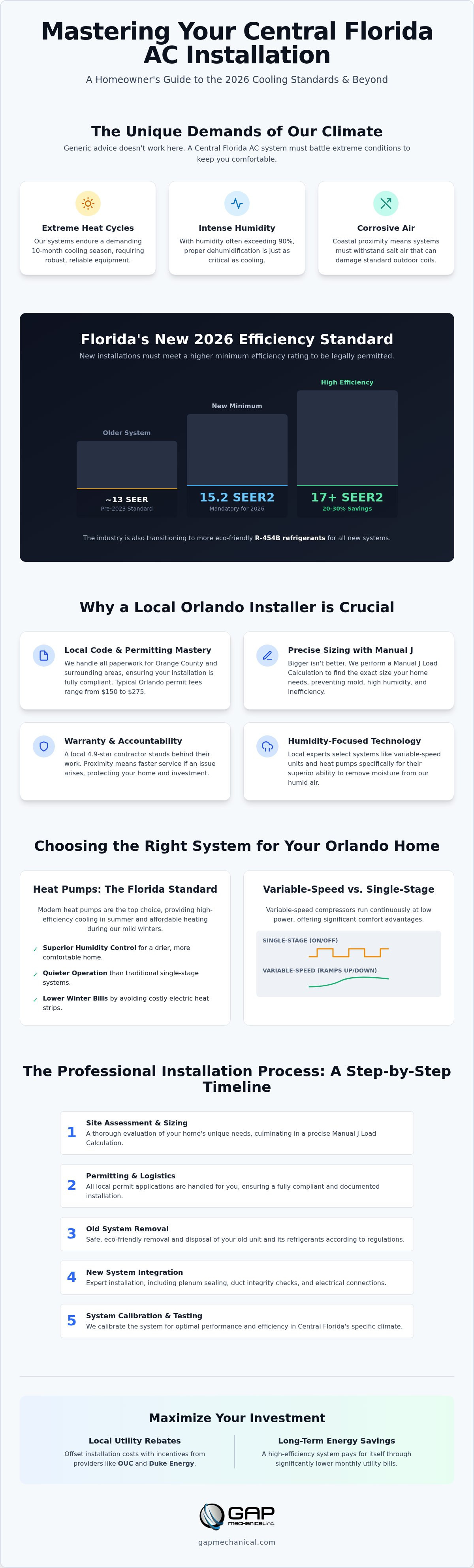
Selecting the right approach for AC installation in Orlando means focusing on comprehensive system sizing and ensuring your home's infrastructure is prepared for Central Florida's unique climate. A successful installation goes far beyond simply mounting a new unit; it involves assessing your home's thermal envelope, optimizing airflow, and selecting technology that can handle the oppressive humidity and extreme temperature swings of the region.
The Unique Climate Demands of Central Florida
Central Florida is defined by its heat, but its challenges are rarely just about temperature. We deal with relentless 90°+ summer days, high humidity that makes the heat feel significantly worse, and sudden, aggressive afternoon storms that require robust systems. For homeowners in areas like Winter Park, Kissimmee, or the rapidly developing neighborhoods around Lake Eola, the HVAC system is the primary defense against the elements. However, older homes in districts like parts of Orlando or Ocoee often present unique installation hurdles.
Many structures built before modern energy standards were implemented may have ductwork that is undersized, poorly insulated, or simply not designed to handle the massive heat load generated by our intense climate. Installing a brand-new, high-efficiency unit into an inefficient shell is like putting a performance engine in a rusty chassis—the system will struggle, run longer, and fail to deliver the consistent cooling you expect.
When considering AC installation near me, it is crucial to look past the equipment and focus on the environment the equipment is working within. The goal is not just to cool the air, but to manage the moisture within the home and maintain a stable temperature despite outside extremes.
The constant battle against humidity is perhaps the most critical factor in Orlando. High humidity forces the AC unit to work harder and longer to dehumidify the air, not just cool it. If the system is not sized correctly or if the ductwork allows too much unconditioned air to infiltrate the home, the unit will cycle inefficiently, leading to discomfort and premature wear.
Beyond the Unit: The Pre-Installation Deep Dive
A professional installation process begins long before the new condenser is lifted off the ground. It starts with a thorough audit of your entire home's performance. This initial assessment is the most valuable step a homeowner can take toward ensuring long-term system health.
The professional assessment focuses on several key areas:
- Airflow Analysis: Technicians measure the volume and velocity of air moving through the current duct system. They look for bottlenecks, sharp turns, and blocked vents, which are common issues in older homes.
- Thermal Envelope Integrity: This involves checking insulation levels in attics and walls, assessing window efficiency, and looking for air leaks around doors and foundation points.
- Load Calculation (Manual J): This is the process of scientifically determining the exact heating and cooling capacity required for your specific home. This calculation must account for factors like sun exposure, ceiling height, number of bedrooms, and local climate factors—not just the square footage.
Many homeowners make the mistake of simply replacing a failing unit with a unit of the same size. This rarely solves the underlying problem. A proper assessment ensures that the unit you select is perfectly matched to the cooling needs of your Orlando residence.
Furthermore, we emphasize the importance of proper ductwork maintenance. If your ducts are leaky, you are effectively paying to cool the outdoors. Addressing structural inefficiencies in the home's infrastructure is often just as vital as selecting the best AC unit.
Selecting Components for Longevity and Climate Resilience
When choosing a modern HVAC system, the focus shifts from simple cooling power to multifaceted performance. Modern systems are designed to operate intelligently, anticipating the demands placed upon them by the Florida environment.
A few key components deserve specific attention:
- Variable Speed Compressors: Unlike older systems that cycle on and off abruptly, modern variable speed compressors modulate their output. This allows the system to run continuously at a lower, steady speed, which is far more effective at managing the high humidity levels characteristic of Orlando.
- High SEER Ratings: The Seasonal Energy Efficiency Ratio (SEER) measures how efficiently the unit uses energy. In a high-demand climate, a unit with a high SEER rating will operate more smoothly and require less energy over its lifespan.
- Zoning Capabilities: For larger homes, advanced zoning allows you to condition specific areas (like the master suite or a home office) independently. This prevents the system from over-cooling unused portions of the house, saving energy and increasing comfort.
The right system should not merely react to the heat; it should manage the environment proactively. This is where the synergy between advanced technology and professional installation becomes critical. A professional team understands how these sophisticated components interact with the specific challenges of a Central Florida home.
To learn more about the different types of systems available to meet your needs, you can review our HVAC system options.
The Importance of Process Over Parts
The difference between a quick repair and a lasting solution lies entirely in the methodology of the installation. An AC unit is one of the most complex pieces of machinery in a home, involving refrigerant lines, electrical wiring, precise airflow balancing, and integration into your existing structure.
When seeking AC installation near me, you are looking for a commitment to a specific process. Our approach at GAP Mechanical ensures that every step is documented and optimized for the long term:
- System Matching: We do not install based on what is readily available; we install based on the Manual J load calculation for your specific address.
- Ductwork Optimization: If the existing ductwork requires modifications—such as adding insulation, sealing leaks, or re-routing—we address those structural issues before the final unit is commissioned.
- System Commissioning: Once installed, the system is run through a rigorous commissioning process. This involves checking pressures, verifying temperature differential, and ensuring all safety features are functioning perfectly. This final step guarantees optimal performance on day one.
We have been serving the Orlando community since 2003, maintaining a commitment to providing highly rated service (4.9 Google rating) and utilizing our expertise (licensed CAC 1813597, EPA-certified) to ensure every installation meets the highest industry standards. Our focus is always on the long-term operational excellence of your system.
If you are interested in understanding the different types of maintenance required for optimal performance, check out our HVAC maintenance tips.
Maximizing Comfort Before the Heat Arrives
As you look toward the next cooling season, preparation is key. Waiting until the peak of the summer heat to address an AC issue means you are often dealing with emergency requests and limited scheduling. Proactive preparation ensures that when you need the system, it is ready to perform at its absolute best.
Here are a few actionable steps you can take to help your home operate more efficiently, regardless of your current system:
- Check Vents and Registers: Ensure no furniture, curtains, or rugs are blocking the airflow from vents or registers in any room.
- Inspect Filters: Replace or clean air filters regularly. A clogged filter forces the system to work significantly harder, reducing efficiency and lifespan.
- Seal Visible Leaks: Check areas where pipes or wiring enter the home for gaps. Even small gaps allow conditioned air to escape and hot, humid air to enter.
- Use Smart Thermostats: Modern, programmable thermostats allow you to set schedules that optimize energy use when the house is empty while ensuring comfort when you return.
These small adjustments can have a measurable impact on your home’s overall thermal comfort and the performance of your AC system, whether you are in a suburban community like Isesworth or a densely populated area closer to Downtown Orlando.
To understand how smart technology can integrate with your home's systems, visit our smart home HVAC solutions page.
Frequently Asked Questions
Q: How long should an AC system last in the Central Florida climate?
A: The lifespan of an AC system is heavily influenced by its maintenance and the severity of the climate. With regular professional tune-ups and consistent care, modern, high-efficiency systems can comfortably operate for many years, but the climate requires diligent attention to maintain peak efficiency.
Q: Do I need a manual load calculation for my specific home?
A: Absolutely. Simply looking at your square footage is not enough. A Manual J load calculation accounts for the unique factors of your home—such as sun exposure, insulation levels, and local climate pressures—to ensure the system is perfectly sized for your specific needs.
Q: What is the biggest mistake homeowners make during AC installation?
A: The most common mistake is focusing solely on replacing the unit without addressing the underlying infrastructure. If the ducts are leaky or the insulation is poor, no matter how advanced the new system is, its performance will be compromised.
Q: How often should I have my AC professionally inspected in Orlando?
A: For optimal performance and to protect your asset against the high humidity and heat, an annual professional inspection and tune-up is highly recommended. This ensures the system is running at maximum efficiency before the cooling demands of the peak season begin.
Frequently Asked Questions
How much does a new AC installation consideration in Orlando in 2026?
The typical consideration for a mid-range system replacement in a 1,500 to 2,500 square foot Orlando home ranges between $7,500 and $10,500. Total asset varies based on the unit size, efficiency rating, and any necessary ductwork modifications. While high-efficiency models require more upfront, they often pay for themselves through utility rebates and lower monthly bills. Always ensure your quote includes the consideration of mandatory Orange County mechanical permits.
How long does a typical air conditioner installation take?
A standard residential replacement usually takes between four and eight hours to complete. Most homeowners can expect the cooling to be restored by the end of the business day. If your project requires extensive ductwork repairs or electrical panel upgrades, the timeline may extend into a second day. Our technicians prioritize a clean workspace and perform a final system calibration before leaving your property to ensure peak performance.
What SEER2 rating do I need for a home in Central Florida?
The federal minimum for new split-system air conditioners in Florida is currently 15.2 SEER2. This standard is enforced at the point of sale and permitting to ensure regional energy efficiency. While 15.2 is the legal baseline, many Orlando residents choose 17 SEER2 or higher to maximize their long-term savings. These higher-rated units provide superior humidity control, which is essential for comfort in our local environment.
Can I install a new AC unit myself to save money?
No, you should never attempt a DIY installation for a central cooling system. Handling refrigerants like R-454B requires EPA certification by law to prevent environmental damage. Additionally, unpermitted work can lead to significant issues with home insurance claims and future property sales. Professional ac installation near me ensures that your system meets all Florida building codes and maintains the validity of your manufacturer's parts warranty.
What is the best time of year to replace an AC in Florida?
The shoulder seasons of spring and fall are the ideal times for a system replacement in Central Florida. Scheduling your project in March, April, October, or November often allows for more flexible appointment times before the extreme summer heat arrives. Replacing your unit before it fails completely during a July heatwave prevents the stress of an emergency situation. It also gives you time to research the best rebates.
Does a new AC installation include a warranty on labor?
Reputable local contractors provide a dedicated labor warranty that sits alongside the manufacturer's parts warranty. While equipment manufacturers cover the consideration of defective components, the labor warranty covers the technician's time to perform the repair. Most professional installations include at least one year of labor coverage. We recommend reviewing these terms carefully to understand the long-term stability of your asset and what is required to keep it active.
How do I know if I need a new AC or just a repair?
If your system is over 10 years old and requires a repair costing more than half its value, replacement is usually the better financial move. Look for signs like skyrocketing utility bills, frequent mechanical failures, or excessive indoor humidity. Modern units offer significantly better dehumidification than older models. When you search for ac installation near me, look for a contractor who provides a transparent assessment of your system's current health.
Are there financing options available for HVAC installation in Orlando?
Yes, multiple financing paths exist to make high-efficiency cooling more accessible for local homeowners. Many contractors offer 0% APR promotional programs for residents with a credit score of 680 or higher. Other options include low-interest personal loans with flexible monthly payments that fit your planning. These programs allow you to invest in a reliable system today while spreading the consideration over several years, often offset by your monthly energy savings.